From its earliest immigrants' enduring impacts
to hosting half a century of festivals, Greek culture is a bold blue Aegean Sea
thread running through our vibrant New Orleans tapestry.
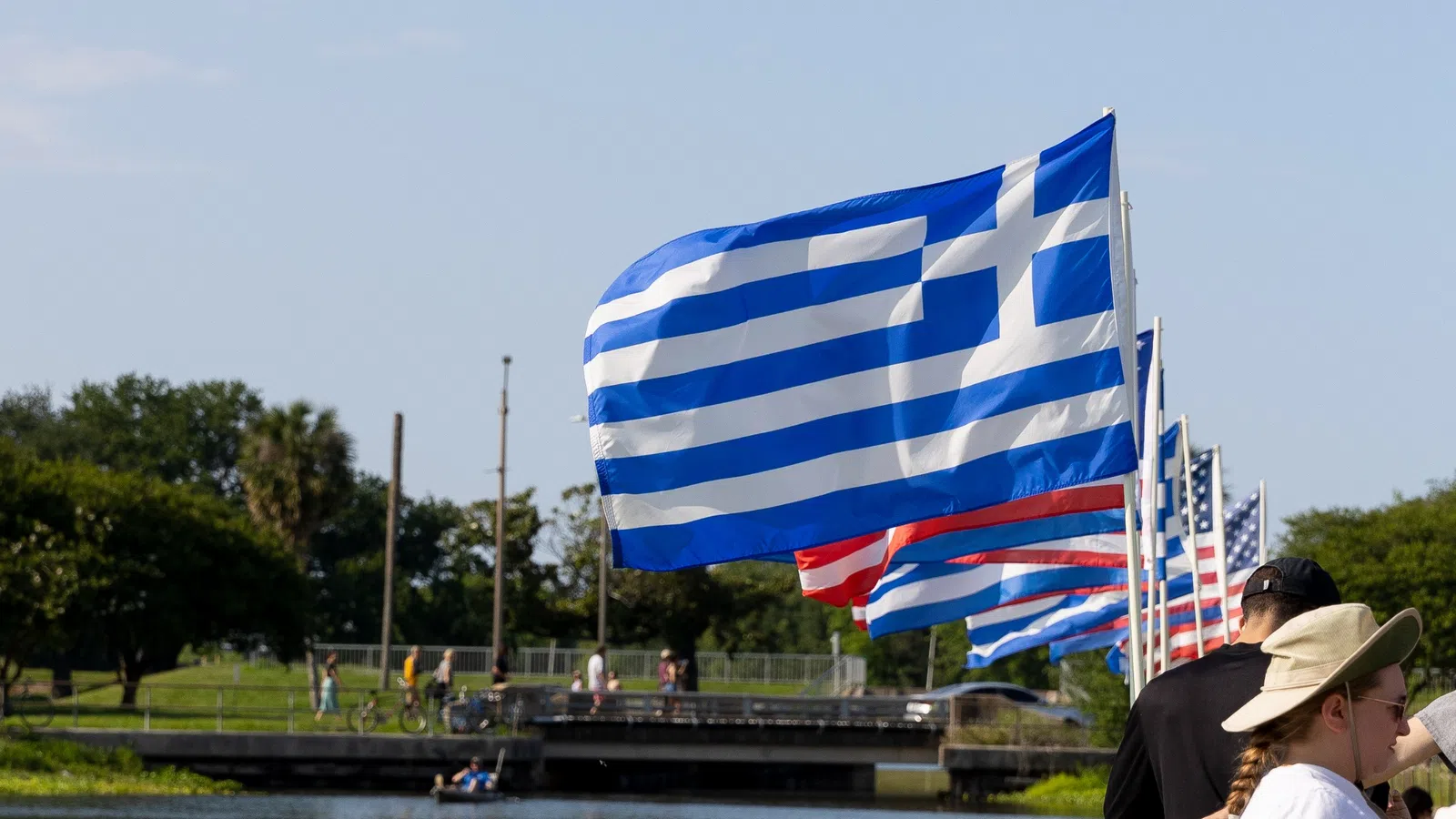
[Courtesy of Where Y'at Staff]
The NOLA Odyssey Begins
New Orleans'
population boomed by 366 percent between 1830 and 1860. Irish, Germans, and
Sicilians comprised the largest immigration waves. By 1850, only 150 Greeks
were recorded in the New Orleans census; however, unlike other immigrants who
arrived with little, many early Greek immigrants to New Orleans were part of an
educated and funded "merchant diaspora."
Prominent Greek
families, such as the Ralli, Benachi, and Botassi families, set up merchant
houses and became key players in the growing cotton trade between New Orleans
and the Mediterranean.
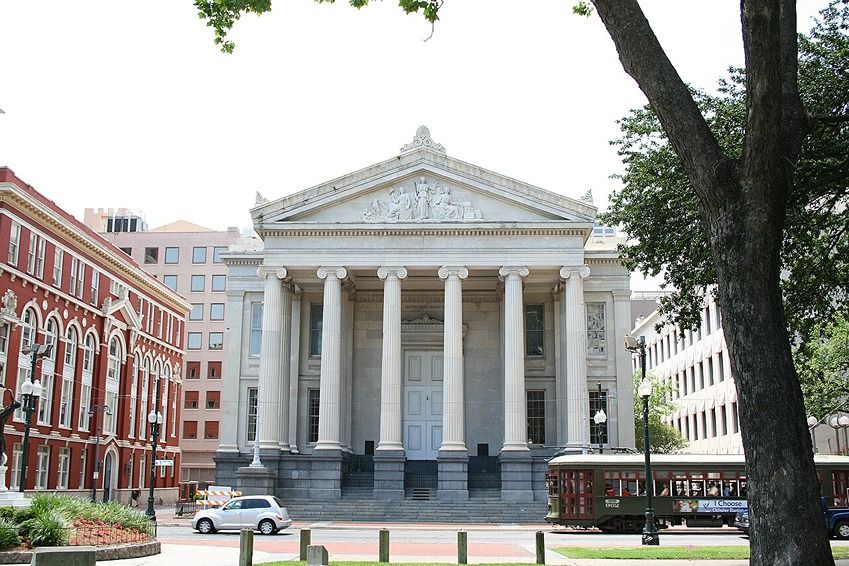
[Courtesy of Diego Delso, CC BY-SA 3.0 via Wikimedia Commons]
At the same time,
the Greek Revivalism movement that began at the turn of the 19th century was at
its peak. The movement symbolized democracy, liberty, and stability and
coincided with the U.S. trying to establish its own identity, accelerated by
the War of 1812 and later by the Greek War of Independence from 1821 to
1832.In New Orleans, Greek Revivalism
inspired the creation of Lower Garden District streets named after the nine
Greek Muses (Calliope, Clio, Erato, Thalia, et al); the naming of the earliest
Mardi Gras krewes such as Comus (1857), Momus (1872), and Proteus (1882); and
the building of notable architectural gems including the Buckner Mansion
(1856), the Dabney House (1856), and Gallier Hall (1853).
While these
architectural marvels and Mardi Gras krewes were being built by established
"American" New Orleanians, Greek immigrants were arriving in New Orleans.
Although Michel Dragon, the first documented Greek in the city, arrived in New
Orleans in the late 1700s, it was the small but substantial group of Greek
immigrants who arrived in the mid-1800s, in part due to the Greek War of
Independence, who created two firsts in the Americas: one was the first Greek
Orthodox Church in the Americas, and the other was the first consulate office
for Greece—both between 1864-1866 and both spearheaded by Nicholas Benachi, a
wealthy cotton merchant.
Greek immigration
continued for different reasons throughout the next century, especially
following wars that brought economic hardships: World War I, the Balkan Wars,
the Turkish-Greco Wars, and World War II. The 1965 Immigration and Nationality
Act prompted a resurgence in Greek immigration to New Orleans by abolishing
discriminatory national origins quotas. The law prioritized family
reunification, allowing Greek Americans in New Orleans to sponsor relatives,
which strengthened the local Greek Orthodox community.
"Our Greek
community, although rooted in the oldest Greek Orthodox Church in the Americas,
has a very large group that immigrated in the 1960s, '70s, and '80s, creating a
community with a very recent diaspora community. I feel very blessed to be a
part of two of the most amazing places on Earth: New Orleans and Greece. I
consider them both my home," said Katerina Tsatsoulis Sutton, Parish Council
and PTA, Holy Trinity Greek Orthodox Cathedral, Executive Committee for our
Greek Festival New Orleans.
From the Founding of the Church to the
Founding of a Festival
"The Greek
community in New Orleans may be small in numbers, but it's incredibly strong,
active, and deeply connected—both within the church and throughout the broader
city," said Laura Labropulos Toras, Co-Chair, New Orleans Greek Festival 2026.
"What stands out most to me is how intentional people are about preserving
Greek traditions while also being fully invested in New Orleans life. There's a
real sense of responsibility to carry the culture forward but also a deep love
for this city and its people."
After the Louisiana
Purchase in 1803, the change from Spanish/French Catholic rule to American
control introduced religious freedom under the U.S. Constitution. This change
made all the difference for the Greeks and other Orthodox groups, who until
that point had conducted most baptisms, marriages, and funerals at St. Louis
Cathedral.
Fundraising from
the most notable and established New Orleans Greek families (Dragon, Dimitry,
Benachi) and support from Orthodox communities in Turkey, Greece, and
Herzegovina led to the purchase of land and the building of the first Greek
Orthodox Church at 1222 N. Dorgenois St. in the Tremé neighborhood. In 1950,
this original wooden structure was replaced by a brick cathedral. In 1976, the
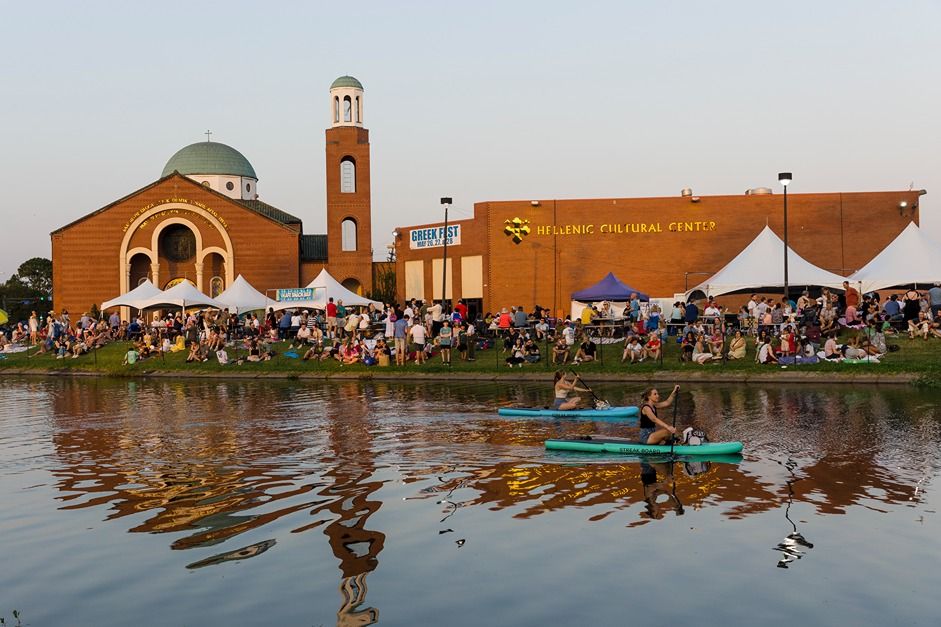
community purchased the current site on Bayou St. John at 1200 Allen Toussaint
Blvd. In 1980, Holy Trinity moved into the Hellenic Cultural Center, and the
gold-topped cathedral was dedicated in 1985.
[Courtesy of Where Y'at Staff]
The New Orleans
Greek Festival began at the original Holy Trinity site in Tremé in 1973,
purportedly inspired by the success of a baklava booth at Jazz Fest. What began
as a small church event has grown to attract 20,000 attendees annually. Just as
the church established and anchored the community in its early days, the
celebration symbolizes the birth and ongoing legacy of Greek culture in New
Orleans.
"The Greek Festival
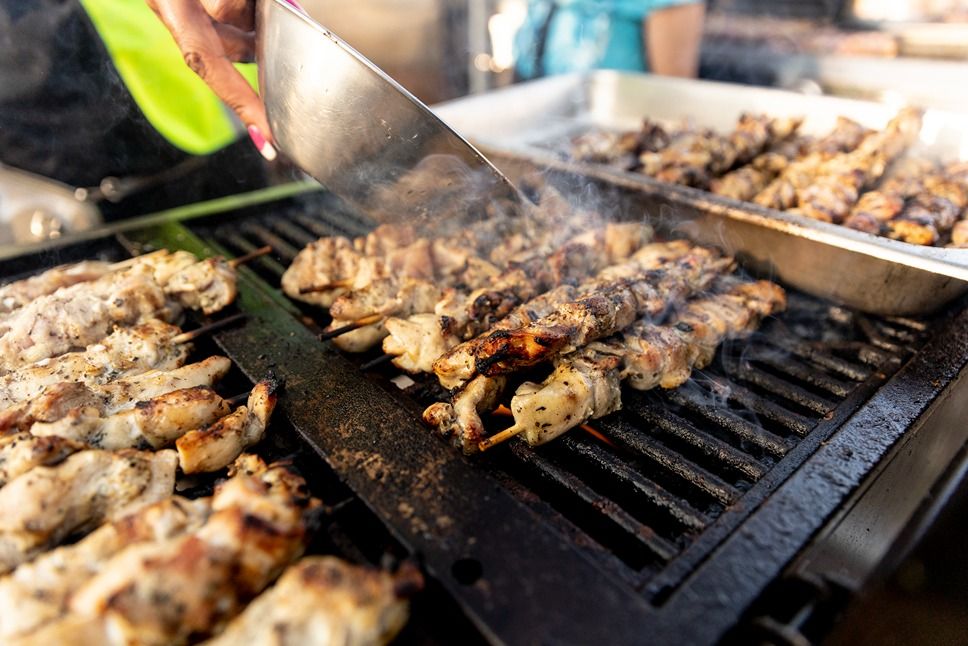
provides the opportunity to experience Greek cuisine, music, Orthodox
liturgical practices, and to learn the rich history of our community while
meeting community members who present the festival as they celebrate the
sharing of their culture," noted Magdalene Spirros Maag, Chair, Holy
Trinity Archives Committee. "This aspect of the festival reflects the Greek
cultural value of philoxenia, love of strangers, which goes beyond
casual hospitality and is a cornerstone of deep cultural values."
This year's
festival theme, "Your Odyssey Begins Here," bridges ancient and modern Greece,
capturing the timeless spirit of a culture whose influence far exceeds its
size—inviting us to embark on our own journey as it continues its vibrant
odyssey in New Orleans.
Sign Up!
FOR THE INSIDE SCOOP ON DINING, MUSIC, ENTERTAINMENT, THE ARTS & MORE!