The Beach Ties That Bond
New Orleans and the cities of the Mississippi Gulf Coast have an intertwined history.
The first capital in French Louisiana was Fort Maurepas—present day Ocean Springs, MS—made under the leadership of Pierre Le Moyne d'Iberville in 1699. The capital moved to present day Mobile, AL, before finally moving to New Orleans in 1722.
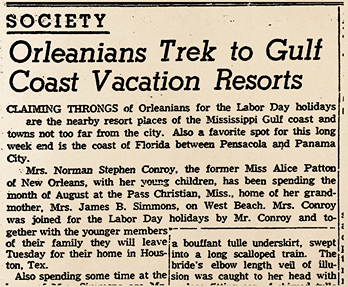
People visited the Gulf Coast for recreation and wellness as early as the Antebellum period. The Civil War only briefly paused such activity before it boomed in the Postbellum period. New Orleans newspaper ads in the late 1800s touted hotels and treatment centers of the Coast where city dwellers could escape yellow fever and other ailments. A notice in the November 11, 1869, edition of The Picayune stated, "Water Cure Establishment at Biloxi under the direction of Dr. H. Ranoe. Dr. Ranoe respectfully informs the public that this Establishment will be opened on Tuesday next, 19th inst., and ready to receive sick persons, invalids, or any one wishing to recuperate by the use of Sea or Spring Bathing."
Mary Cracchiolo Spain, regional director of PR for Beau Rivage Resort & Casino, stated, "People come over for the Gulf breezes and medicinal water. It's always had this beautiful, small town charm."
The Louisville and Nashville Railroad was extended in 1870 to include lines stretching from New Orleans through Mississippi to Mobile, AL, and beyond. Rail services came and went throughout the 20th century, with a long pause after Hurricane Katrina. The renaissance of Gulf Coast train travel with the introduction of Amtrak's Mardi Gras Service in August 2025 surpassed ridership expectations within less than a year.
The beachfront along the coast of Harrison County was created by Section 2 of the River and Harbor Act of July 3, 1930, and completed in 1952. The Gulf was dredged for over 6 million cubic yards of sand, which was pulled up to the Highway 90 seawall, creating a protective beach barrier.
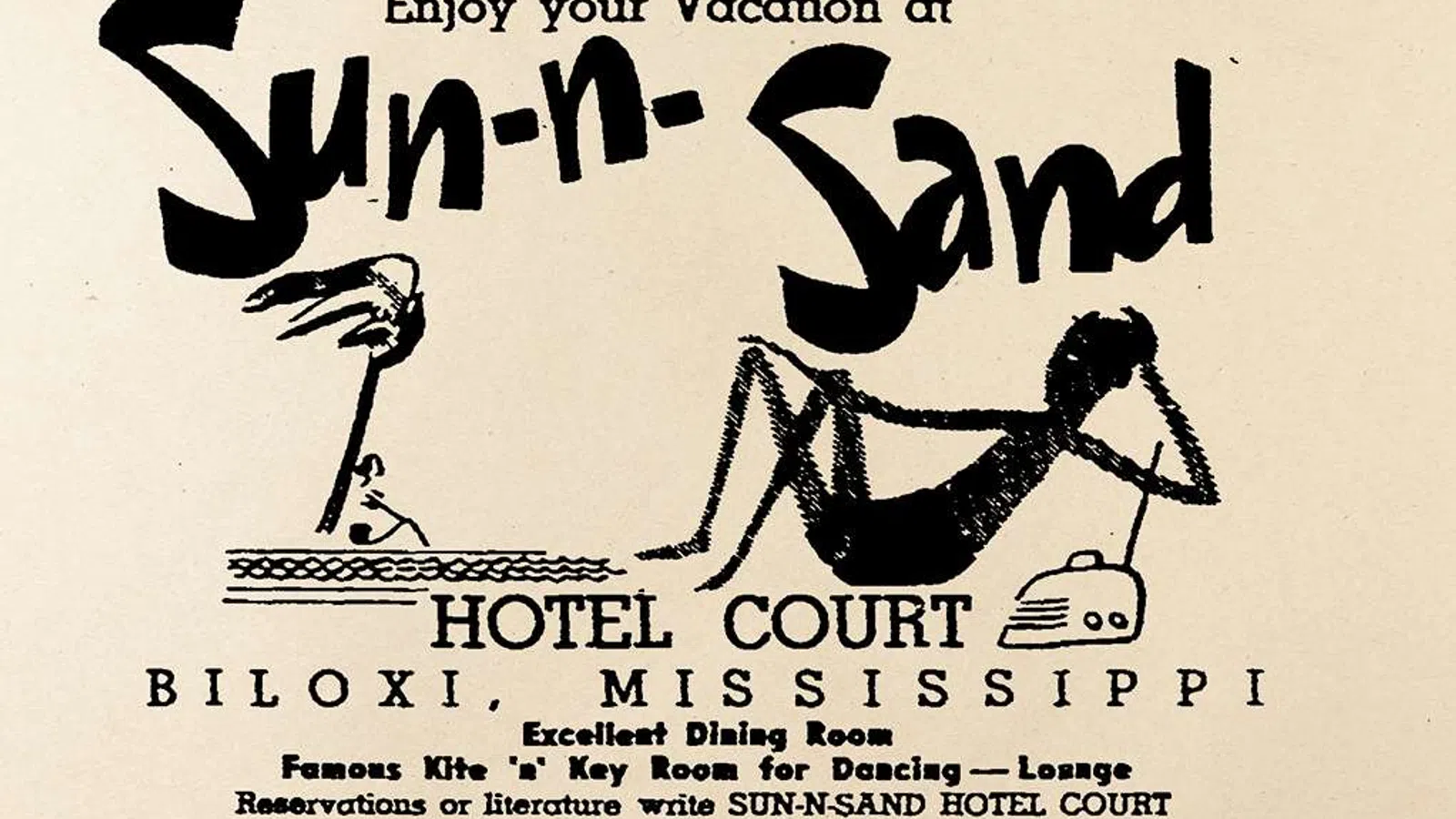
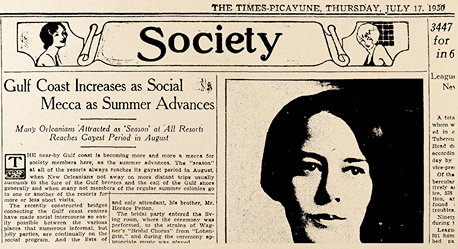
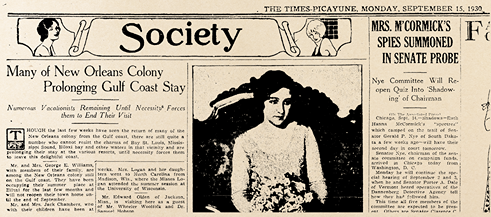
Opulent resorts promised fun on the new sunny shores. Great Southern Hotel, White House Hotel, and Buena Vista Hotel were popular options. A Times-Picayune article from Monday, January 25, 1937, explains that the area's enchantment has not been lost in its modernization. The article reads, "In place of the former white shell roads which by moonlight seemed to be 'ribbons of silver beside a shimmering sea,' there are now such incomparable drives as that along the Ocean Springs seawall when, at night, the seascape and the islands and the channel lights become a backdrop for romance."
The Gulf Hills Hotel, which opened in Ocean Springs in 1927 attracted high-end guests including celebrities such as Judy Garland, Marilyn Monroe, and Jayne Mansfield. By 1950, the land around the hotel became a working ranch where guests were invited on horseback rides and other outdoor activities. Elvis Presley found refuge in Waterfront Villa #9 early in his fame as he performed at the Slavonian Lodge and Keesler Airman's Club in 1955. He met his local love interest June Juanico at the latter performance.
Gulf Hills Hotel was nearly lost to demolition in 2018 until a new owner revived it. A grand-scale renovation was launched and breathed new life into the retro hotel where former guests Jayne Mansfield, Marilyn Monroe, and Elvis Presley are honored with themed suites.
This titillating time period drew droves of tourists from Louisiana and neighboring states. The Times-Picayune Sunday morning edition May 8, 1966, reads, "The Mississippi Gulf Coast is one of the world's most exciting vacationlands and it is right at our very own doorstep. Once again this year the world's longest man made beach will be host to thousands of vacationers. From Bay St. Louis and Ocean Springs the hotels, motels and tourist attractions are preparing for what is believed will be the best season ever."
Gus Stevens Seafood Restaurant & Buccaneer Lounge, which opened in 1947 in Biloxi, was a hot spot for stars that attracted the likes of Jerry Van Dyke, Andy Griffith, and Jerry Lee Lewis. Actress Jayne Mansfield performed there in 1967 before departing for New Orleans to appear on WDSU's Midday Show. She was in a fatal car crash before reaching the city. The restaurant and lounge shuttered in 1975.
Biloxi was well known for being an underground gambling and vessel casino mecca long before it became legal in 1990 under the Gaming Control Act. More than a dozen casinos opened in Mississippi by the end of the '90s. "Mississippi was the third state in the Union to get gaming. My mentor, Bruce Nourse, was the first director of the Mississippi Gaming Commission. He was a Biloxi boy in those back rooms dealing cards. Bruce brought back an exact copy of Nevada's gaming laws, and that became our legislation. I think it's neat to tell our story in what makes us unique, despite gaming proliferating all over the country," Cracchiolo Spain explained.
Beau Rivage Resort & Casino was the largest hotel/casino outside of Nevada when it opened in 1999 with 1,740 rooms, several restaurants, pool, spa, theater, and an exciting gaming floor. She continued, "Steve Wynn, who changed the face of Las Vegas, watched the market and decided to build here. Twenty-seven years in, and we're doing better today than we did in the beginning. That says a lot about the destination. We've got top flight entertainment. We change it up because we have so much repeat business. People will come here five, six times a year, so we have to do different things."
The Mississippi Gulf Coast has been a beachy haven for New Orleanians for nearly 200 years, and the bond seems to only strengthen with each passing year.