"The City of the Dead"
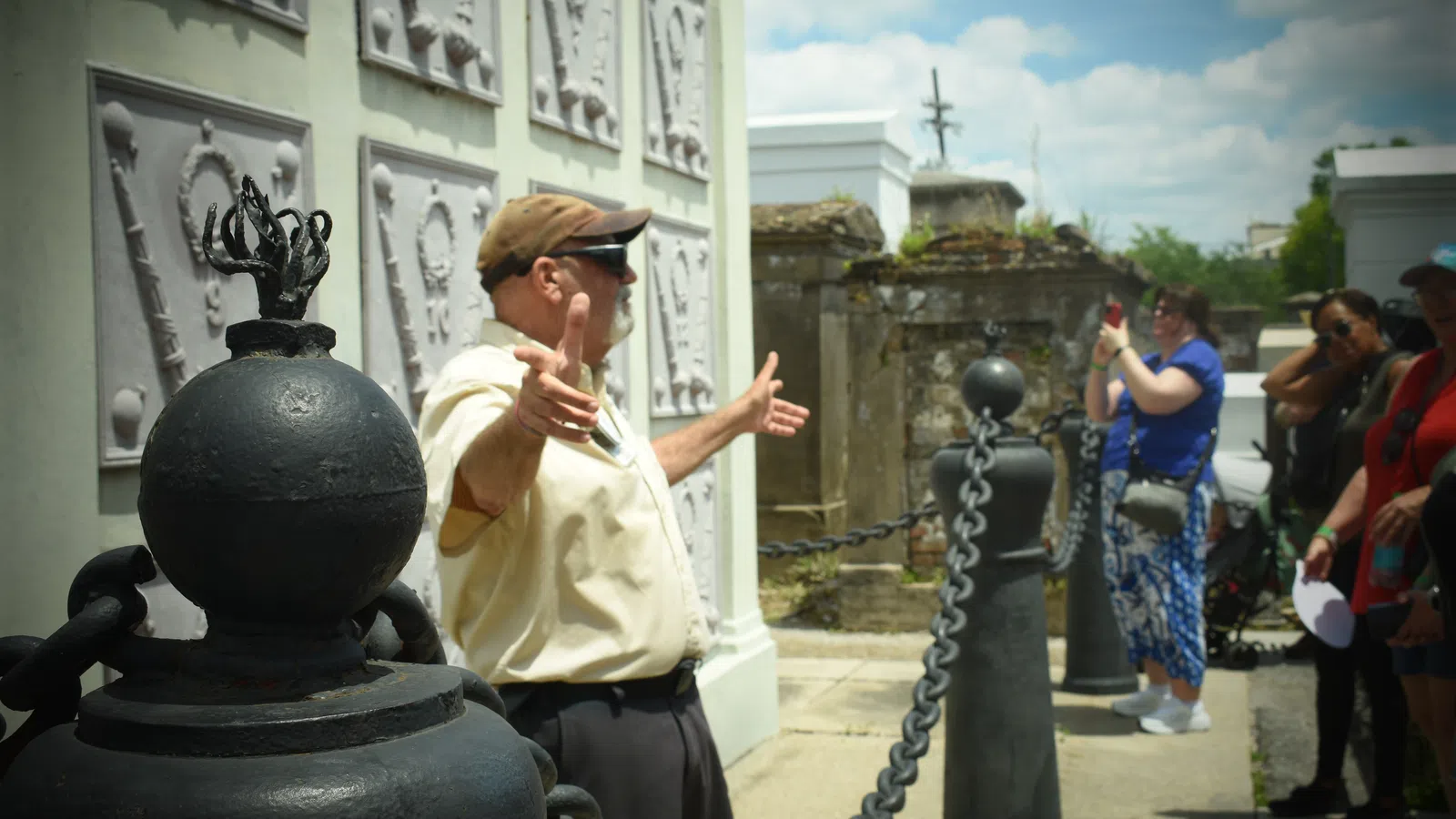
"Please, no leaning on the tombs," said tour guide Alan Raphael to a young man resting against a wall crypt. No straying from the path either.
The word "buried" is discouraged, for "entombed" is the correct term. Those on his tours are visitors, not tourists. Also, please respect the space.
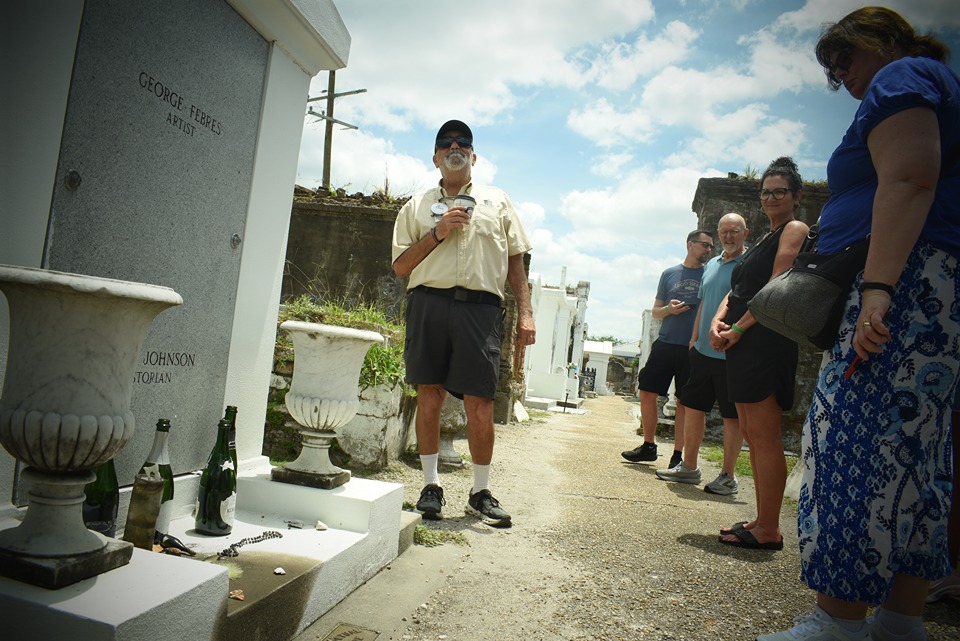
There's a cemetery just outside of the French Quarter, where over 33,000 of New Orleans' deceased lie to rest, called St. Louis Cemetery No.1. It is New Orleans' oldest and, what many people believe, the most famous active graveyard in the city.
Visitors are guided through the 18th and 19th centuries as they meander through narrow pathways, avoiding stepping onto brick burial beds or decrepit headstones. As Raphael educates those on the remembered, the crowd listens carefully to his nonchalant yet alluring descriptions.
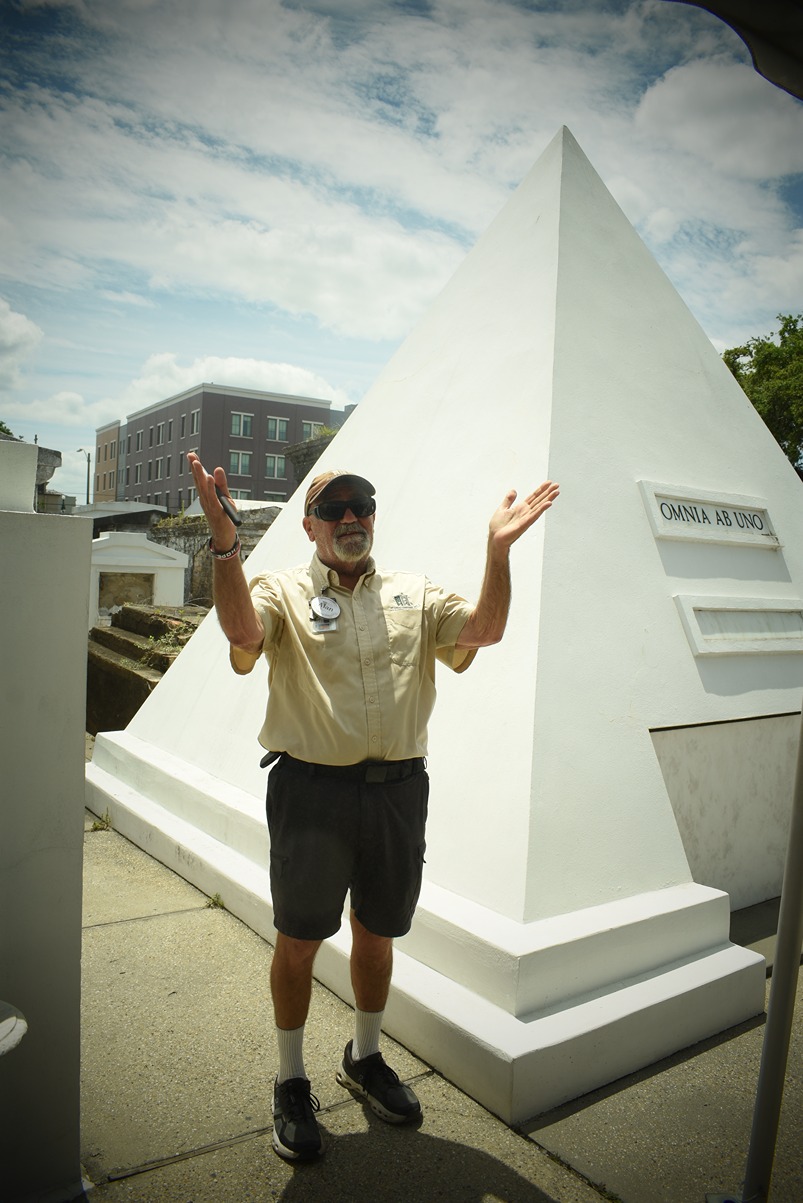
Raphael gathers people from across the globe through the gates into what he calls "the city of the dead" due to the tombs' stark resemblance to houses. There in the cemetery, Raphael tells the tales of historical figures such as the 19th century Voodoo queen Marie Laveau, civil rights activist Homer Plessy, and "society tombs" such as the New Orleans Musicians and Italian Mutual Benevolent Societies. Nicolas Cage has already reserved a spot in a pyramid tomb when his day comes.
Laveau's tomb is the last stop on Raphael's tour. You are brought to a seemingly plain white house-shaped tomb and stand under a tent with water misters to relieve you from the beating sun. Raphael points out three faint engravings marked "XXX" on the side of her tomb. Decades of myth and lore have led people to the cemetery to tamper with Laveau's tomb, including teenagers, bartenders, drunk celebrators, and other mischievous folks looking for "magic." It is believed by some that if you draw three X-marks, spin in three circles, and—well, you must find out the rest on your own to see what might happen. Over time, Laveau's grave has been vandalized and repainted over and over, Raphael said, and is never left alone, no matter how hard the cemetery tries.
Unlike many French Quarter ghost tours, Raphael sticks to documented history and is careful not to veer away from the factual memory of those resting around him. "I'll do just about any kind of tour except the ghost tour. I refuse to do those. I don't believe in any of that stuff. The two stories that are true, the Axe Murderer and Madame Wallery, are factual."
Raphael is careful not to use, or hear, the word "buried" on his tours, for the "city of the dead" has no bodies underground. New Orleans is known for its distinctive above-ground entombments due to the city's subjection to high water levels and swampy climate.
The tallest tomb in the cemetery could be the marble Italian Mutual Benevolent Society Tomb, with space for nearly 1,000 corpses—one tomb houses 1,000 Italians. Built in 1857, the tomb served Italian immigrants as an affordable option for their loved ones, Raphael said. This tomb has two large white marble statues of angel figures. One is embedded in the front and the other on the very pointed top, holding up a cross.
Raphael said he treats the tours as if they were at a fine art museum. "No touching of anything inside the museum—inside the cemetery—which I sometimes mistakenly call a museum, as I just did," he said jokingly.
On the tour, he dives into the deep historical significance and lore of the irreplaceable relics in the cemetery. One example is the history of the New Orleans caveau, which are found at the bottom of the above-ground, mudless tombs. Cavues are vaults where the remains of a body go to cook down, "ashes to ashes, dust to dust," Raphael said in a voice of a narrator from a macabre story-tale. After a year and one day, the tomb can be unsealed for another member of the family to rest—and not a day earlier, he said.
Four or five times a week, Raphael leads a group through the cemetery. "I prefer the word visitors rather than tourists," he said, speaking with the quiet reverence he reserved for the dead.
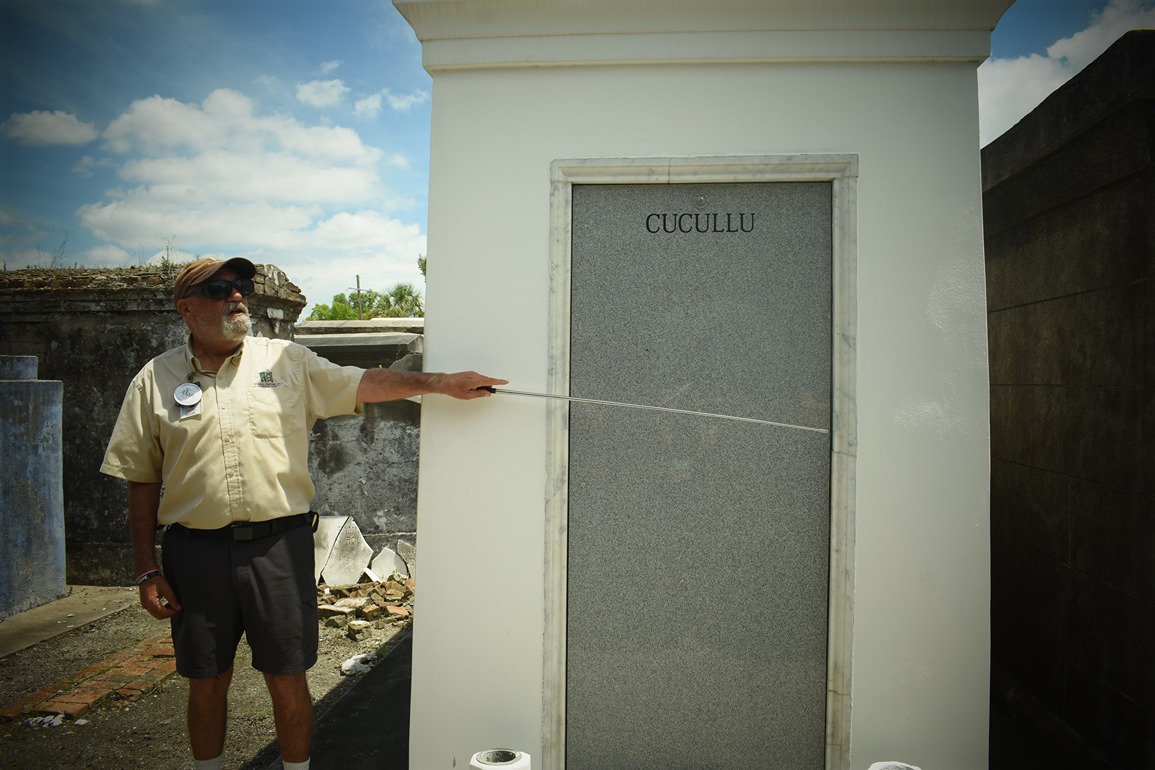
Though Raphael may have encyclopedic knowledge on the sacred grounds, he has received questions that surprise him on tours. "One of the interesting questions that I got [was] from probably a 12-year-old boy who wanted to know what happens if you have a hip replacement," to decay properly inside the vault. The child had asked him, "'What does the sexton do with that appliance when it's down in the caveau?' And I really didn't know what to tell him, but I thought that was a pretty deep question."
Raphael is from a small town in North Louisiana called Bastrop and came to the big city to pursue his education at Tulane University. After decades of working at TV stations, in marketing, and in public relations, he found himself wanting to do something a little different and fun. He landed in a class at Delgado to get his tour license and has since walked around the French Quarter, bestowing knowledge upon the masses.
Raphael has also taken an interest in Garden District tours, where ornate mansions and iron-laced balconies tell a different story of New Orleans history—another tour that talks about New Orleans' distinctive architecture.
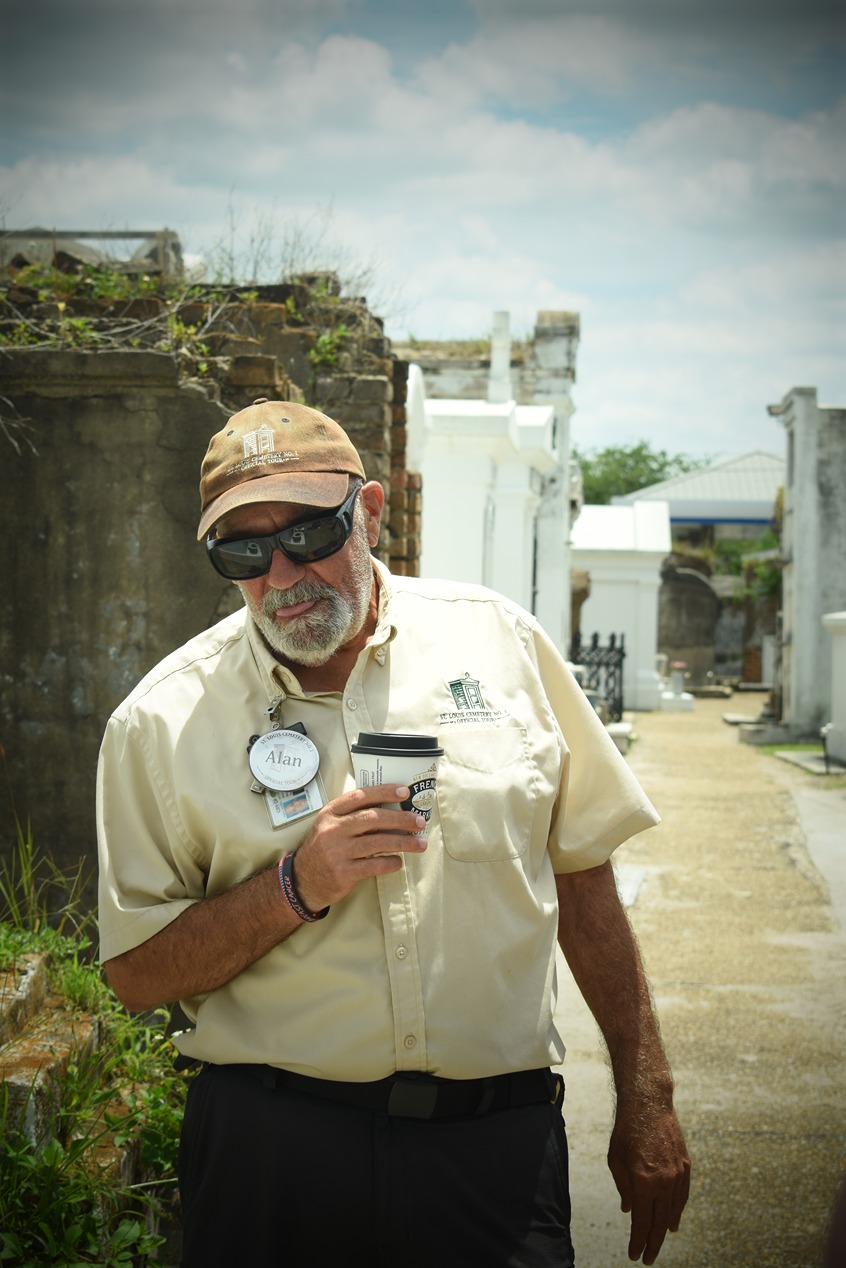
After finishing his hot cup of French Market coffee, he ends the tour right on time and pulls out his business card to all the visitors, sending them back to 501 Basin St.'s front desk into the living world.
Raphael does not humor in hauntings or horror. Instead, he guides visitors through the practical realities of death in New Orleans—a city where memory is stacked carefully above ground, waiting for someone willing to stop and listen.