New Orleans' Unique Irish History
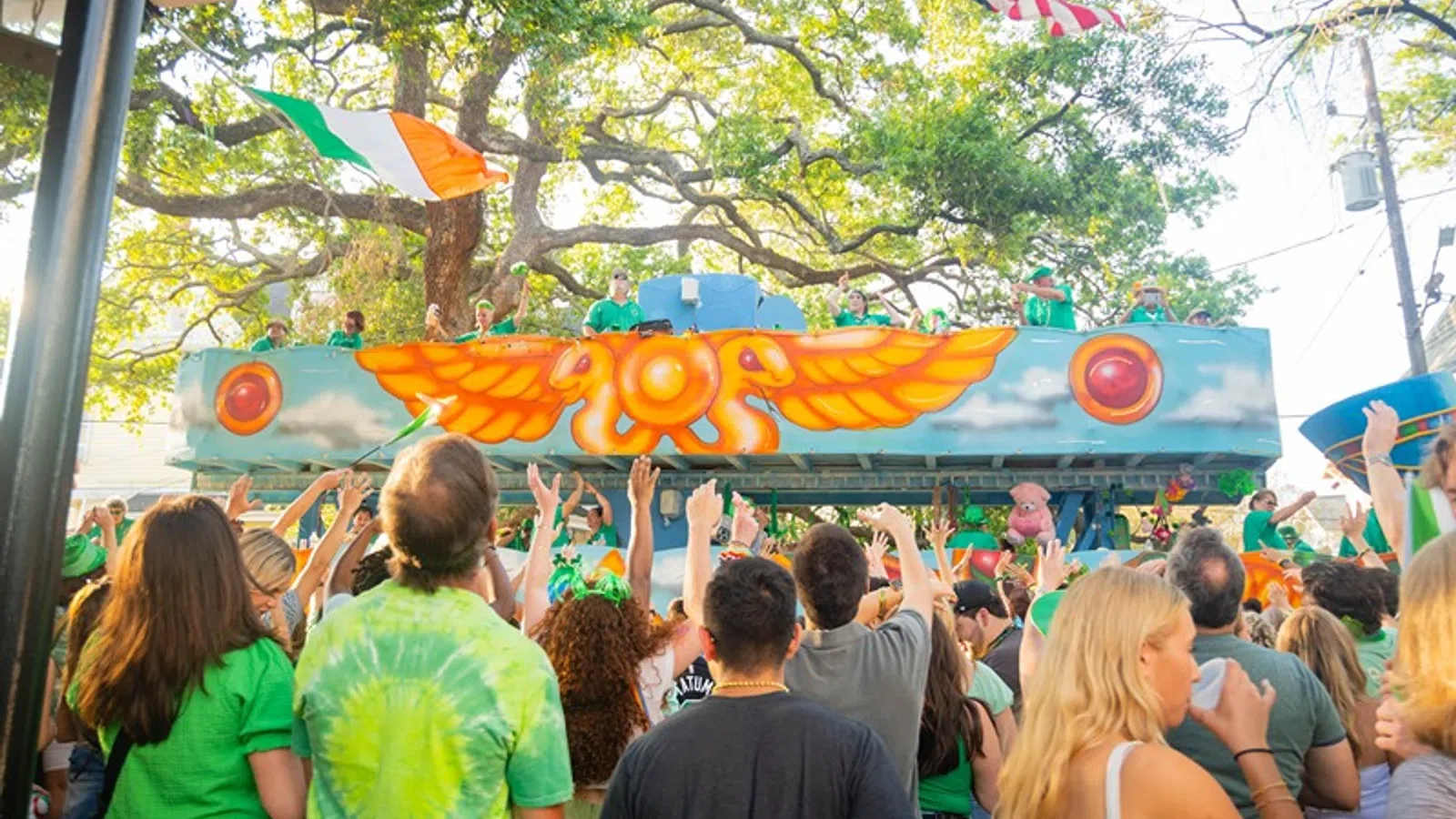
On the heels of Mardi Gras, the St. Patricks' Day Parade seems like one of the last parades before the summer heat sets in, but with this celebration is a long and dense history of Irish immigration to New Orleans.
The arrival and integration of Irish
immigrants in New Orleans was not an easy path. So, as we celebrate this year, let's
take a moment to remember how exactly we got to where we are today.
The Roots
While many believe that the first official St. Patricks' Day
celebration in New Orleans took place in 1809, Dr. Laura D. Kelley, an Irish
historian, found that it started a few years earlier. It wasn't a parade and no
cabbages were thrown. It was a feast put together by early Irish immigrants in
the city.
Irish immigrants at this time came to New Orleans so their
Catholicism could be practiced without persecution. Countries such as France and Spain
were close choices as they were both majorly Catholic states. New Orleans, a
city at the forefront of French and Spanish expansion into the New World, was
ideal for Irish families seeking a new home. As it turns out, the
grass wasn't always greener for these early Irish settlers.
Hard Work
New to the city and eager to
work, Irish
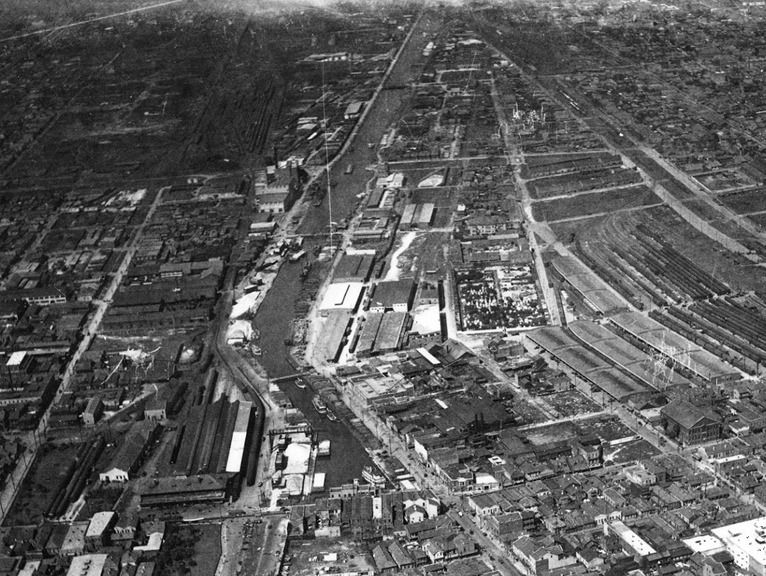
laborers were hired to construct the New Basin Canal. Working conditions on
the canal were dangerous. The swampy and disease-ridden work environment took a
fatal toll on the laborers. Little was done to alleviate the struggling
workers, and outbreaks of cholera and yellow fever claimed what was possibly
thousands of lives. Through their perseverance and great sacrifice, these men
built one of the largest shipping lanes in New Orleans' history.
In the time of this immense
struggle for Irish laborers, according to Dr. Laura D. Kelley, only about half of the
population occupied labor jobs. The other half participated in careers as
doctors, attorneys, law enforcement. By the 1830s, when the canal began its construction, the Irish already had a dominating role in what was then the United States' largest port. In the years to come, they would participate in historic
military battles, develop banks, build churches, and continue to celebrate their
heritage with one of the largest parades of the year.
The Irish Channel
Among New Orleans' diverse and cherished neighborhoods is the Irish Channel. The Irish Channel is perhaps a confusing name because it wasn't a specifically Irish area. What we now call the Irish Channel was a stretch of neighborhood home to all kinds of immigrants, the Irish being one of them. This isn't to negate their presences in the area, but to highlight the presence of immigrants of all ethnicities. In fact, the Irish community have a lasting cultural impact on the area. Early Irish pubs, then referred to as coffeehouses, emerged. And of course, the St. Alphonsus Church was built.
The church, just a block off
Magazine Street today, the was built by the Redemptorists, an Italian Catholic sect that led a mission of preaching to poor
and immigrant communities. It was more than simply a place for worship. In line
with their mission, priests would hold money for Irish families, in lieu of a
bank, helping them save their hard-earned dollars. The church still exists today,
just a block from the St. Patrick's Day Parade route.
Celebrating History
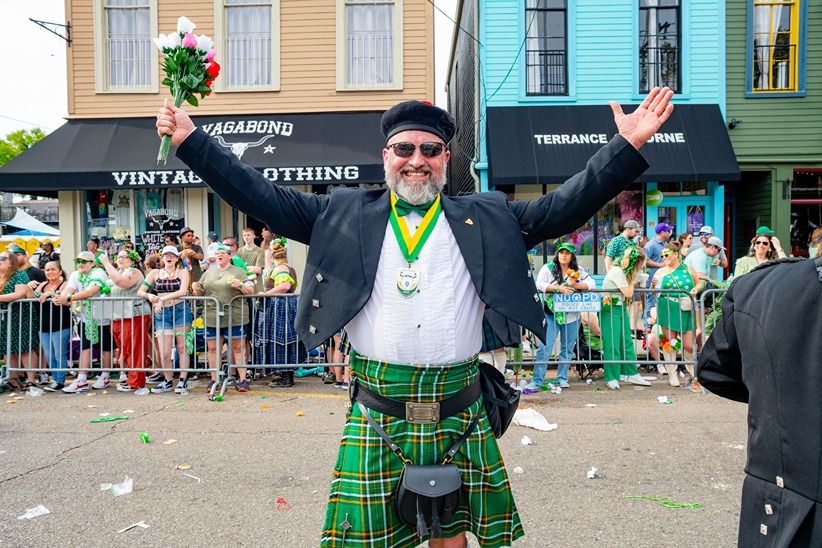
Though this marks the 79th year for the Irish Channel Parade this St. Patrick's Day, it is 220 years since that inaugural St. Patrick's Day feast in 1806. New Orleanians have been celebrating this holiday for nearly as long as we've been a city. As we don our sportiest greens and hit the pubs for a round of pints, let's remember the Irish immigrants that dedicated generations of hard work to uplift the city of New Orleans.
Kelley, Laura D. The Irish in New Orleans. University of Louisiana, 1 Oct. 2014.