NOLA Names
From highways to bridges, Louisiana's signs honor local legends whose service and stories shaped our communities.
Louisiana's roads don't just carry traffic—they carry stories. But have you ever stopped to wonder who's behind the names on our bridges and highways?
According to Daniel Gitlin, public information officer for the Louisiana Department of Transportation and Development (DOTD), honorary dedications, such as memorials and named highways or bridges that appear on signs, are typically established through legislative action. State lawmakers choose the names, and DOTD installs the signs. "Legislators submit a bill with a name dedication, and it must be approved by the legislature to become law," Gitlin said. "Once passed, DOTD is required to install signage; however, members of the public can submit an idea to a legislator, or a legislator can propose it themselves. Often, family members suggest names in memory of someone who passed away and was influential locally."
One well-known example is the Huey P. Long Bridge, spanning the Mississippi River and linking Elmwood on the Eastbank with Bridge City on the Westbank. Locals remember Huey P. Long as Louisiana's governor from 1928 to 1932 and as a U.S. Senator until his assassination in 1935.
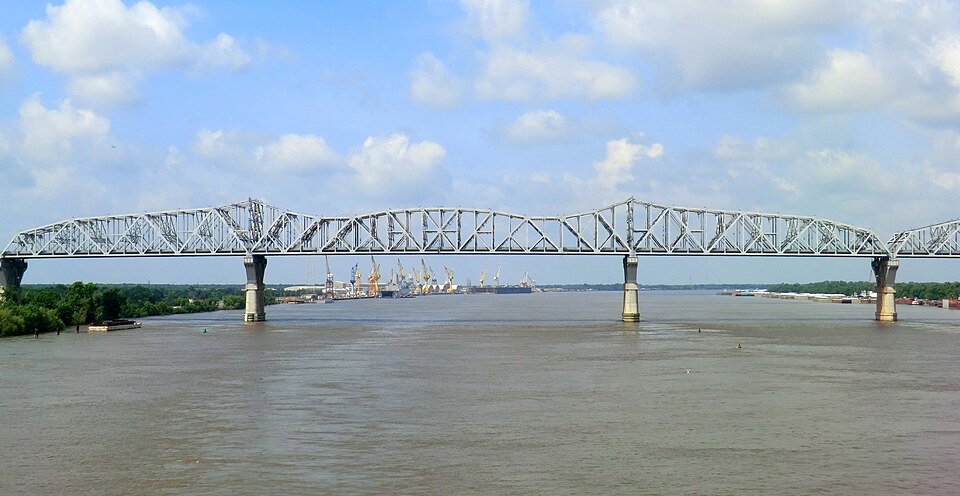
Perhaps less well known is the name behind the Danziger Bridge in New Orleans. Spanning the Industrial Canal, the crossing is named for Alfred Danziger, a New Orleans attorney and civic figure who served as personal counsel to Governor Huey Long and later as executive counsel to Mayor Robert Maestri.
Identifying the figures behind Louisiana's bridges and highways raises a broader question: How many of the state's roadways bear names of historical significance? Gitlin noted that, as of 2018, the state legislature had passed more than 150 acts dedicating over 200 roads to honor individuals or groups across Louisiana.
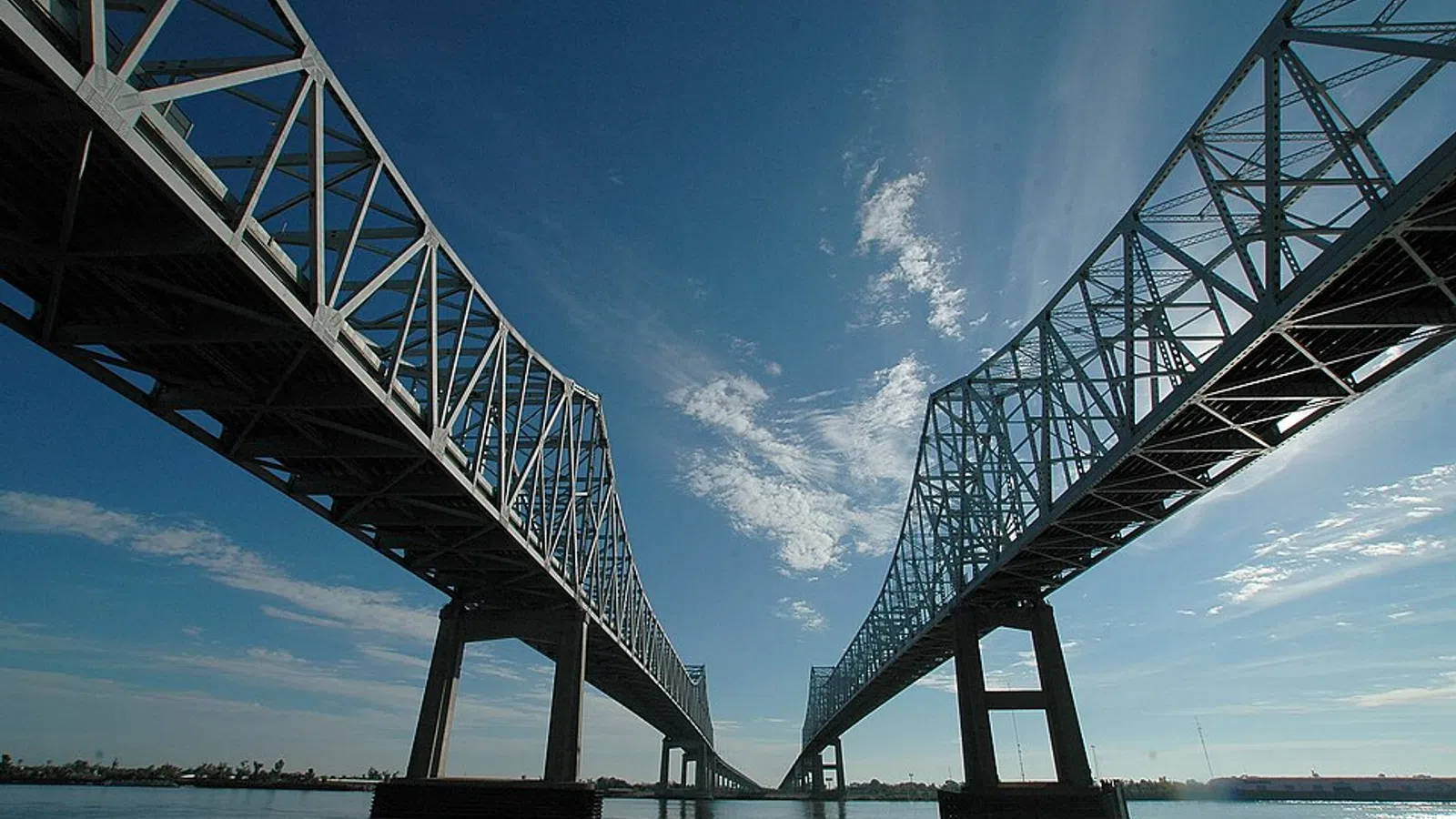
These commemorations are especially visible in New Orleans, where major bridges such as the Crescent City Connection and the Claiborne Avenue Bridge, also called the Judge William Seeber Bridge, are familiar fixtures. Still, the stories behind their names remain largely unrecognized, even among lifelong New Orleanians. Like many New Orleans landmarks, these bridges bear names with unexpected origins. So where did the name "Crescent City Connection" come from?
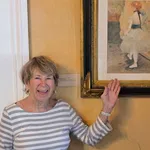
"My name is Jennifer Grodsky Cataloglu, and I named the Crescent City Connection when I was 10 years old—a fourth grade student at St. Clement of Rome in Metairie," said Cataloglu, who now lives in Annapolis, MD, where she works as a dental hygienist and raises two children.
Cataloglu's entry of "Crescent City Connection" won a public naming contest for the Greater New Orleans bridge, leading the Louisiana State Legislature to officially adopt the name for the twin bridges in 1989. "Senator Fritz Windhorst decided that this contest should only be entered by grammar school children in the hopes they would learn how a bill would become a law," Cataloglu said. "Thousands of students in seven parishes worked on this homework assignment, and 621 classrooms entered this contest."
Inspired by training with her family for the annual Crescent City Classic, Cataloglu proposed the name "Crescent City Connection." She explained, "I knew the city was crescent shaped, and the bridge connected my Eastbank family to my Westbank family. To me, the twin span was connecting the whole city."
Her entry was ultimately selected as the official name of the twin bridges, and the experience didn't end there. Cataloglu and her entire fourth grade class traveled to the State Capitol, where they learned firsthand how a bill becomes law.
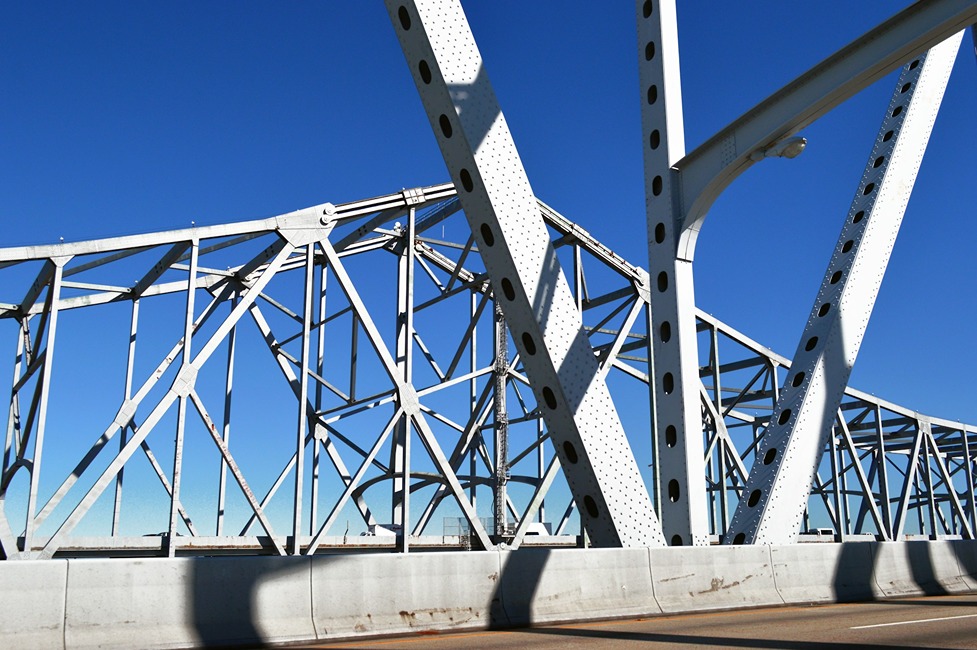
The Crescent City Connection isn't the only bridge with a story to tell. Known to many locals simply as the vertical lift bridge spanning the Industrial Canal, the Claiborne Avenue Bridge was officially named in honor of Judge William Seeber, who served on the First City Court and played an active role in the city's judicial affairs throughout the 1940s.
That tradition of naming infrastructure continues today. The Louisiana House of Representatives recently passed a bill to name a planned Mississippi River bridge in the Baton Rouge area the "President Donald J. Trump Expressway," after Donald J. Trump. The bridge would span between the I-10 and LA 70 crossings, linking LA 1 and LA 30, and is projected for completion around 2033. The bill, however, was not picked up in the most recent Louisiana Regular Legislative session.
Drive through the city of New Orleans and you'll see quiet memorials honoring local heroes. Called "memorial guide signs," they commemorate individuals whose decades of service left a lasting mark on their communities. "A memorial guide sign is a brown sign with white legend placed at appropriate locations, generally one in each direction," Gitlin confirmed. "In some instances, it can be a green sign."
Gitlin noted that the "Avery C. Alexander Expressway" sign, for example, can be spotted along the I-10 Expressway at the 17th Street Canal line within Orleans Parish near Lakelawn Cemeteries. This green memorial sign honors Reverend Avery Alexander, a prominent Louisiana civil rights leader remembered for his October 31, 1963, arrest, when he was dragged by his heels up the steps of City Hall while advocating for desegregation.
Another green memorial guide sign that stands out along the interstate to and from Louis Armstrong New Orleans International Airport bears the name Henry A. Smith Jr. Memorial Road. This flyover ramp honors St. Charles Parish resident Henry A. Smith Jr., a civic and business leader who devoted 26 years of service to the airport.
Other eye-catching, brown memorial guide signs along Louisiana Highways 39 and 46 in St. Bernard Parish honor Lynn B. Dean, a longtime public servant and marine engineer, and Henry Rodriguez Jr., a decades-long elected official who helped guide the parish through Hurricane Katrina and other crises.
The list goes on. The next time you're driving the city's roads, notice the signs along the highways and bridges named for Louisiana's public figures. These memorial signs and officially-named spans do more than mark the way, they quietly honor local heroes and keep their stories alive.