Reflecting Together
Rosh Hashanah and Yom Kippur are two of the most significant observances in the Jewish faith. Rosh Hashanah, the start of the Jewish New Year (September 22 to 24) offers a chance to look toward the year ahead, while Yom Kippur, the Day of Atonement (nightfall October 1 through dusk October 2), is a time to reflect on one's actions over the past year.
Many Jewish New Orleanians will spend this Yom Kippur looking back even further, just as several did 20 years ago when gathering for the first time since Hurricane Katrina to observe the High Holy Day. The storm remains the deadliest humanitarian disaster in American history, causing upwards of $120 billion in damage, taking more than 1,800 lives, and displacing nearly two million Louisiana residents, as recounted by the National Institute of Health.
New Orleans' Jewish community was no exception. "The impact of Hurricane Katrina was huge," said Sherri Tarr, chief operating officer for the Jewish Federation of Greater New Orleans. "Practically the entire community of 9,600 Jews evacuated." Of this number, the Federation estimates that roughly half resettled during the years immediately following the storm. Those that returned confronted a grueling road to recovery.
"Evacuees faced endless challenges," recalled Jayne Guberman, Director of Oral History at the Jewish Women's Archive (JWA). "Many would return to homes and businesses that were severely damaged or destroyed, suffered financial insecurity with lack of access to their bank accounts, all while being unable to find and connect with family and friends."
NOLA's Jewish Community During Katrina
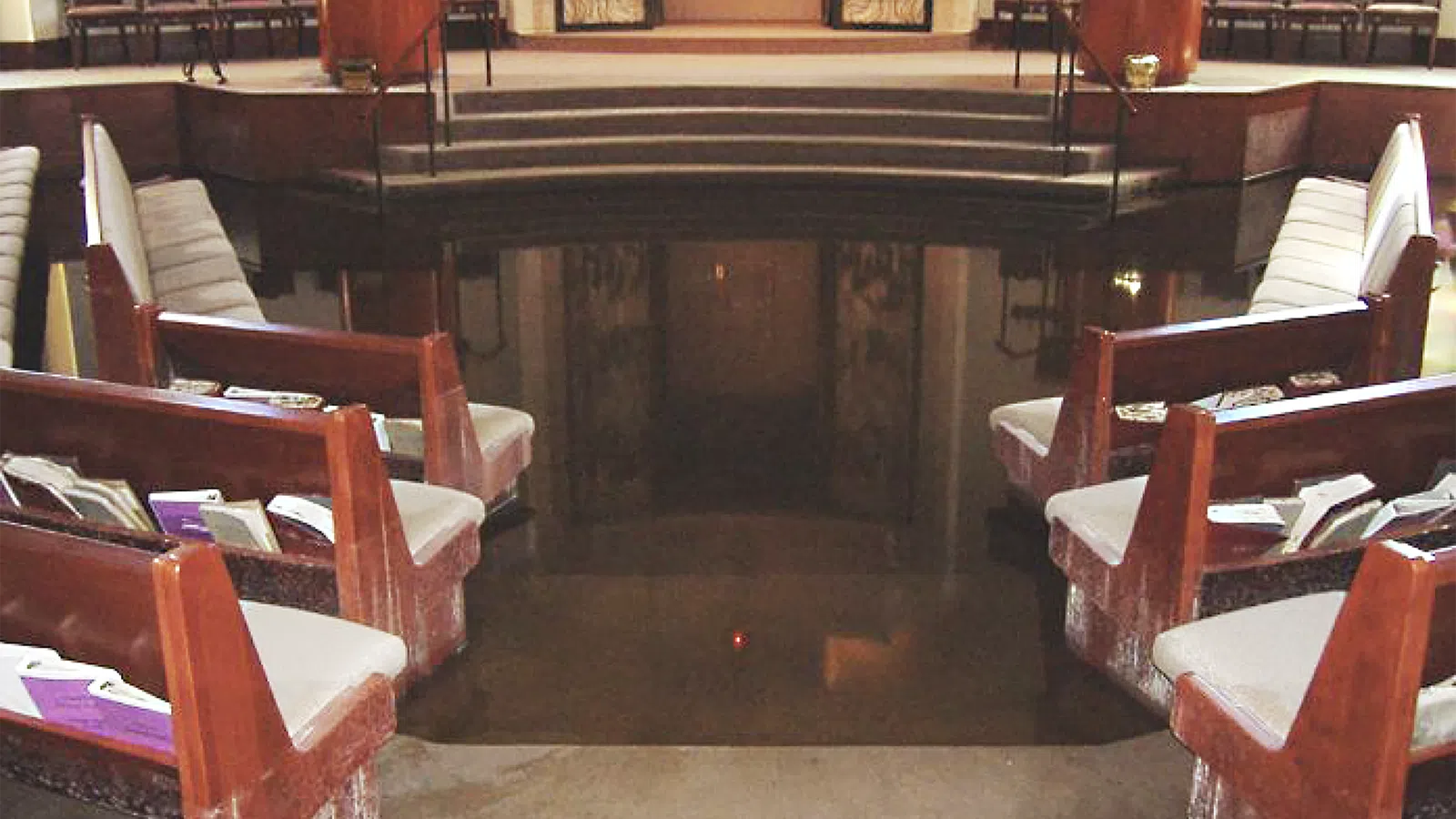
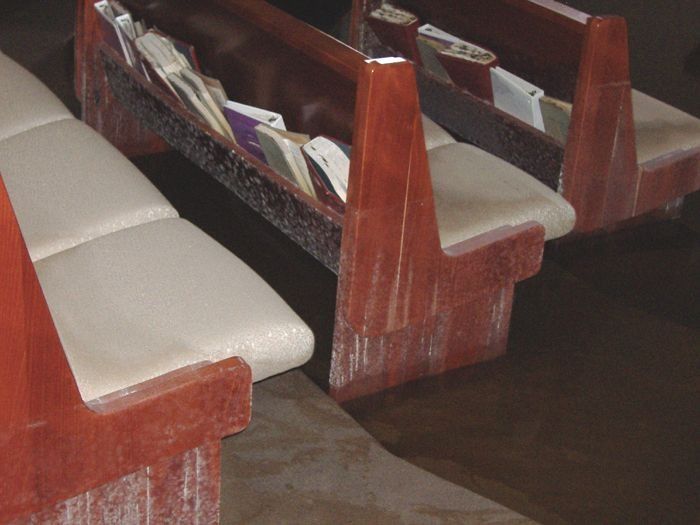
In 2006, Guberman led a JWA initiative curating Katrina's Jewish Voices, an online archive of images and oral accounts from impacted Jewish residents. Among the narrators are several Holocaust survivors drawing parallels between circumstances following the storm and their own experiences post-World War II in Europe. "It was extremely traumatizing for us, as it was for all New Orleanians," Tarr said. "Almost all of our synagogues flooded."
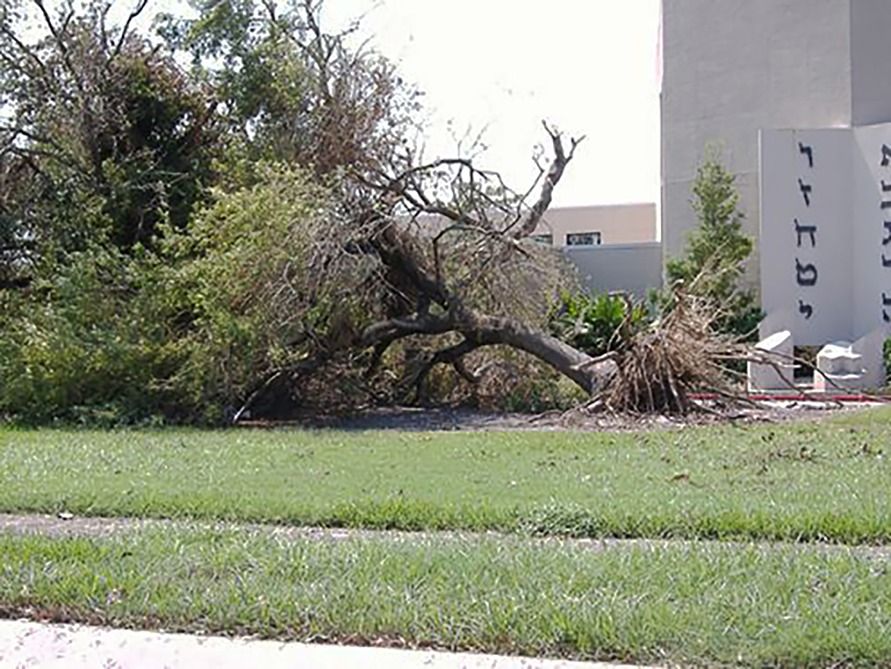
Among the synagogues destroyed by the storm was the Modern Orthodox Congregation Beth Israel, then located in Lakeview. Beth Israel is the city's oldest Orthodox congregation and was once the largest in the Southern United States.
"The first step [to returning] begins on Yom Kippur," said Myron Goldberg, a former president of Beth Israel. "For Rosh Hashanah, many people went wherever they could, so we felt we needed our own service. We were able to secure a space at a meeting room at a hotel in Metairie. Yeshiva University in New York was able to send a rabbi, as well as some prayer books, for the service."
Even with their community in widespread exile amidst large-scale communication breakdowns, word got around and a service was held to a full house. "It was a very hard, hard evening," Goldberg recalled. "Every aisle of chairs had a box of Kleenex at the end. Everyone experienced loses of some type, and they were still getting together to observe this very special day."
Beth Israel's synagogue was beyond repair; however, Congregation Gates of Prayer, a Reform synagogue in Metairie, offered its members space to host a weekly service. Through this act of kindness, the seeds of change and regrowth began to blossom. "I don't think a partnership like this had existed in any fashion before," Bradley Bain, former president and gabbai of Beth Israel, exclaimed. "Things were just sort of insular in that Reform members would adhere to their practices, and Orthodox members would think Orthodoxy is the way things should be. This truly ushered in an era of cooperation amongst all synagogues in New Orleans. It astounds me, 20 years later, that there really isn't a precedent, in this country or anywhere in the world, for this type of cooperation."
The differences between denominations faded as local Jewish institutions began to lean on each other during the long period of rebuilding. Meanwhile, the Jewish Federation of Greater New Orleans, working with the Jewish Federation of North America, raised $28 million towards recovery efforts. $16.5 million went directly to the city of New Orleans, with the remainder being distributed to cities around the country where Jewish New Orleanians were evacuated.
This relief allowed Beth Israel to rebuild next to Gates of Prayer. "It turned out to be an amazing opportunity," Bain recalled. "Real estate is much more affordable [in Metairie], allowing young families to purchase homes near the synagogue that they couldn't before. The building also has a much bigger space to accommodate them." To this day, the neighboring synagogues each proudly display a plaque commemorating their bond, fatefully forged 20-years ago.
Recovery
Post recovery, Federation funds were allotted to a Newcomers Program to encourage families to move to New Orleans. Participants were provided monetary grants, complimentary synagogue and JCC memberships, and social and professional networking activities. "Prior to Katrina, we were seeing a population decline," Tarr recalled. "The summer after Katrina, we were 6,000—today, there are roughly 13,000 Jews in New Orleans."
Bain attributes much of this growth to young families that came here to be a part of the rebuilding. "So many of those 20-somethings who came down to make a difference stayed here in New Orleans. Today, these are the people stretching their legs in terms of leadership, serving on boards and starting families. The severing of intergenerational ties because of Katrina has changed the makeup of our leadership immensely, particularly with the involvement of women in positions of leadership, from executive committees to past presidents."
As New Orleans' Jewish community reminisces on how far their home has come these past 20 years, and even considers the 20 to come, the common thread underscoring all progress is community. "No matter what our individual situations are, none of us lives in a vacuum," Harold Pesses, a former president of Beth Israel, said. "We all have to be one people—whether you drive a car on Shabbat or say slightly different text, all of those things are inconsequential in the grand scheme of things. If we can focus on the things that make us similar, we can always get along. You can always build from that."
You can learn more about the Jewish experience during Hurricane Katrina by visiting Katrina's Jewish Voices at jwa.org/communitystories/katrina.