
Joy as Resistance
Much of the beloved cultural aspects of New Orleans is rooted in Black culture, but this sense of celebration, while fun loving and joyful, has rarely been separate from survival.
For Black communities in the city, joy has often been an act of resistance. In many circumstances, celebrations stemmed from exclusion and necessity yet sustained by deep communal bonds. Across centuries marked by enslavement, segregation, and systemic inequality, Black New Orleanians have continually created their own spaces to gather, to mourn, to laugh, and to live fully. Whether in the form of parades, social clubs, or alternative economies these traditions tell the story of a people full of resilience.
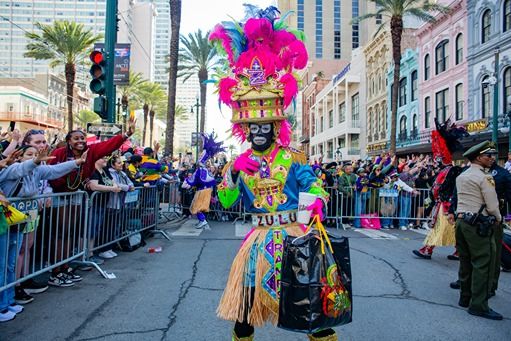
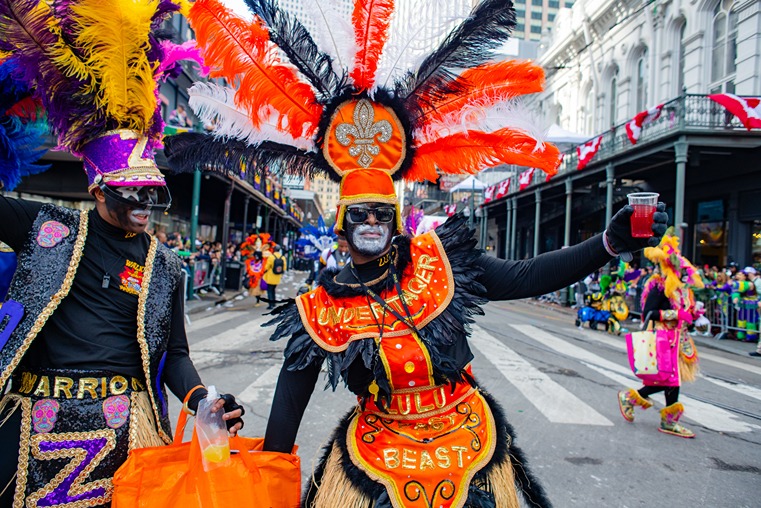
Take Mardi Gras, for example. Today, it's globally recognized as a grand, inclusive spectacle, but that wasn't always the case. For much of its history, the official krewes that organized parades and balls were segregated, excluding Black participants entirely. Rather than accept that exclusion, Black New Orleanians built their own Mardi Gras traditions from the ground up. They didn't just replicate what existed—they reimagined it.
One of the most iconic examples is the Zulu Social Aid & Pleasure Club, founded in 1909. Its origins were humble, even playful. A group of Black laborers, inspired by a comedic skit about African royalty, decided to create their own Mardi Gras krewe. What began as satire evolved into one of the most beloved and enduring institutions in the city. Zulu's parade, with its hand-decorated floats and the famous tradition of throwing painted coconuts, became a powerful statement—if access is denied, we will create something just as meaningful.
But Mardi Gras was only one expression of this spirit. Long before Zulu took to the streets, Black New Orleanians had already been organizing themselves into benevolent societies, also known as mutual aid organizations, that provided critical support in times of need. These groups, which later became known for their "second lines," were born out of necessity in a society that denied Black people access to basic services such as insurance and healthcare. Benevolent societies pooled resources to help members pay for funerals, medical expenses, and other emergencies. Funerals, in particular, became moments of profound communal expression. The "first line" would consist of the family and the brass band, leading the procession in somber tones.
Once the burial was complete, the "second line," friends, neighbors, and community members, would erupt into music and dance. It was a transformation of grief into a celebration of that person's life.
These social aid and pleasure clubs continue to parade through the streets of New Orleans today. They are living testaments to a history of collective care and resilience.
Even in places where vice and exploitation defined the landscape, Black New Orleanians carved out spaces of autonomy. Storyville, the city's legalized red-light district established in 1897, was officially segregated, with limited opportunities for Black workers and patrons. In response, Black entrepreneurs and entertainers created parallel spaces, which was informally known as "Black Storyville." There, Black musicians, sex workers, and business owners could operate and thrive on their own terms.
These spaces were crucial incubators for early jazz, providing opportunities for Black musicians to perform and innovate their craft. While the official Storyville catered largely to white clientele, these alternative venues nurtured a cultural revolution that would eventually transform music worldwide. Once again, exclusion gave rise to creativity.
The roots of this resilience stretch even further back into the era of slavery itself. Louisiana's unique colonial history, shaped by French and Spanish rule before becoming part of the United States, created a somewhat different social structure compared to other parts of the South. While still deeply oppressive, it allowed for certain pathways to freedom that Black people navigated with remarkable determination.
Some enslaved individuals were able to purchase their freedom through a system known as coartación, particularly during the Spanish period. They might save money from extra labor or skilled work, gradually paying their enslavers for their own liberation. Others gained freedom through military service, especially during conflicts such as the War of 1812, when free Black men and enslaved individuals fought in defense of New Orleans.
There were also instances of self-emancipation through escape, of course, as well as manumission granted by enslavers. Free people of color, a significant and distinct class in New Orleans, often worked to free family members, pooling resources in acts of quiet defiance against the system.
What ties all of these histories together is a consistent pattern: When formal systems excluded or oppressed them, Black New Orleanians responded not with resignation but with creation. They built institutions where none existed. They transformed hardship into culture. They made celebration a form of resistance.
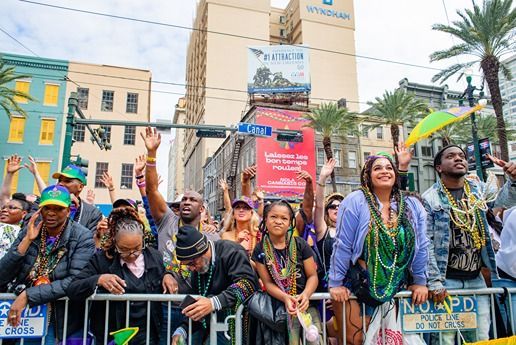
That legacy continues today. Every Mardi Gras season, when Zulu rolls through the streets, it carries with it more than a century of history. Every second line parade echoes the footsteps of benevolent societies that refused to let their members be forgotten or neglected. Every note of jazz that drifts through the French Quarter and beyond is rooted in spaces that once existed outside the boundaries of acceptance.
In New Orleans, resilience is not just about surviving. Here, we live out loud and unapologetically. This city insists on joy even when the world says you don't deserve it. And perhaps most importantly, it's about doing so together, as a community.