NOLA Cemeteries
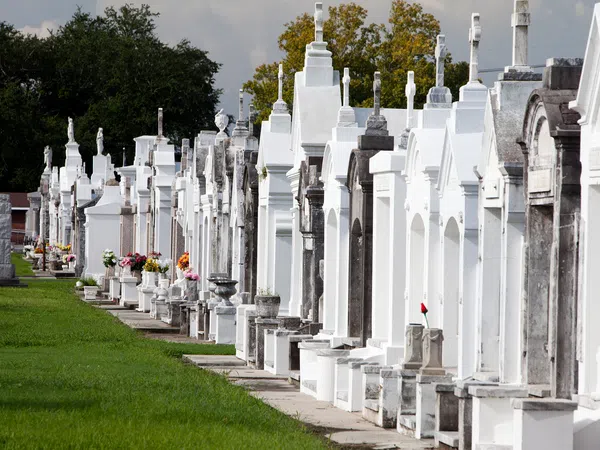
The final resting spots of fascinating people and striking examples of architectural ornamentation can be found even in less prominent local locales.
The French-Quarter-adjacent St. Louis #1 and Uptown's Lafayette cemeteries may be the darlings of thanatophiles, but dedicated explorers of New Orleans' Cities of the Dead should not make those the only stops on their tours.
Greenwood Cemetery & Cypress Grove
Set here, John Kennedy Toole's posthumously published novel A Confederacy of Dunces is honored with a statue of its hero, Ignatius J. Reilly, on the 800 block of Canal Street. The streetcar passes right by it, but it's at the far end of Canal, at the streetcar's terminus, that you'll find the final resting place of the author himself.
According to William Allerton, long-time public relations consultant for Greenwood Cemetery, "Many of Toole's fans are as eccentric as Toole's Ignatius J. Reilly." He added that the fans leave a variety of objects on the grave, including "copies of Confederacy of Dunces, jelly donuts, cups of café au lait from Morning Call, and Mardi Gras beads, to name a few."
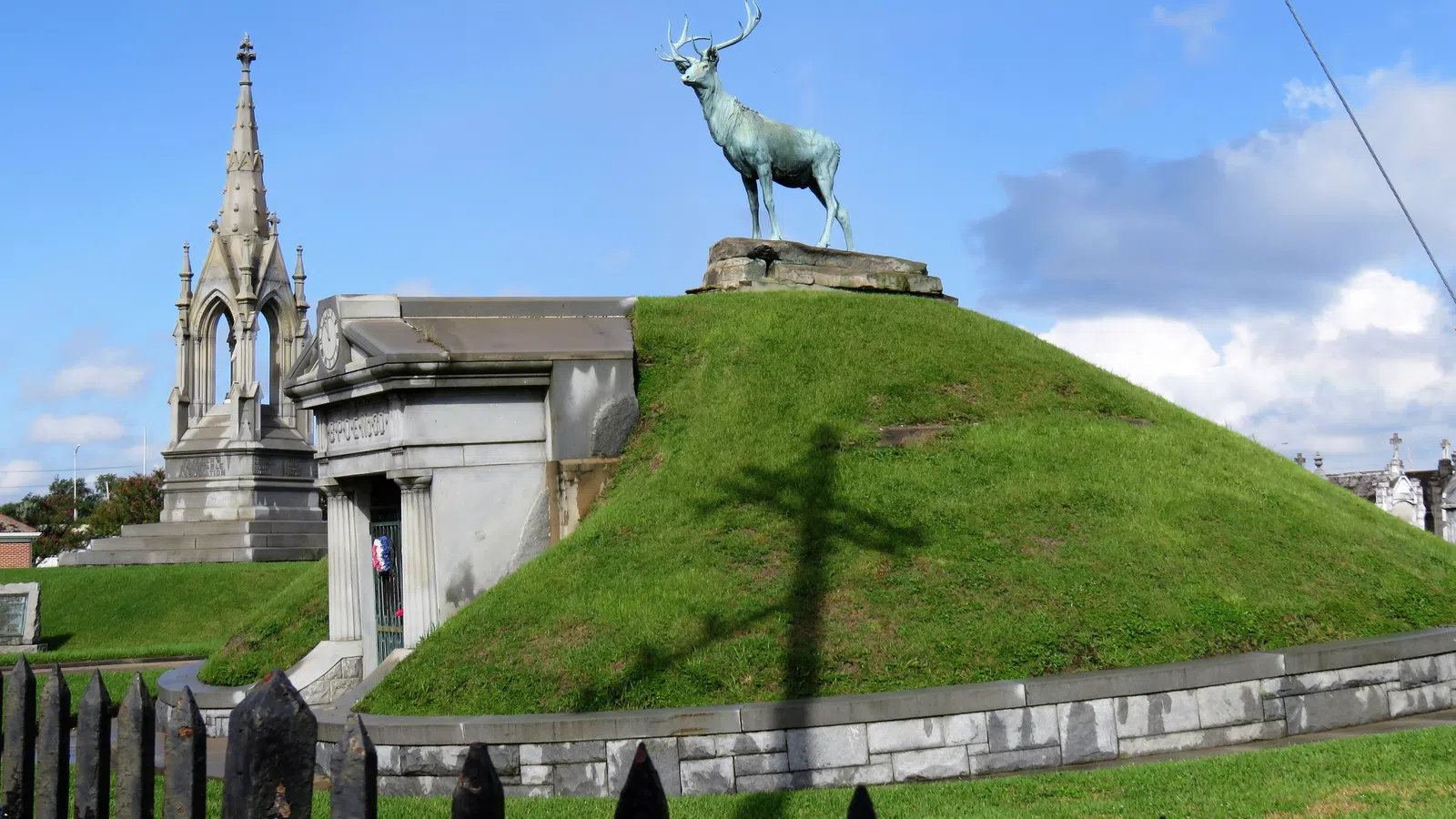
Greenwood, where Toole is interred, sits in the middle of the hub of graveyards known as the Canal Street cemeteries. It was founded by the Fireman's Charitable and Benevolent Association (FCBA) in 1852, and one of its most prominent features is the 52-foot high neo-Gothic Firemen's monument, created by sculptor Alexander Doyle and erected in 1887. The firefighter's monument is far from the only memorable memorial at the site, however. Perhaps the most eye-catching of them is the statue of a majestic elk that stands atop the tumular tomb of Lodge No. 30 of the Benevolent and Protective Order of Elks, visible from the streetcar as it approaches the cemetery. A monument to Confederate soldiers may be of interest to students of Southern history who can no longer find examples of such on public property.
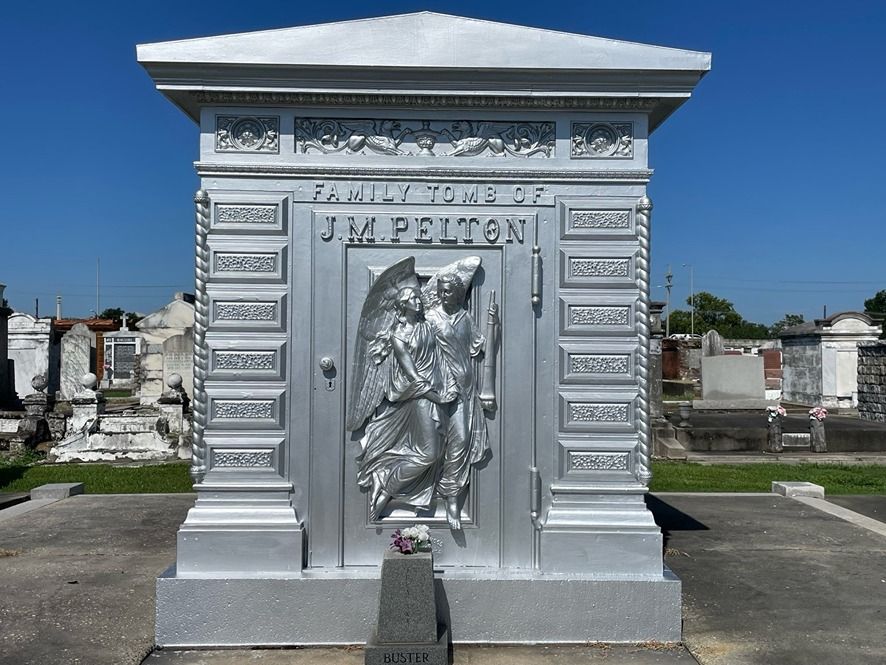
As de facto historian for Greenwood, and its predecessor Cypress Grove across the street, Allerton has performed extensive research while helping to create the FCBA's website and revise a booklet detailing the cemetery's history that was created in the 1960s. "Much of this research requires walking the aisles of each cemetery, taking photos of interesting graves," he said. Exploring the graves led to "the discoveries of a Louisiana governor and congressman, seven mayors, and notables from all walks of life—a founder of the Medical College of Louisiana, now Tulane University Medical School—actors, authors, musicians, and professional baseball players."
The last group includes the son of one of the largest oyster dealers in New Orleans—Pelicans' pitcher John Joseph Martina. Known as "Oyster Joe," he went to his final resting place in 1962 and was inducted into the New Orleans Professional Hall of Fame in 2008. There's also major-leaguer Jack Kramer, who helped the St. Louis Browns defeat the New York Yankees and win the pennant in 1944.
As for entertainers, Marion Zinser may not have been a household name, but the native daughter of New Orleans was featured in some notable films.
Allerton pointed to tombs worth viewing for the beauty of their construction, historical significance aside. "The Maunsel White Tomb is an architectural gem, designed in the Greek Revival style by the internationally acclaimed architect J.N.B. de Pouilly and constructed by Paul Hippolyte Monsseaux," he noted.
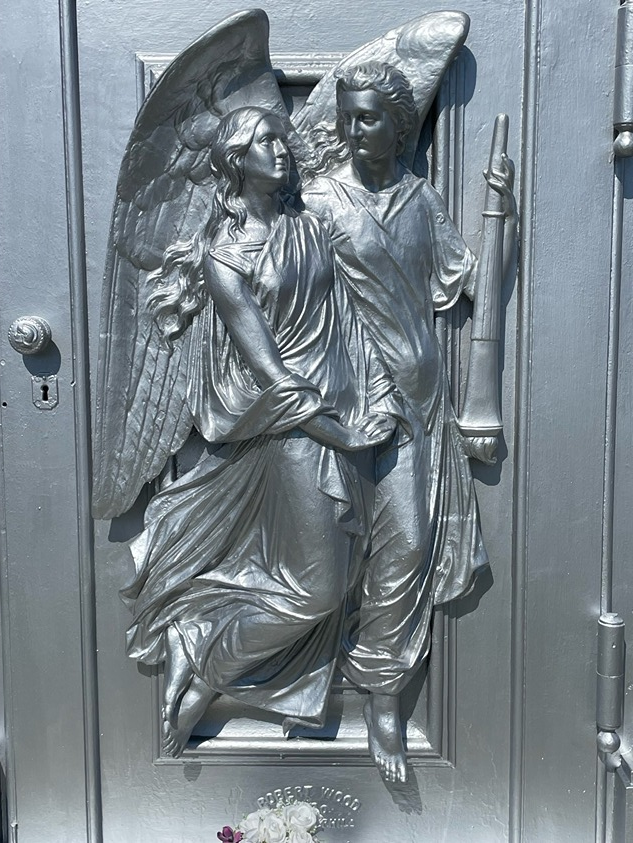
He cited cast iron tombs, such as the Pelton Family's, as favorites. "The detail of the symbolism is so touching," he said of the decorative relief. "The angel is escorting the deceased to the afterlife. He's holding an upside-down torch, which, in a funerary context, symbolizes a life extinguished."
Lake Lawn Metairie Cemetery
Just across the highway, Lake Lawn Metairie Cemetery has had its share of Confederate dead, too, including Jefferson Davis and General Albert Sidney Story, whose statue stands atop a burial mound dedicated to the Louisiana Division of the Army of Tennessee. Both of them were relocated, but General Pierre Gustave Toutant-Beauregard's remains remain. He fired on Fort Sumter and began the Civil War.
Storyville madam Josie Arlington is reportedly still there, but she would be difficult to find. She's been in an undisclosed location since being evicted from her red granite tomb due to protests from moralists of her day. There are more easily located luminaries interred there, including novelist Anne Rice, ice-cream-parlor impresario Angelo Brocato, trumpeter Al Hirt, singer Louis Prima, crusading district attorney Jim Garrison, restauranteur Owen Brennan, and industrialist Andrew Higgins. The location boasts beautiful sculptures, such as the Weeping Angel statue, a forerunner of memorial statuary of the like and the popular Doctor Who antagonists.
Dispersed of Judah
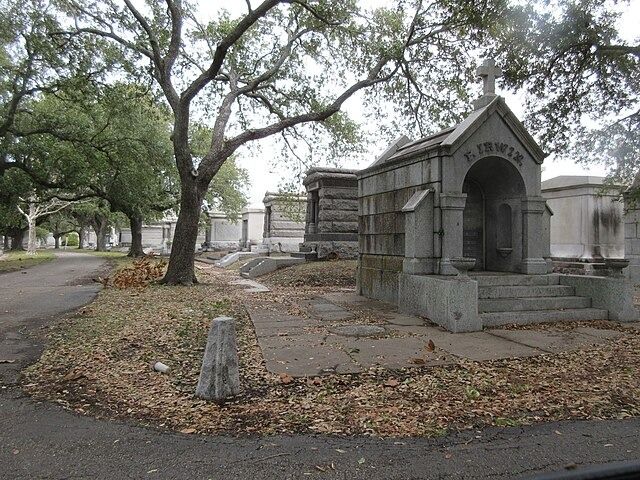
Dispersed of Judah, the Jewish cemetery next to Cypress Grove, has only coping tombs, the name taken from the architectural term for the top course of masonry in a wall. Raised rectangles of earth surrounded by short walls, they facilitate in-ground burials.
Finding all the graves worth seeing in New Orleans requires a little digging. Nola Tour Guy owner David Hedges touts the memorials to culturally significant figures in St. Louis #3, tucked away in Bayou St. John, including architect James Gallier, who was lost at sea; Storyville photographer E.J. Bellocq; and sculptor Florville Foy. "He made tomb markers and enclosures," Hedges said of Foy. "He worked in stone for his entire life, and it's fascinating to me what he picked for himself, for his own tomb."
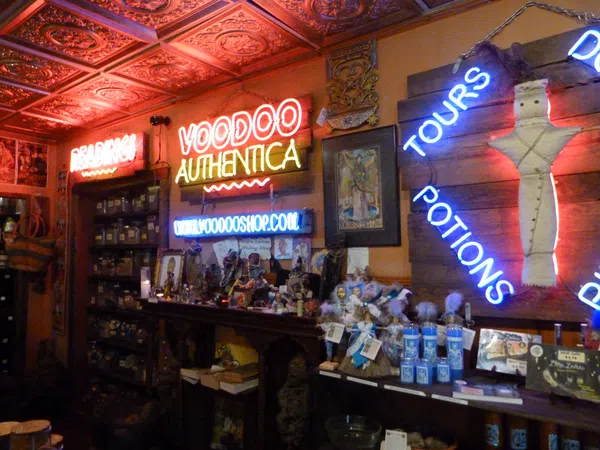
Where Y'at, Voodoo Queen?
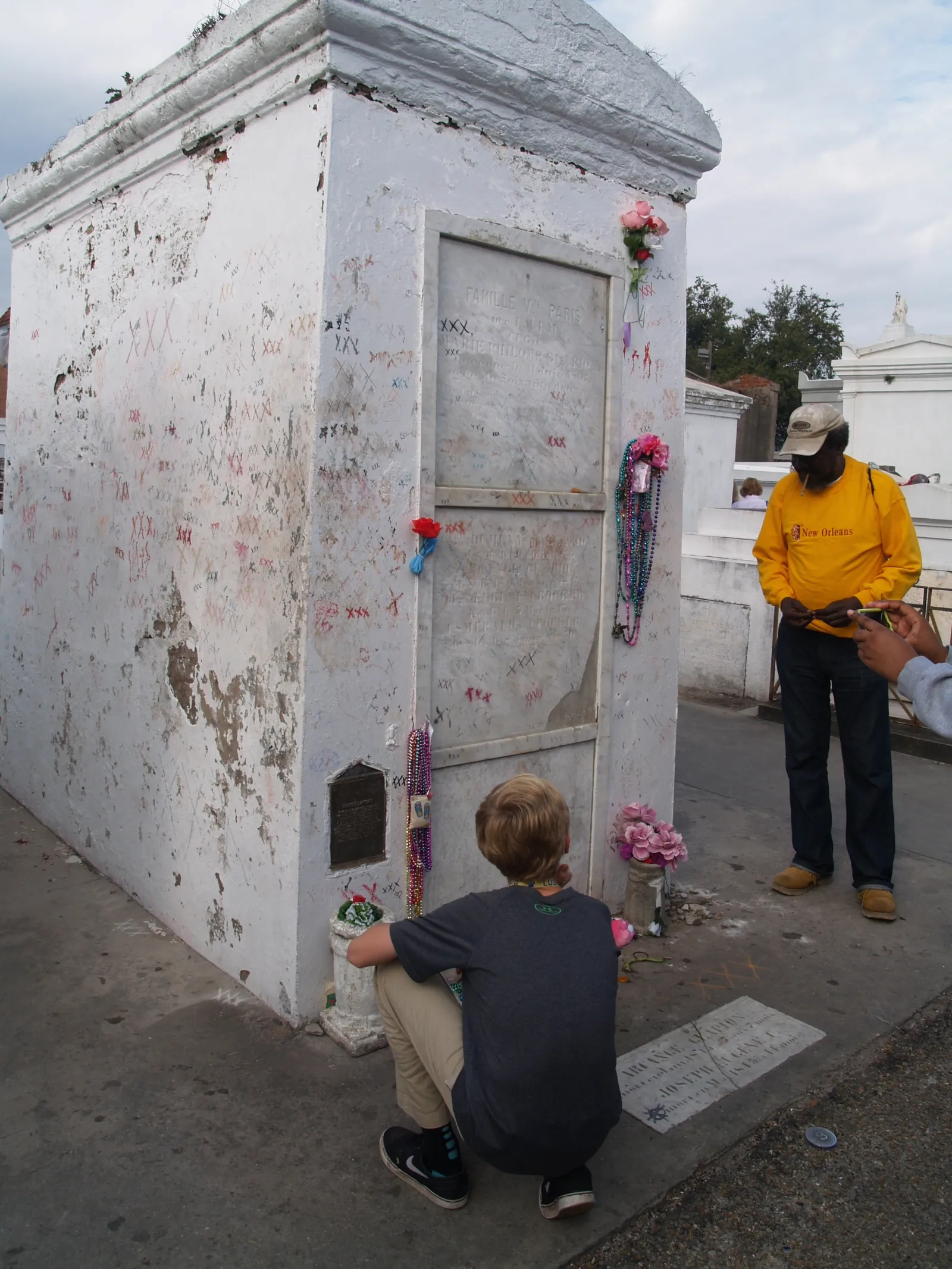
Even the famous grave of the "witch queen of New Orleans," Marie Laveau isn't necessarily in the first place you'd look. "The Alaux family tomb was once referred to as the 'Faux Laveau' tomb because it was falsely speculated that Marie Laveau was buried in this tomb," related Juliet Hotard, restoration and volunteer coordinator for Save Our Cemeteries. "Misguided visitors would mark three Xs in the hopes of attaining three wishes from the Voodoo priestess."
"Look beyond the century-plus years of hurricane damage and devastation of graves that have long survived the families of the deceased loved ones, and focus on the beauty of tomb architecture, the touching symbolism of tomb decorations," Allerton urged potential graveyard-visitors.