The Faerie Playhouse
The ancient traditional Celtic New Year celebration has passed us by, marking the end of summer and the harvest and girding communities for the hard winter ahead.
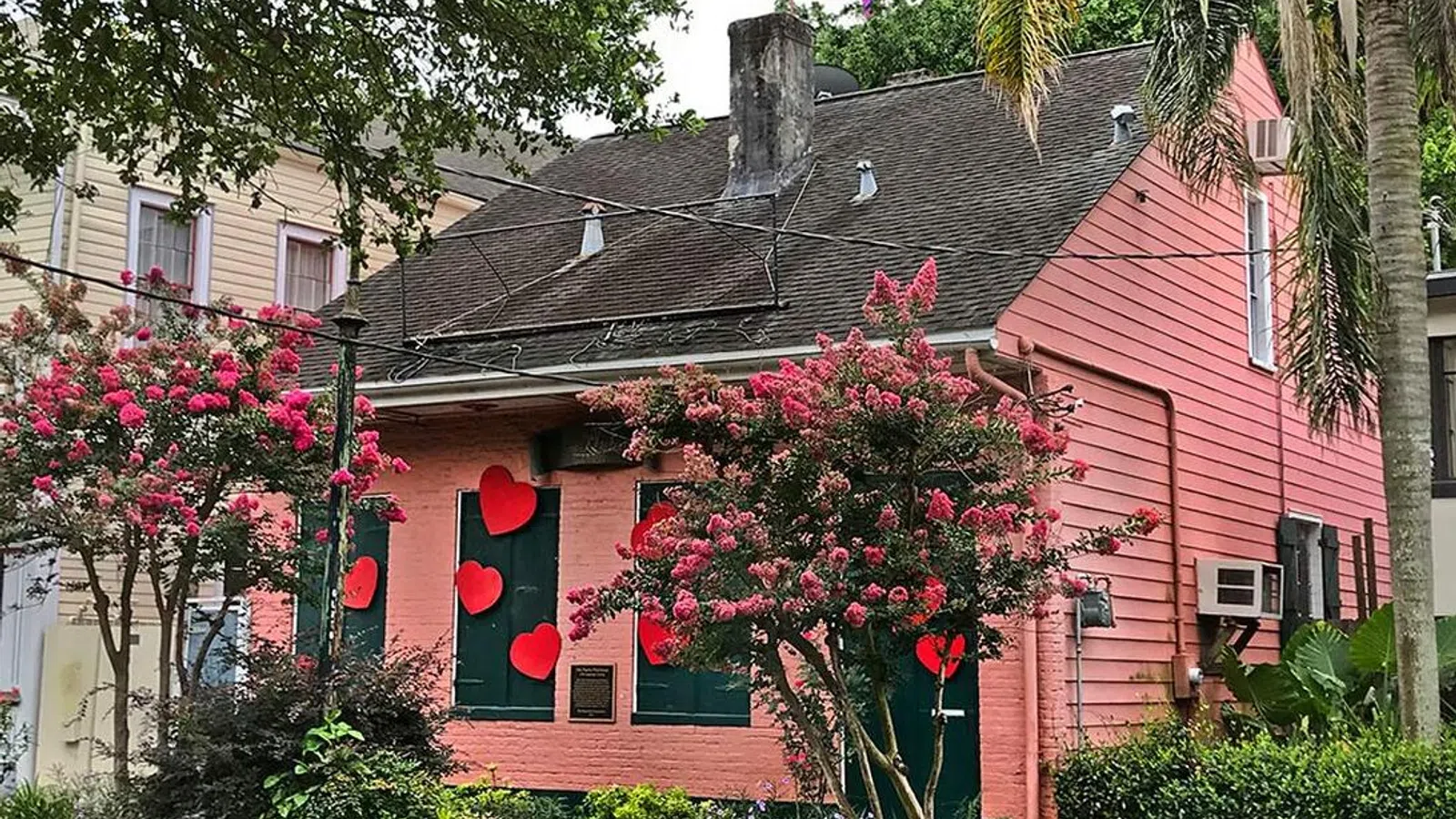
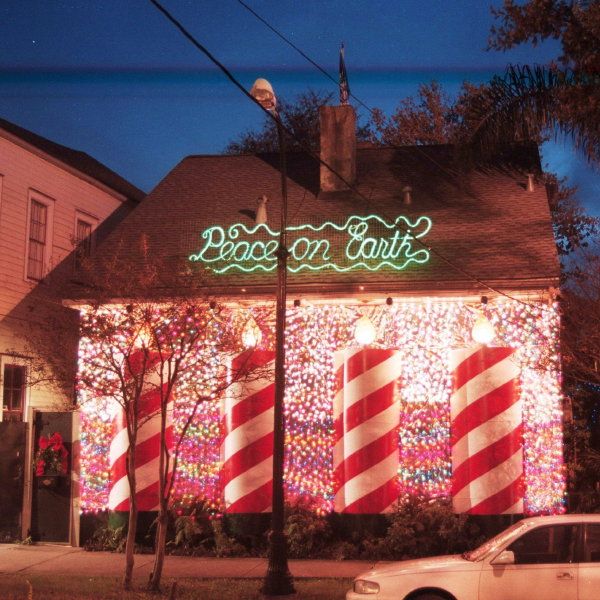
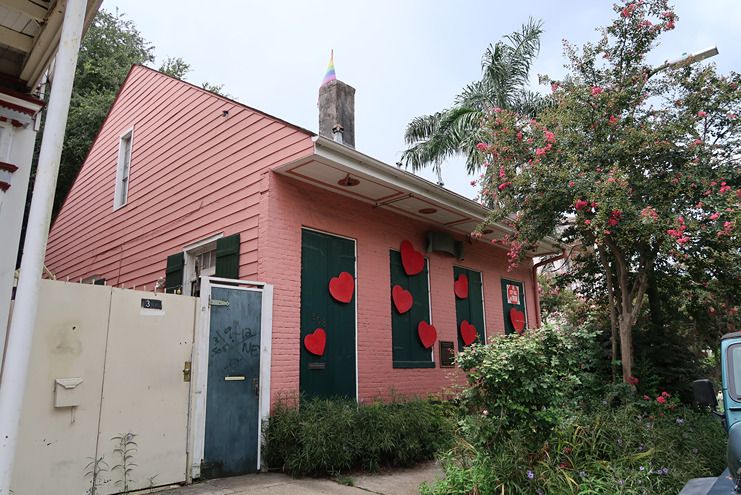
Although Samhain is no longer thought to occasion visits from fairies roaming the world of men, they have long had a year-round home in New Orleans—a pink, heart-covered 1844 Creole cottage on Esplanade Avenue, long known as the Faerie Playhouse.
The Building on Esplanade
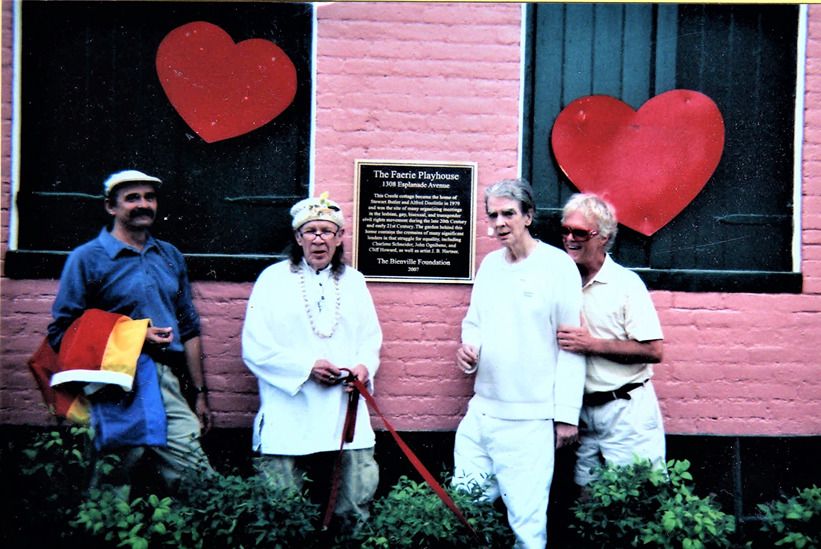
The building was the home of activist Stewart P. Butler and his lifemate Alfred Doolittle, beginning in 1979. Its name apparently was inspired by a play written by Doolittle called Peter Puck, which was performed for the first (and last) time in the building's backyard in the summer of 1992.
The building has many of the features associated with a Creole cottage, a style of architecture popular in New Orleans in the late 1700s and early 1800s. It is one and a half stories high, has a pitched roof with the ridgeline parallel to the street, and has four openings on the façade with shutters. The main floor is two rooms wide and two rooms deep with a pair of smaller storage areas referred to as cabinets located at the rear of the structure. There are no interior hallways. It is not any quality of the physical structure of the place that makes it particularly memorable, however, but rather that of the lives that have been lived there.
The History of the Faerie Playhouse
For over 40 years, Butler was involved with many groups, including the Louisiana Lesbian and Gay Political Action Caucus, Parents and Friends of Lesbians and Gays, the New Orleans LGBT Community Center, the Gertrude Stein Society, and the LGBT+ Archives Project of Louisiana. He also received an award from the ACLU of Louisiana for his work. Many strategy meetings, as well as social celebrations, took place at the home of Doolittle and Butler—the house acting more or less as a community center for many years.
A memorial garden in the back yard contains the cremated remains of Doolittle, Stewart, and many of their friends and fellow activists. Among them are: artist John J. Ognibene; retired US Army captain John H. Foster; computer technician Carlos Clifton Howard Jr.; companions Jack "Ruby" Gentry and Paul Joseph "Pogo" Orfila; Blanchard "Skip" Ward, co-founder of the Unitarian/Universalist Church's Gay Caucus and publisher of Le Beau Monde; painter Elwood Richardson; and homebuilder Rich Magill, a veteran of the United States Air Force. All of them had been trailblazers in fighting for the rights of their community.
Charlene Schneider, the owner and operator of the iconic lesbian bar on Elysian Fields that bore her name for more than two decades, joined them after succumbing to cancer in 2006. In its heyday, her place had hosted young Ellen DeGeneres and Melissa Etheridge.
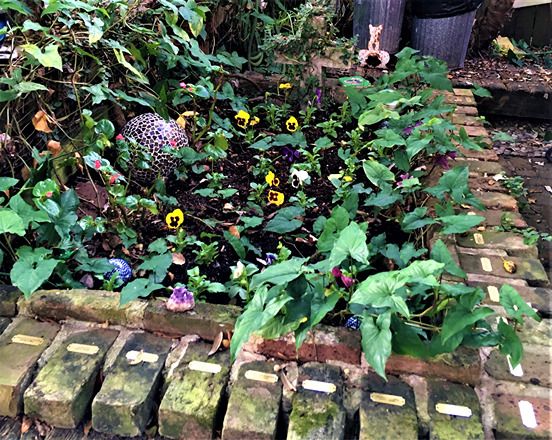
In April 2024, a second line and celebration of life for Otis Fennell, former owner of the queer bookstore Frenchmen Art & Books—one of the first such businesses in the South—was held at the Faerie Playhouse.
After his unsolved 2002 murder, the ashes of artist John Burton Harter were interred in the memorial garden. You can see Harter's portrait of Butler as Dame Edna on a virtual tour of the building created by the National Park Service. The tour is the first of a planned series of sites related to LGBTQ history and can be found on the Faerie Playhouse's website. A private exhibition of Harter's paintings, on loan from the Faerie Playhouse, was put on prior to the annual meeting of the LGBT+ Archives Project of Louisiana in June 2025.
Butler was involved in activism and community-building until his very last days, staying active in PFLAG and as a part of St. Anna's congregation. Having survived Doolittle, he left the Faerie Playhouse to St. Anna's Episcopal Church in his will, with the aim to support St. Anna's ministry to LGBTQ+ communities.
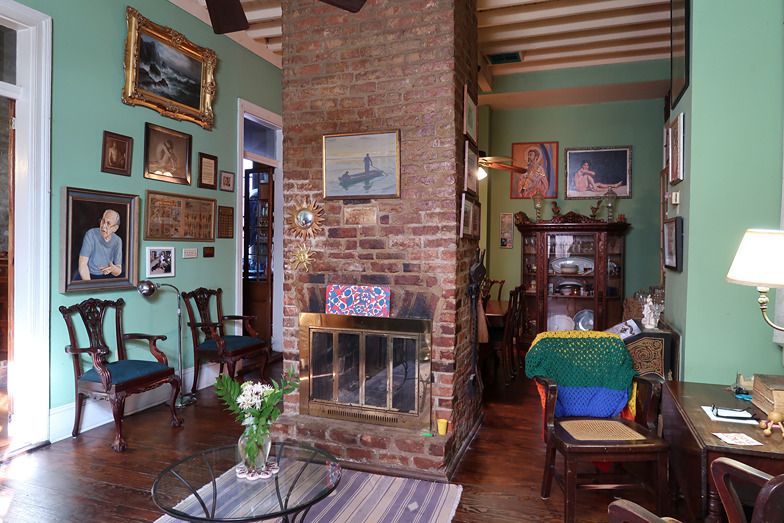
A nonprofit organization called the Faerie Playhouse was formed by friends and admirers of Butler and Doolittle in 2024 with a mission to preserve the house and commemorate the work that was done by the couple and their community. The significance of the house, as well as its occupants, to LGBTQ+ history in New Orleans has the potential to inspire and educate younger generations who are working for civil and human rights.
Though the organization's website states that efforts are underway to gain the Faerie Playhouse official designation as a local historic landmark through the New Orleans Historic District Landmark Commission, as yet, such standing exists unfortunately only in the "Land of Make-Believe." A communication from the Faerie Playhouse board confirmed that no nomination forms for landmark designation have been submitted at the present time. Possibly, St. Anna's ownership of the property presents a complication for that effort.
The house still hosts regular monthly board meetings for the LGBT+ Archives Project of Louisiana and the Faerie Playhouse organization. The couple's circle of close friends continue to have occasional social gatherings there, as well. In February 2025, the organization hosted an event at the nearby Dodwell House community center called "Love Letters to the Faerie Playhouse," where members of the public created Valentine's to show their love for Butler and Doolittle, as well as the couple's home. The Valentine's were displayed at a memorial service for the inurnment of Stewart Butler's cremains at the Faerie Playhouse one week later.