St. Joseph's Day in New Orleans
Every year on March 19, global communities celebrate St. Joseph's Day, which is the feast day honoring St. Joseph, husband of the Virgin Mary and the foster father of Jesus.
In the Catholic faith, St. Joseph is respected as the patron saint of workers and families. The holiday is celebrated globally, and New Orleans embraces the day as well, with local celebrations across the city and other parishes.
History and Origins
The origins of the celebration go back to medieval Sicily. According to the Archdiocese of New Orleans, Sicily once suffered a devastating drought, which caused immense famine. The people prayed to St. Joseph for relief and help, asking for his intercession with God. Rain finally came and the crops grew again, specifically the fava bean, and the Sicilians held a feast in gratitude and celebration. Families prepared tables filled with food and shared it with those less fortunate. That tradition became known as the St. Joseph's Altar, which symbolizes gratitude, faith, and charity.
The traditions arrived to New Orleans in the late 19th century after waves of Sicilian immigrants arrived in the city. As one of the largest posts in the United States at the time, New Orleans became a place with an active Italian American community. Over time, St. Joseph's Day became a city-wide event celebrated in churches, residences, educational spaces, restaurants, and institutions across the area.
St. Joseph's Day Altar
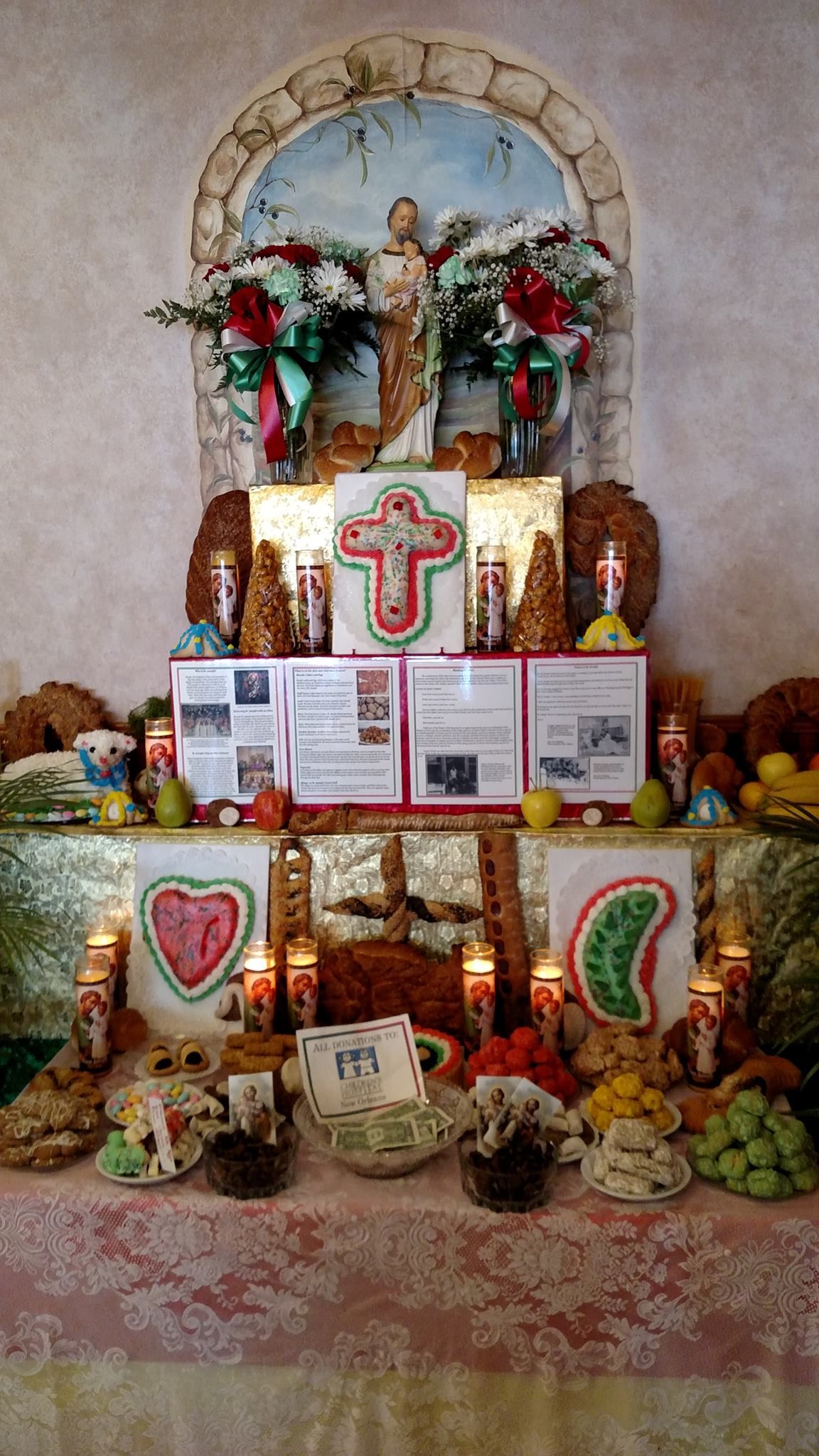
Creating an altar fulfills a promise that was made to St. Joseph in return for an answered prayer. The altars are typically constructed in the shape of a cross and feature three tiers, representing the Holy Trinity. There is a stature or picture of St. Joseph at the center of the top tier, surrounded by flowers and candles. The flowers are often red, green, and white, which are the colors of the Italian flag.
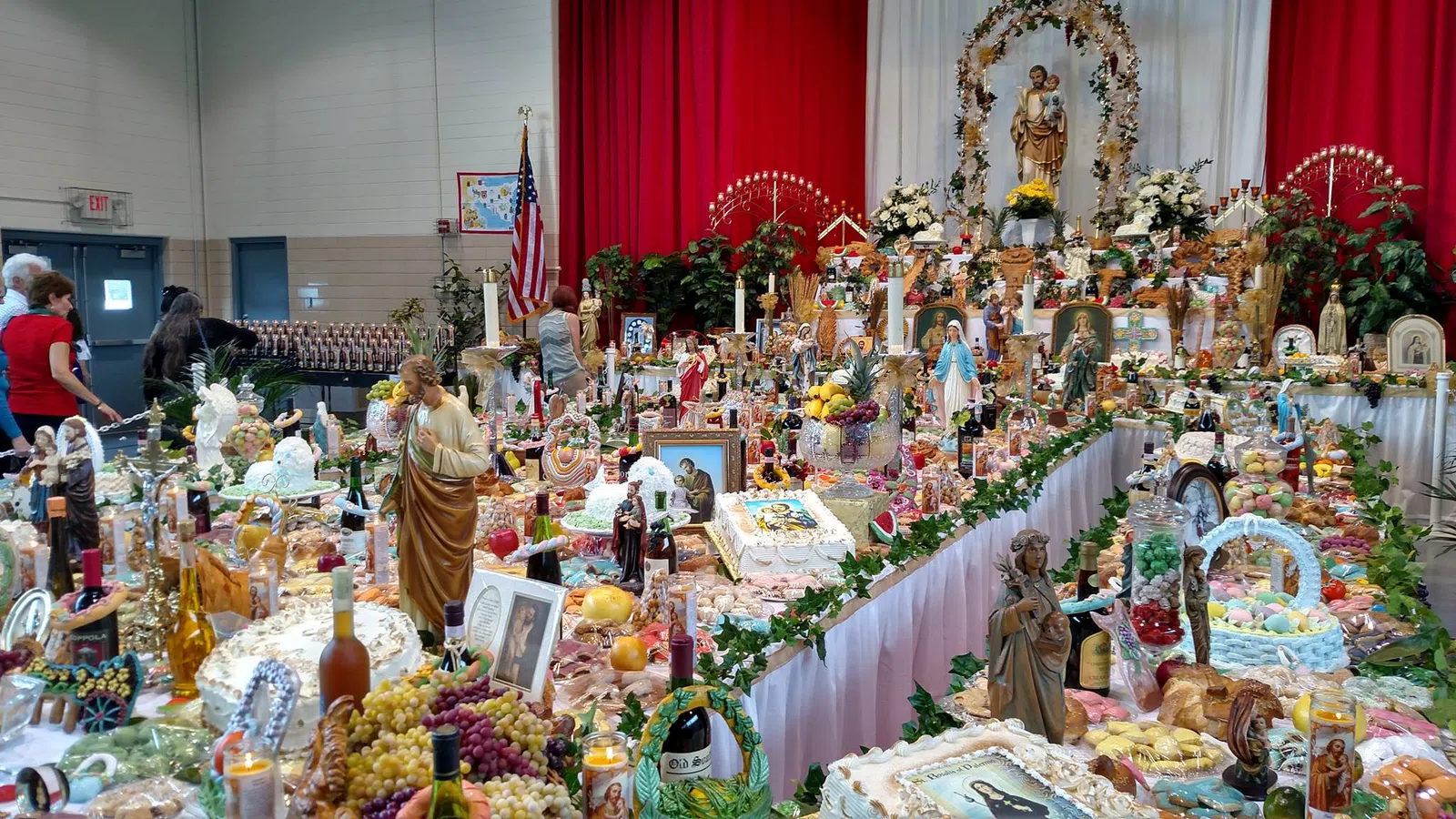
The altars are decorated with a myriad of food dishes such as bread baked into shapes that represent the tools of a carpenter, pastries, fruit, vegetables, fish, and the fava bean, which resembles luck. Fresh produce represents the harvest that occurred after the famine. There is no meat since the Solemnity falls during the Lenten season of fasting, abstinence, and repentance.
At the altar, visitors often leave written prayers, petitions, and donations of food or money to charity. After the altar is taken down, much of the food is shared or donated to those in need, continuing the Sicilian tradition of charity and community support.
Greater New Orleans Events
Within Greater New Orleans, many public altars are open to visitors every year. Churches with strong Italian heritage often host them, allowing visitors to view the displays, attend the blessings and share traditional meals. All Saints Church in Algiers hosts an altar open for viewing leading up to March 19. Many educational spaces also participate, such as Archbishop Chapelle High School in Metairie, which hosts a public viewing on March 18 and 19. On the Westbank, residents can also visit the altar at St. Joseph Church and Shine in Gretna.
A list of spaces in the New Orleans area hosting events can be found on the Archdiocese of New Orleans' website. Many families also host private altars at their homes.