
A Matter of Perception
Revisiting restaurants covered years ago to see what's changed or what's deliciously stayed the same.
"I think the most obvious changes are not at the restaurant itself but the city in general," said Frank Brigtsen, chef and co-owner of Brigtsen's Restaurant. "I say that is because of the altered perspective in the way that people might view Brigtsen's."
Marking the restaurant's 40th anniversary, this year, Brigtsen was recently hailed by Food & Wine Magazine as "a leader in the New Orleans culinary scene, preserving the rich history and flavors of Creole cooking," but his cuisine was viewed through a different lens when the Riverbend restaurant first opened.
Food critic Gene Bourg had no lack of praise for Brigtsen's when it opened, granting it a nigh unattainable "five beans" and gushing about every morsel to pass through his lips from a dish of blackened prime rib of "unassailable quality" with a "marvelous" herbal crust to a "spectacularly good" banana ice cream; however, the young chef was astonished to read Bourg's claim that Louisiana cooking was "redefined" at Brigtsen's. "I was like whoa, wait. What? Is that what I'm doing? I'm just doing what I do," Brigtsen laughed. "Now, 40 years later, I'm viewed more as the traditionalist who carries the torch for classic Creole cuisine, but I'm still doing the same thing."
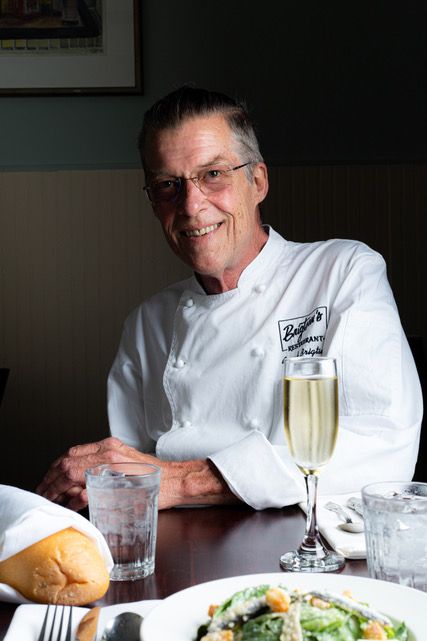
Doing what he does, Brigtsen reflects that the demographics of New Orleans has changed a lot over the years but most notably after Hurricane Katrina, an event which quite literally ripped hundreds of thousands of longtime residents from their homes, never to return. "This vacuum was filled by people from elsewhere and it changed the complexion of our population," Brigtsen said.
This major upheaval in our city's culture was, in part, what inspired Brigtsen to begin teaching at Nicholls State University in Thibodeaux, where he spent 17 years teaching a culinary course on Creole and Acadian food, and he began offering classes at the New Orleans Center for Creative Arts in 2011 when the high school established its culinary school. "I recognized then that I was indeed a traditionalist. I want to preserve Creole/Cajun cuisine and teach what I know, what Paul Prudhomme taught me."
While many of the dishes at Brigtsen's are an obvious homage to Creole cuisine, as well as the recipes and techniques of his mentor, Brigtsen confides that his creative dishes are often the product of circumstance. "I had some leftover duck, and I wanted to do something different with it, and I decided to make a duck calas [and] served it with an orange [and] Creole mustard sauce," Brigsten explained. "Calas are on my menu everyday in one form or another. We serve shrimp calas with our BBQ shrimp, and we have an appetizer of crawfish calas during crawfish season."
Calas are fried rice fritters or rice doughnuts that were sold from covered baskets carried by Creole women and free people of color in the French Quarter in the 17th and 18th century. "I love having calas on the menu because every time someone asks what they are, we get to tell the story," Brigsten said. "The historical significance of that is powerful to me."
Running an economical, sustainable kitchen with little or no waste was instilled in Brigtsen long before he began cooking with Prudhomme. One such story he likes to tell is how his father insisted on French bread with every meal, but by the end of the week, there would be stale heels of bread stashed on top of the refrigerator. "If there was enough, on Sunday nights, my mother would make bread pudding. It was a special dish for us."
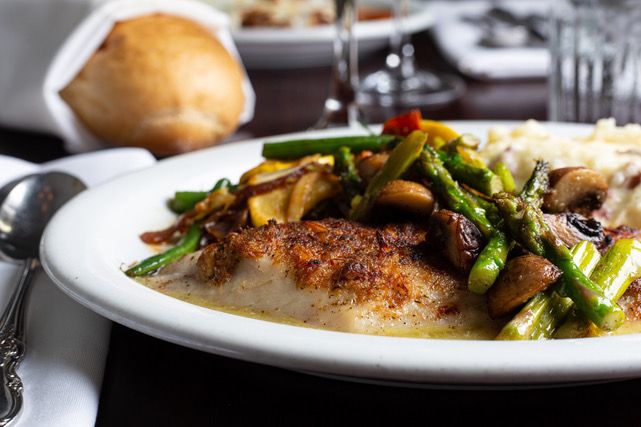
Over a decade ago, the menu at Brigtsen's offered dishes such as crab and corn bisque, smoked Muscovy duck with andouille cornbread, and banana bread pudding with a pecan praline sauce. Today, Brigtsen's menu features shrimp remoulade with guacamole and deviled eggs, roast duck with a tart dried cherry sauce and dirty rice, and figgy bread pudding with dreamsicle sauce. He loves to change things up to coincide with what's in season or to incorporate flavors from different cuisines, but he never fails to fall back on the classics.
"I like to keep one foot firmly rooted in the past and one foot looking forward, and that's really a joyful stance," Brigsten said. "You don't shut anything out and you embrace what's coming, what's in season, and what's available. Have fun with it, create, and yet still make the gumbo and the trout meunière."
Most recently, Brigsten announced his new cookbook titled Color of Flavor, set to be released in June. A self-published edition, the new cookbook is a departure from the two Stay at Home limited edition electronic cookbooks the chef released during the pandemic shutdowns. Color of Flavor features gorgeous photos captured by Romney Caruso and was created in partnership with President of Blue Runner Foods Richard Thomas. "We've been friends forever. He [Richard Thomas] came up to me one night a year ago and said, 'Frank, do you want to write a cookbook?' And I said, 'Yes.'"
Boucherie
It's been more than 17 years since Chef Nathanial
Zimet's BBQ dreams made the jump from the celebrated "Purple Truck" (aka Que
Crawl) into a side-hall cottage on Jeanette Street. In the years since, the
restaurant moved around the corner to a space on S. Carrollton Avenue
(currently Cafethomas), launched the fast-casual "Cajun smokehouse" Bourrée
with 'que enthusiast Anthony Hietbrink right next door, and, after only a few
years, jumped back to their iconic, pig-anointed cottage.
"It's crazy. I sometimes look back and think, 'How did
I do that?'" Zimet reflected.
The Le Cordon Bleu-trained chef first opened Boucherie
with a mind to offer a haute barbecue dining experience at a reasonable
price. By using more affordable cuts and seasonal, locally-sourced ingredients,
diners were diving into bowls of watermelon and Creole tomato gazpacho
with kaffir lime tuna ceviche before enjoying an entrée featuring their
signature 12-hour roast beef po-boys served on Dong Phuong pistolettes with
horseradish and pickled red onion.
In its early days, the Jeanette Street restaurant was
unassuming—a petit, silvery-gray cottage tucked behind the bustling
streetcars and businesses on Carrollton Avenue. Neighbors and visitors alike
quickly developed favorites, dishes that remain on the menu to this day from
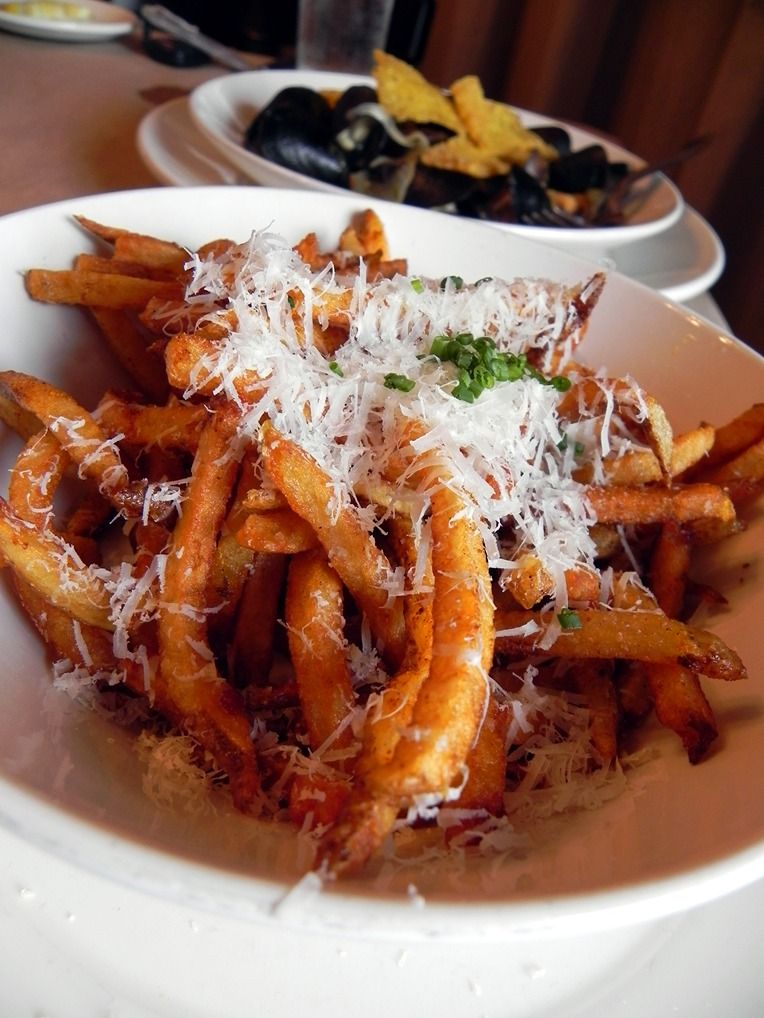
their grilled Romaine Caesar salad to the melt-in-your-mouth smoked Wagyu beef
brisket with moreish garlic parmesan fries. Let's not forget about their
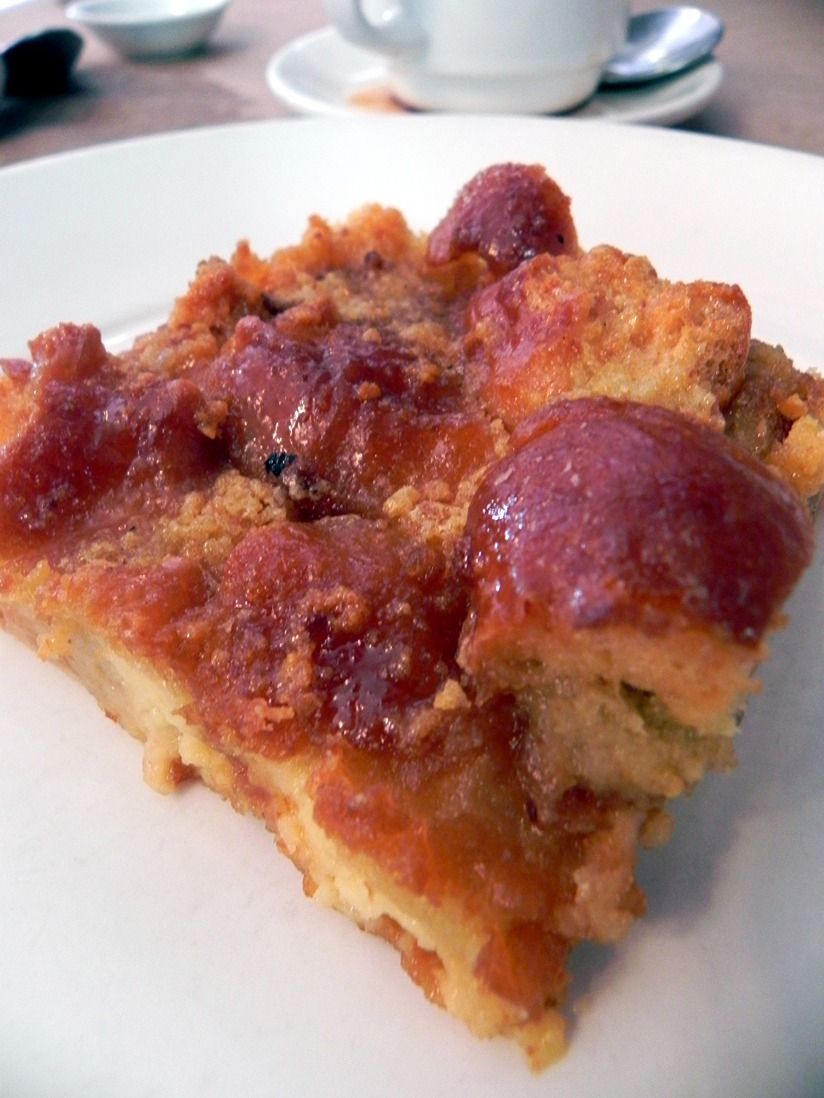
desserts such as the famous Krispy Kreme bread pudding. "A lot of my staples
are still there," Zimet said. "I think I've really been able to find the voice
of Boucherie."
When Boucherie moved into the old Café Granada space on
S. Carrollton Avenue in 2015, the cottage on Jeanette was transformed into
Bourrée, originally a fresh fruit daiquiri and chicken wing concept created by
Zimet and his business partner James Denio. But in that same year, longtime
neighborhood pizza parlor Café Nino closed up shop and the duo jumped on the
opportunity, moving Bourrée into a larger space that allowed an expanded menu,
a butcher shop, and outdoor dining.
On its 10th anniversary, Boucherie returned to its home
on Jeanette Street when owners quickly realized patrons missed the quaint,
intimate dining vibe of their original location. The little cottage, stamped
with a lilac pig in its pediment, had become an endearing brand, one diners
were loath to relinquish.
The pandemic shutdowns in 2020 inspired Zimet to expand
his school lunch program "Boucherie Feeds," which now reaches over a dozen
local schools from the Westbank to the Northshore. "I started to have kids, and
I realized I wanted to be more present, but I was also thinking about how to
give back to this community that has supported me so well."
Late last year, Boucherie took a vital, two-month break
to avoid losing money during New Orleans' infamous summer doldrums but not
before announcing the opening of The
Gardens at Bourrée, a vibrant "outdoor sanctuary" featuring the best of both
kitchens. "The Gardens is an artistic expression of the senses paired with
exceptional fare and libations, a farm-to-fairytale dreamscape we built for our
patrons and our community to enjoy," Anthony Hietbrink, manager of Bourrée,
said.
Although the curated landscape began with brunches, the
intent is for the space to evolve, offering the neighborhood an event venue
hosting weddings and other private celebrations—which is booking up fast—to
public events such as farmers' markets and art bazaars. "I love catering, and
it offers me the opportunity to basically cater in my backyard," Zimet said.
"It's dreamy."
Chef Zimet and his partners also recently acquired a
large riverside warehouse, a cornerstone to support their adorably-dubbed new
initiative Humble Bumble. In partnership with local farms, and Zimet's own farm
in Abita Springs, the program endeavors to grow produce for their school lunch
program while simultaneously "creating a friendly space where neighbors can
better themselves and improve their community through alternative methods of
enrichment."
Early in September 2025, Boucherie returned from their
summer hiatus with a bang. "I opened with a chef's tasting menu, a super-fine
dining thing, which has always been my passion, like my gold standard way to
eat." After renovations, which included a shiny new paintjob transforming the
charming cottage into a rich, boysenberry purple, Chef Zimet relaunched
Boucherie as an uber fine-dining destination with a nine-course degustation
menu.
For only $115 per person, remarkably reasonable given
the ever-rising cost of food and current national economic policies, diners are
transported with ajoblanco, an Andalusian white gazpacho made
with almonds, lump crab cakes featuring Cambodian pickled crab dolloped with
caviar crème fraîche, and Kabayaki-style Wagyu. There's even an intermezzo
course of dirty rice with foie gras and fried sweetbreads, and a
palate-cleansing glacée is served before embarking upon crème brûlée
donuts.
"To cook for people like that, you know the crescendo
of multiple courses," Zimet said. "Not just having the elements on the plate
marry and sing, but this whole idea of sitting there for hours and being able
to be just taken away with food."
Habitual fans of the purple shack need not fret if the
fancy new tasting menu is not up their alley. Boucherie still offers a taste of
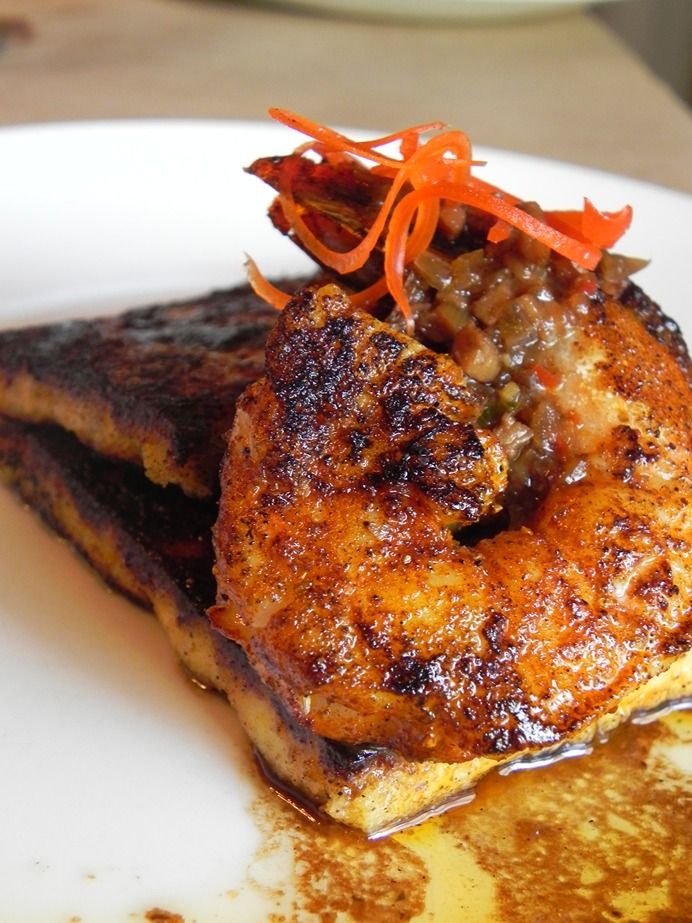
the classics, so you can have your blackened shrimp and grit cakes and eat
them, too.
Cochon Butcher
Revisiting restaurants covered years ago to see what's changed or what's deliciously stayed the same.
Donald Link and Stephen Stryjewski effectively made elevated Cajun magic when they launched Cochon Restaurant in 2006, and Butcher, which opened three years later, was a citified answer to a back-country boucherie.
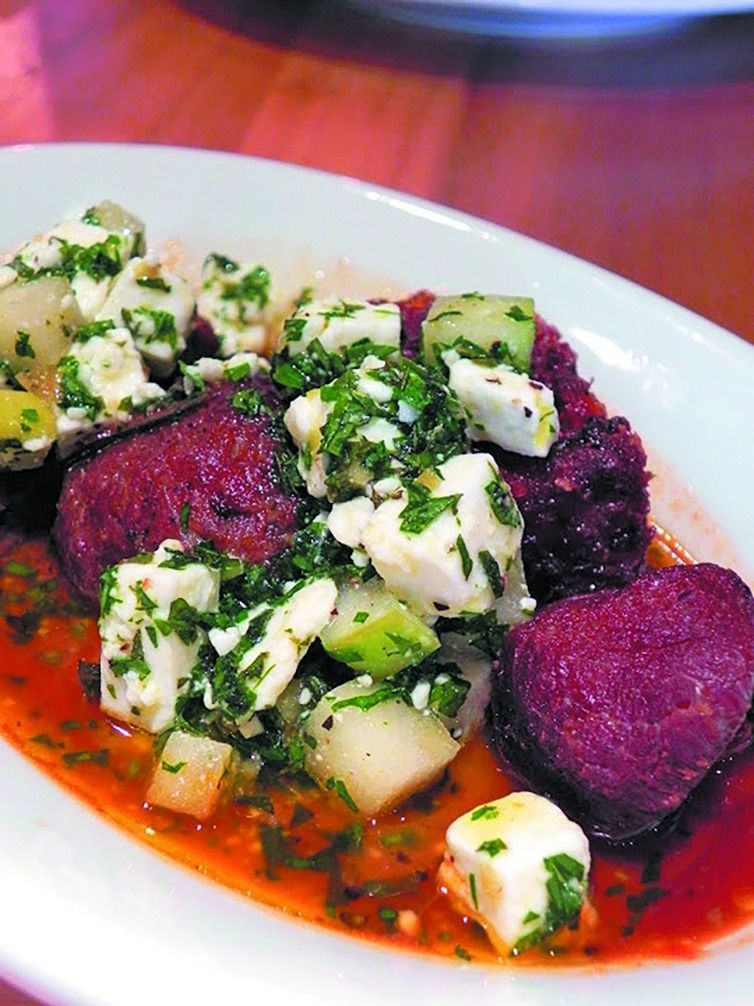
While the sit-down restaurant on Tchoupitoulas Street offered bowls of pork and black-eyed pea gumbo and pork cheeks with crispy feta and sauerkraut cakes, the tiny Butcher around the corner on Andrew Higgins Boulevard was selling the core of those pork-tastic dishes. It was like a meat market from the southwestern part of the state was plunked down on the edge of the Warehouse District.
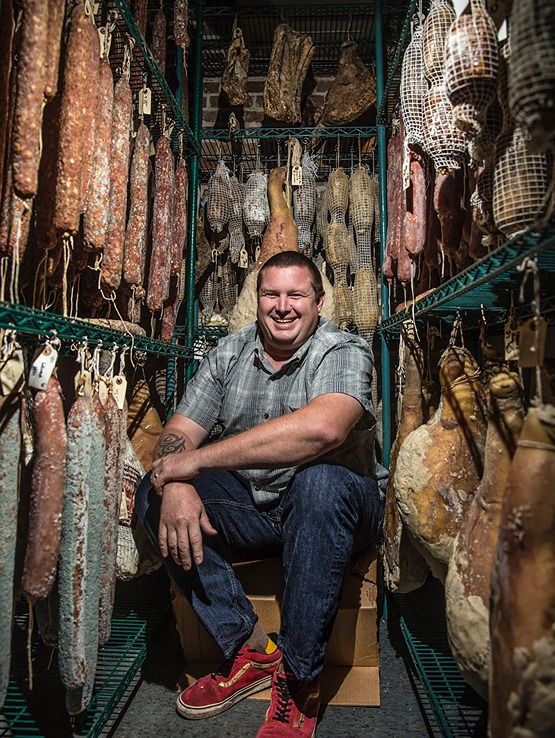
Unlike the markets in Lafayette or Scott, Butcher upped their game. Not only could any person like myself walk in and purchase quality, housemade and cured pork products including beautifully brown links of andouille, small slabs of spiced and dry-cured tasso, Cajun rillon (caramelized pork belly), and boudin, the case also featured meaty Kurobuta bacon and charcuterie such as soppressata, pancetta, mortadella, and capicola.
When Cochon Butcher first opened in 2009, it was a relatively tiny space—only 800 square feet—which mainly served as a butcher shop with gleaming white tiled walls and stainless steel surfaces. It also was an ideal place for busy workers to grab a sandwich to-go and, if you were lucky, a seat at one of only a few high tables or the bar.
Surrounded by cases displaying cured salumi, duck pastrami, and dry-aged country ham, hungry patrons could enjoy selections from a small chalkboard menu such as a pastrami on rye with sauerkraut (pickled on site); their award-winning muffaletta with housemade mortadella, salami, and pickled peppers; or a highly coveted bundle of hot boudin, a lunch guaranteed to go down well with an ice-cold Abita Amber.
After nearly 17 years in business, the Warehouse District meat market has certainly grown. An expansion in 2014 added 2000 square feet of space, increasing the seating from 30 to 120 and adding a larger kitchen and a full bar. Like many restaurants trying to survive during the pandemic, Butcher stretched its outdoor tables into the street, an impromptu patio that has seemingly become permanent.
House meats, charcuterie, and specialties such as duck confit and pork rillon can still be purchased at the counter, but from hook to hang, the process has become more streamlined. According to Stryjewski, their skilled butchers break down over 2,000 pounds of meat in house every week, supplying all eight restaurants and event spaces in the Link Restaurant Group, including Butcher.
What's more, the hogs supplying all of their pork products are sourced from a terminal crossbreed of Berkshire Blue hogs, a feat accomplished in cooperation with the proprietors of Ryles Quality Pork, a high-quality hog farm in Georgia. "There are different ways we break them down," Stryjewski said. "Some of the parts are for retail sale, some of the parts we use for the restaurants, and then some of them we do for production."
Since its inception, Cochon Butcher, and the entire restaurant group, has always been about quality and that hasn't changed, whether it's the free-range, well-raised and fed chickens sourced from Greener Pastures to the greens from Perilloux Farm in Lake Charles. "We've spent a long time developing relationships with farmers and trying to source the best possible products that we can."
The Link Restaurant Group's commitment to quality and its employees has garnered both local and national accolades over the years, including a combined total of six James Beard awards. Just recently, Cochon Butcher achieved a Bib Gourmand rating from the prestigious Michelin Guide, a distinction which denotes a restaurant offering both high quality and value.
With its expanded capacity and larger kitchen, including a hood, Butcher's menu has indeed grown over the years. The Cubano and Cajun pork dog, now on a pretzel bun, currently share menu space with a Moroccan-spiced lamb-stuffed pita with tzatziki and chili oil, as well as the infamous "Le Pig Mac" with all-pork patties, which claimed a permanent spot circa 2015.
The fresh, hot boudin and mac & cheese are now "small plates" alongside Cajun-fried ribs, grilled salmon belly, and black-eyed pea chili. Plus, Cochon Butcher flaunts its curing cred with customer-curated charcuterie and sausage boards including coppa, country terrine, head cheese, and daily fresh links and deer sausage, respectively.
It is a disappointment to discover their incredibly stellar BLT was no longer on the menu. I later found out the sandwich wasn't a big seller, though for the life of me I can't figure out why. Toughing it out, I opted for the Buckboard Bacon Melt instead and "suffered" through every meaty bite layered with Swiss and tangy collard greens.
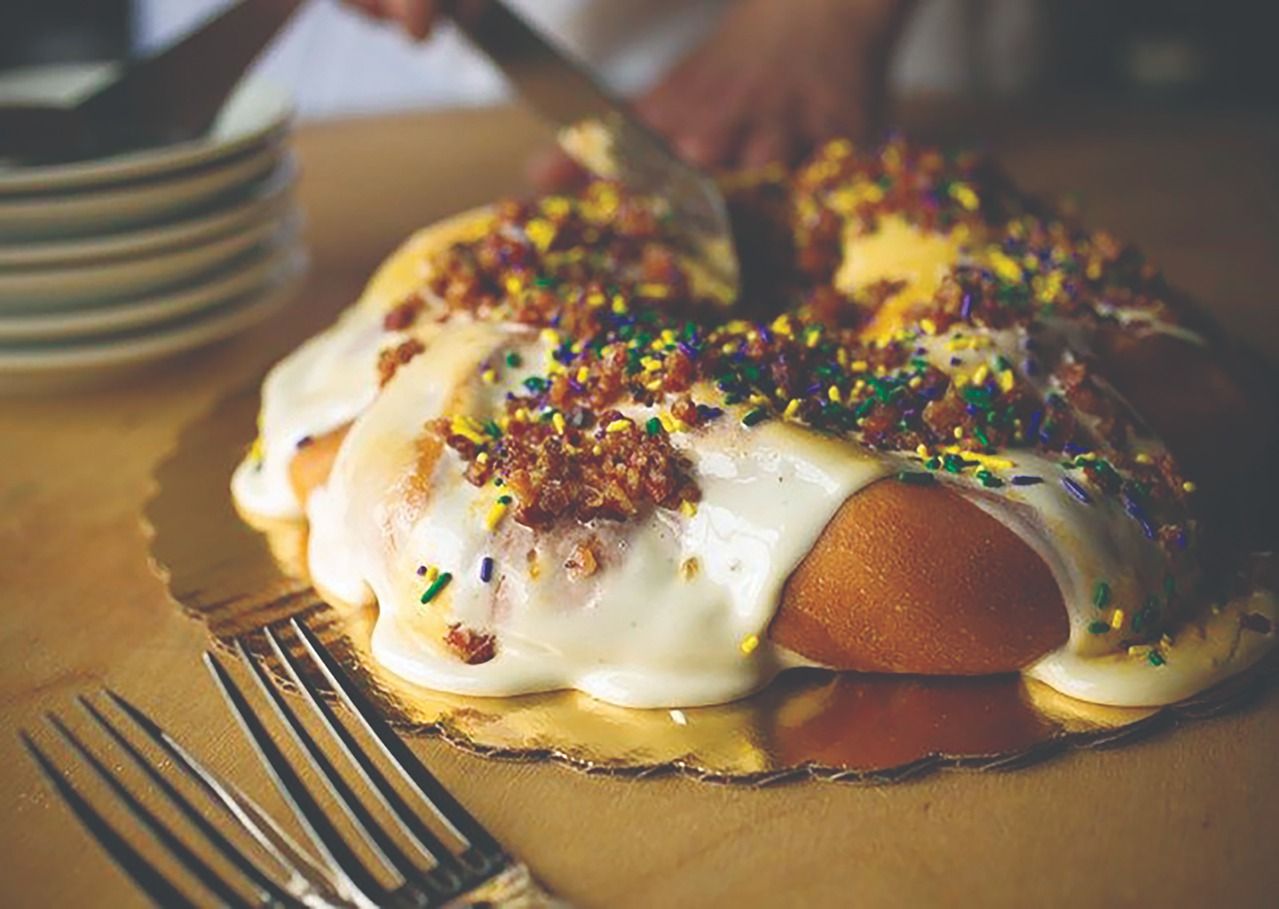
As it should be, Cochon Butcher is mostly about meat, but since day one, they've attracted incurable sweet tooths with their bacon pralines and unusual cookie flavors (PB&J and Rocky Road). While their sweet stuff is coming out of Pastry Chef Maggie Scales' domain at La Boulangerie these days, for over a decade, Butcher is the only Link spot in town to score their famed "Elvis" king cake filled with peanut butter and banana and topped with house-cured bacon, marshmallows, and traditional purple, gold, and green sprinkles—an annual Mardi Gras must, whether it's a slice at the restaurant or a full-sized cake to take home to share—or not.
Pro-tip: Cochon Butcher is only a block from the end of the parade route at St. Joseph and Tchoupitoulas streets, a spot sometimes rumored by locals to have both smaller crowds and excess throws. Either way, you can tough it out with bacon, beer, and king cake at the restaurant.
Elizabeth's Restaurant
Revisiting local restaurants that I covered years ago to see what's changed, or what's deliciously stayed the same.
Always hungry for affordable experiences and new flavors to share, I pulled off the dazzling feat of dining at more than 700 New Orleans-area restaurants over the years. It's a lifetime achievement I'll happily brag about, and now, at last, I have that opportunity.
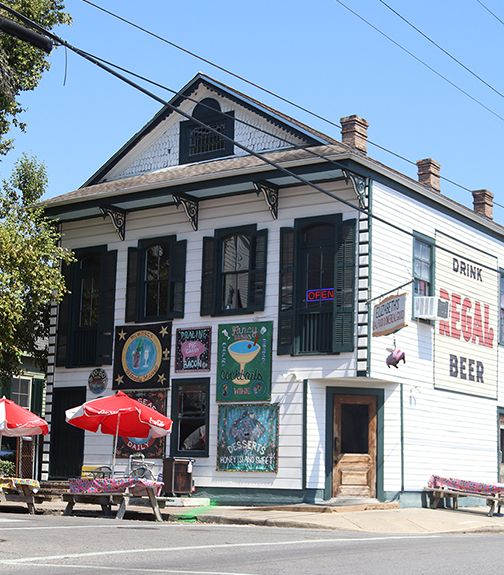
On the corner of Chartres and Gallier streets stands Elizabeth's Restaurant, a tall, two-story building painted with vintage signage advertising bygone local products Regal Beer and almond-flavored soft drink Dr. Nut, as well as touting "Fresh Seafood Daily." In 1998, South Carolina-born chef Heidi Trull opened the Bywater neighborhood spot with the intention of serving "real food done real good" at an affordable price in a laid-back, unpretentious atmosphere.
After graduating from the culinary arts school at Johnson and Wales in Charleston, Trull honed her craft working in fine dining kitchens such as the Ritz Carlton in St. Louis, Elizabeth on 37th in Savannah, and Emeril Lagasse's flagship restaurant Emeril's NOLA. Inspired to open her own place, she wanted to offer a restaurant for everyone, serving staple local dishes such as grits and grillades, po-boys, and old-fashioned calas, all at a budget-friendly price. Elizabeth's began as a closely-guarded secret amongst hungry locals but grew to be a wildly successful restaurant as more and more savvy visitors discovered the Bywater gem.
In the spring of 2005, Trull decided to start a family and sold Elizabeth's to innkeepers Floyd McLamb and Stuart Anthony. The duo renovated the building's unused second story, adding another dining room and bar, but their future plans for the restaurant were unrealized when Hurricane Katrina struck and devastated the city.
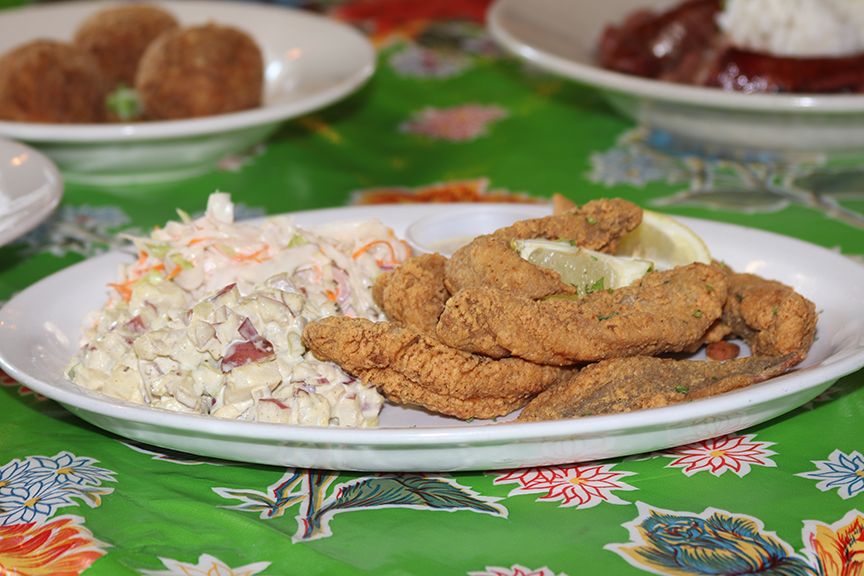
Today, Elizabeth's is owned by Chef Bryon Peck, a graduate of the California Culinary Institute who started working with Heidi Trull at the neighborhood gem almost since its inception. To this day, Peck still honors Trull's vision, retaining numerous dishes from the original menu, from their renowned praline bacon to the bayou breakfast with fried catfish and eggs.
In my first year of Where Y'at's "$15 & Under" column nearly 14 years ago, I waxed poetically about "the Blessed Biscuit"—a Southern breakfast staple often found on my family's kitchen table. Though it's doubtful any restaurant will ever be able to replicate the soft, flaky biscuits made with a lifetime of skill and big handfuls of love by my great aunt Edie, the buttermilk biscuits served with a savory sausage gravy at Elizabeth's certainly will come close.
In successive visits over a decade ago, we explored over half the menu, delighting in a cornbread waffle piled high with sweet potato hash pan fried with duck confit and housemade pepper jelly, gobbled a "redneck" version of eggs Benedict with poached eggs and hollandaise resting atop crisply battered and fried green tomatoes, and dug into a fully dressed fried oyster po-boy served with sweet potato fries.
As it is so often said, "The only constant in life is change," and things have certainly changed at Elizabeth's over the years. The exterior has acquired heavier decoration, with colorful signage touting everything from Elizabeth's signature praline bacon, which still rocks, by the way, and our city's famed lost bread, a.k.a. pain perdu, to red beans and rice. In fact, the "Elizabeth's" sign hanging above the front door has been re-lettered with larger print that includes the restaurant's iconic slogan and, for a while, a swinging bewinged piglet.
The restaurant had also eliminated their dinner menu almost entirely. However, luckily, they will be bringing back their dinner, with the addition of happy hour, starting on September 25, making their new Thursday, Friday, and Saturday hours 8 a.m. to 8 p.m. Additionally, they are open every day of the week for breakfast and lunch from 8 a.m. to 2:30 p.m.
Favorite menu items from the past are often resurrected as specials handwritten on a large chalkboard that changes regularly. Recent comebacks include a Creole version of British staple bubble and squeak made with sautéed cabbage, Louisiana shrimp, and hog jowls topped with poached eggs and hollandaise.
Chef Peck will also use the chalkboard specials to introduce new flavors to "Elizabethans," dyed-in-the-wool regulars, including housemade potato chips with blue cheese sauce, shrimp ceviche with a jalapeño lime broth, and crawfish and shrimp-stacked fried green tomatoes topped off with a fried soft shell crab.
While change is always invigorating, there's a lot to be said for what stays the same. Elizabeth's still serves fried chicken livers with pepper jelly, as well as old fashioned calas—our city's beloved, and almost lost, fried rice fritters—drizzled with Steen's Cane Syrup—items that harken back to Chef Trull's original menu.
The restaurant remains both a neighborhood gem and touristy brunch hotspot where visitors sit at mismatched tables draped in gaudy, colorful tablecloths—decor all too apropos for Maw-Maw's kitchen—sipping Pimm's Cups or pineapple jalapeño margaritas from plastic tumblers and sharing plates of fried boudin balls or pecan pie.
Elizabeth's has staked a claim in the hearts of locals and visitors, a restaurant that's survived Hurricane Katrina, as well as the pandemic shutdowns, and that's still serving "real food, done real good" at blessedly affordable prices. It's up to us to ensure the landmark Bywater restaurant remains part of our cityscape for as long as possible, so go get you some while the getting's still good.