Cranes, Trains, and Automobiles
Activities on the other side of the three-and-a-half mile wall along Tchoupitoulas Street, stretching from Felicity Street to Audubon Park, is a mystery for many, especially those wondering why there are sudden thundering metallic crashes at all hours near the seven ship-to-shore container cranes towering over Riverside Market.
That noisy insomniac beast is the New Orleans Public Belt (NOPB) tirelessly working around the clock with Port NOLA. Although it is not open to the public, it is owned by the public—initially by the city and now as a political subdivision of the state. NOPB's extensive 91-mile web of tracks surrounds New Orleans like a belt. It is an intricate workhorse of a railway system that literally helps keep the commerce of the world moving with materials moving between boats and trucks with cranes and trains.
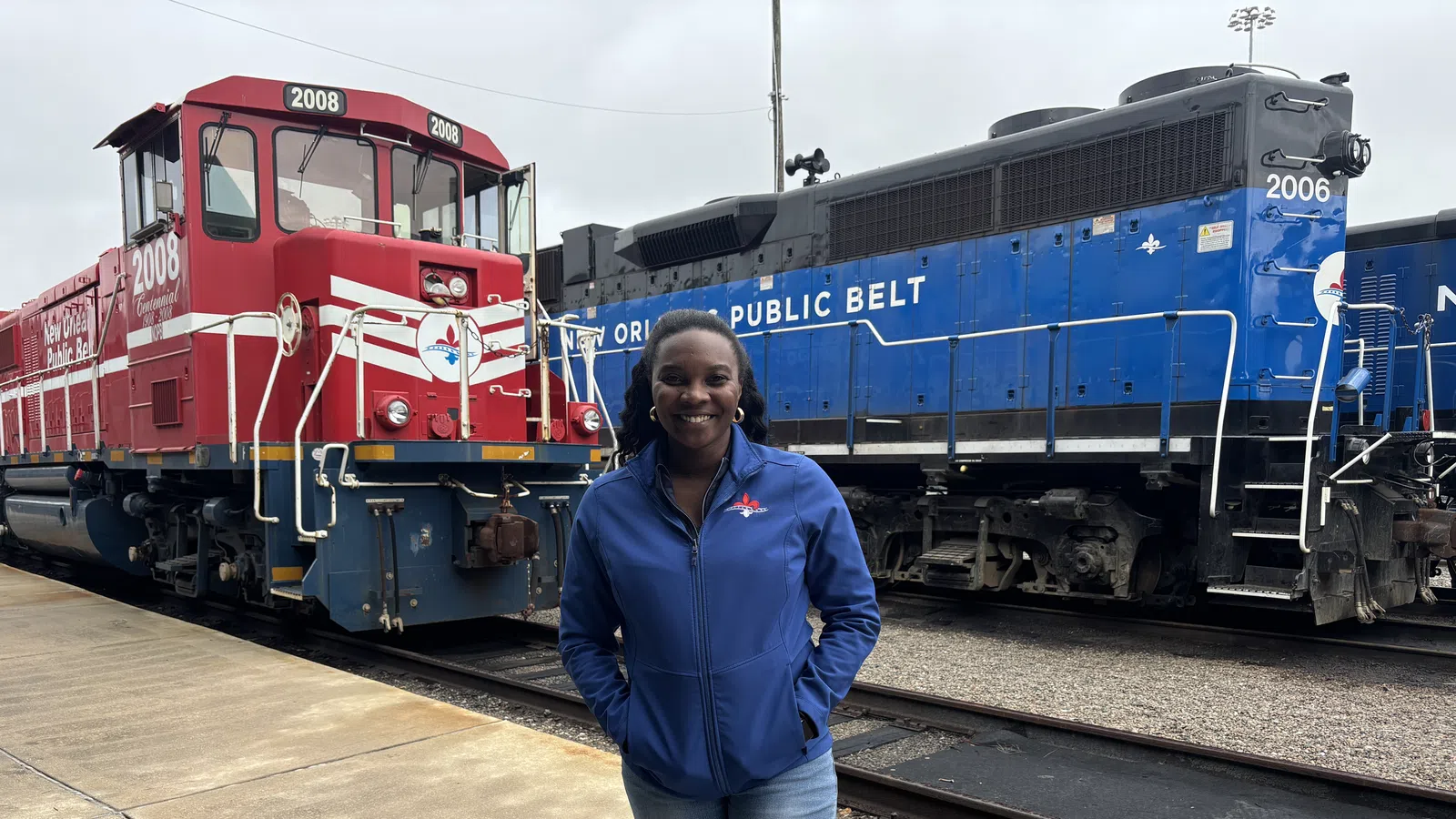
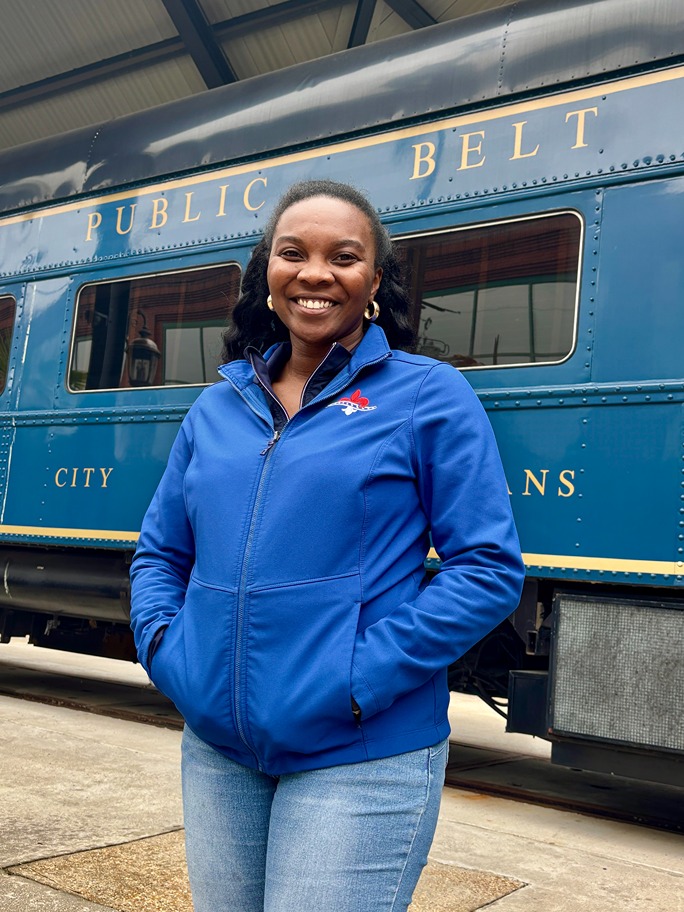
"People are surprised by how much we do and how it contributes to the economy," said NOPB's General Manager Tomeka Watson Bryant, a proud second-generation railroader who followed in her father's and uncles' footsteps.
"Materials we move around are in our day-to-day life, such as drinking water for the Sewer & Water Board and Amazon packages."
Going into its 120th year serving the only deep-water container port in Louisiana, the NOPB is a neutral Class III riverfront railroad carrier stretching 32 miles from Audubon Park downriver to the Industrial Canal, representing a third of its tracks throughout the metro area. The Belt links to six of the largest Class I railroads in North America: BNSF, UP, KCS, CN, NS, and CSX. Connecting with their 132,000 miles of tracks, NOPB ultimately reaches 33 states and Canada. In concert with Port NOLA's unique location on the Mississippi River feeding into the Gulf, the Belt's impact is global. "The Port of New Orleans is critical," Port NOLA's Kimberly Curth said of the Belt's significance. "It's vital to the supply chain—an enormous driver of economic prosperity."
All the Belts & Whistles
In 1890, individual trunk railroads served the Crescent City's riverfront barges and ferried railcars heading west across the river. The city quickly identified needing an impartial, municipally operated, port-based railroad service to bolster the waterfront's growth.
The New Orleans Belt Railroad was formed in the early 1900s with the goal of "providing uniform rail service to all shipping companies in an efficient and cost-effective way." NOPB's Board of Commissioners was composed of the mayor and 16 mayoral appointees. Construction began in 1905, and a single locomotive rolled in 1908, moving railcars over 20 miles of track from Monticello Street in Holy Cross to Marigny's Mandeville Street.
Tightening the Belt
By 1921, NOPB's impact was undeniable, so Louisiana assumed operations. The Belt's board consolidated commissioners into a governor-appointed, seven-member regional board: four representatives from Orleans Parish, two from Jefferson Parish, and one from St. Bernard Parish, with each serving staggered five-year terms.
NOPB's expansion was exponentially rapid, fueled by the country's insatiable demand for expedient rail service. This resulted in construction of the Huey P. Long Bridge in 1932 so trains could cross the Mississippi River. In 1946, a foreign-trade zone (FTZ) was established in the port—now with more individual warehouses and sites than any other U.S. port-administered FTZ. By 1956, NOPB tracks extended to Lake Pontchartrain and along both sides of the Industrial Canal.
Sharing interlocking activities, a strategic alignment of Port NOLA and NOPB in 2018 secured the Big Easy as an integrated supply chain hub. While Tomeka Watson Bryant serves as the Belt's GM, NOPB shares its CEO, Beth Branch, who pulls double duty as Port NOLA's president and CEO, as well. In the rare instance there is a conflict between the organizations, Branch breaks any stalemate.
Y'all Be Workin' on the Railroad
Handing over 265,000 rail cars in 2025 alone, NOPB positions itself as a "one-stop shop" single point of contact for rail and logistics services in New Orleans. "It's like a game of train solitaire," Bryant explained. "We're a switching railroad and have a list of railcars going everywhere." The cars are rearranged by "building a suit of railcars" similar to the card game. Like solitaire, it takes some shuffling to get the cars in he correct order to deliver them on a particular train route, with the locomotive being the ace.
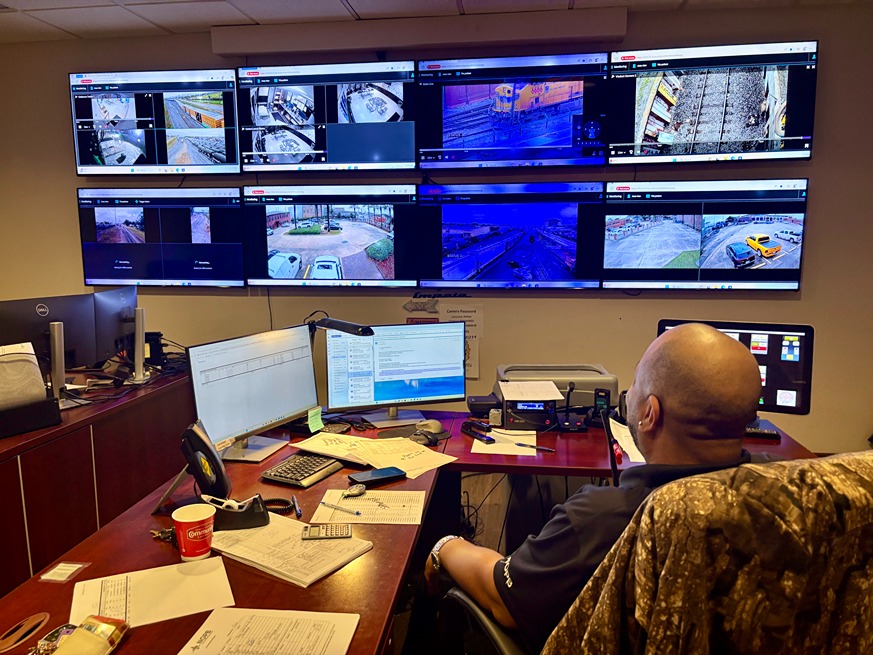
Unlike solitaire, the Belt has several hundred players. In NOPB's Cotton Warehouse Yard headquarters on Tchoupitoulas Street, multiple activities are monitored on more than 20 live streams. The NOPB staff, including almost 40 train engineers and close to 50 conductors, contributes to the port.
NOPB's solitaire-like goal is completing lines of interlocking train cars so they can "clear the suit" to make room for more. Thus, many will be relieved to know the monstrous crashing noises are not Jaeger vs. Kaiju battles or massive containers being carelessly dropped but rather the strategic coupling of railcars as they connect to their trains.
Conjunction Junction
Bryant protects the Belt's core purpose in bolstering the local economy and noted, "We primarily focus on our local tenants that originate and terminate in New Orleans."
NOPB's operating income has increased nearly 300% since Port NOLA and NOPB joined forces. In conjunction with the NOPB, Port NOLA generated $100 million in revenue annually over previous years.
Beyond revenue, the NOPB is experiencing increases in overall safety, efficiency, and green initiatives. A grant from the U.S. Department of Transportation funded improvements leading to a notable decrease in emissions, including upgrading to solar powered switches.
While AI may not ever replace the necessity for hands-on work at the Belt, Bryant noted "it might help with realigning railcars more efficiently" in the future by "reducing the amount of touches." Bryant confidently reassures fans of the film Unstoppable that a runaway train through New Orleans is "impossible."
The Belt's Cotton Warehouse Yard along the riverfront in Uptown New Orleans is supported by the Claiborne and France yards serving downtown customers and four storage yards located in the St. Claude, Uptown, and Gentilly neighborhoods.
NOPB Offices are also Working Museums for the Organization
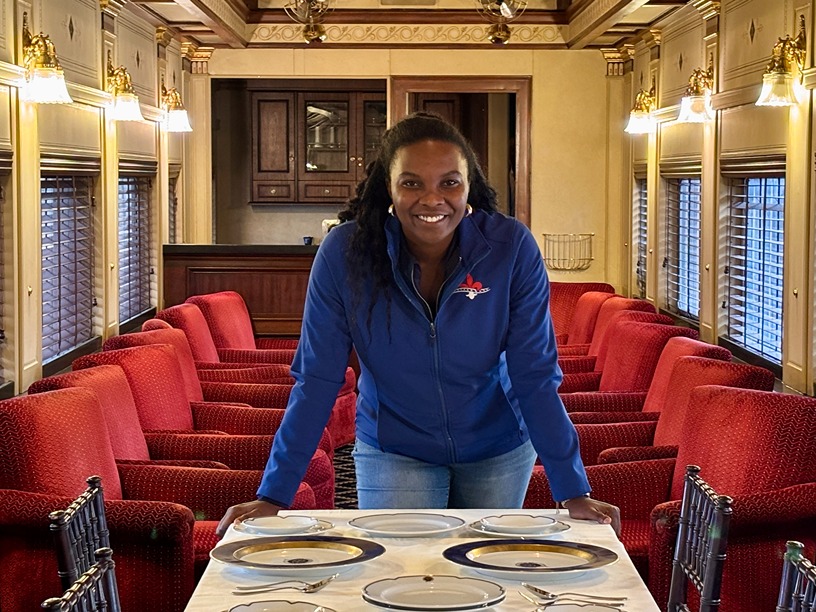
The railyard behind NOPB's offices is "one of the last true roundhouses," Mechanical Clerk Scott Richoux boasted. It is one of the original Belt buildings constructed in 1908, still serving as intended. The yard also supports car storage with several vintage train cars and locomotives.
Even in the aftermath of Hurricane Katrina, many employees were reassigned to operations in Houston; however, the Belt was active again within several weeks, with trains running primarily north and west in less than a year, despite destroyed tracks and bridges east of the city. "It was like a giant shook up a snowglobe and stuff landed everywhere, washouts as deep as 20 feet with boats, houses, containers in the way," Richoux recounted.
"It was eerily peaceful, no sounds—no planes, cars, people, just quiet," he said. With all of the city shut down, Coast Guard ships docked in the river opened their doors to the Belt staff for meals and shelter when needed, but the Belt was hard at work.
Vision
"Advancing global connections and infrastructure to exceed the needs of tomorrow" with the overarching goal of driving economic prosperity, which creates opportunities in, and for, New Orleans.