All About Sugarcane
Sugar is one of Louisiana's most successful industries, providing about 20% of the nation's sweet fixation. Louisiana sugarcane is grown over 530,000 acres of land in 25 parishes.
According to the American Sugar Cane League's 2024 report, "Production should exceed 16 million tons of cane and has an economic impact of $2.3 billion to the cane growers and raw sugar factories of the state." Directly and indirectly, the state's sugarcane industry employs 16,670 workers.
Sugarcane cuttings were brought to Caribbean islands and North America by European colonizers who created cash crop industries, along with rice and tobacco, using enslaved labor. Sugarcane was planted in New Orleans in 1751 by Jesuit priests at their church on Baronne Street. The American Sugar Cane League expands on this history, "Several plantations were planted in what is now the city limits of New Orleans, and, in 1795, Étienne de Boré first granulated sugar on a commercial scale in Audubon Park. Except for disastrous production years during the Civil War, during a disease epidemic of the 1920s, and from 10-degree freezing temperatures affecting the 1990 crop, the Louisiana sugarcane industry has continued to increase in productivity, mainly due to improved varieties, cultural practices, pest control, and sugar processing techniques."
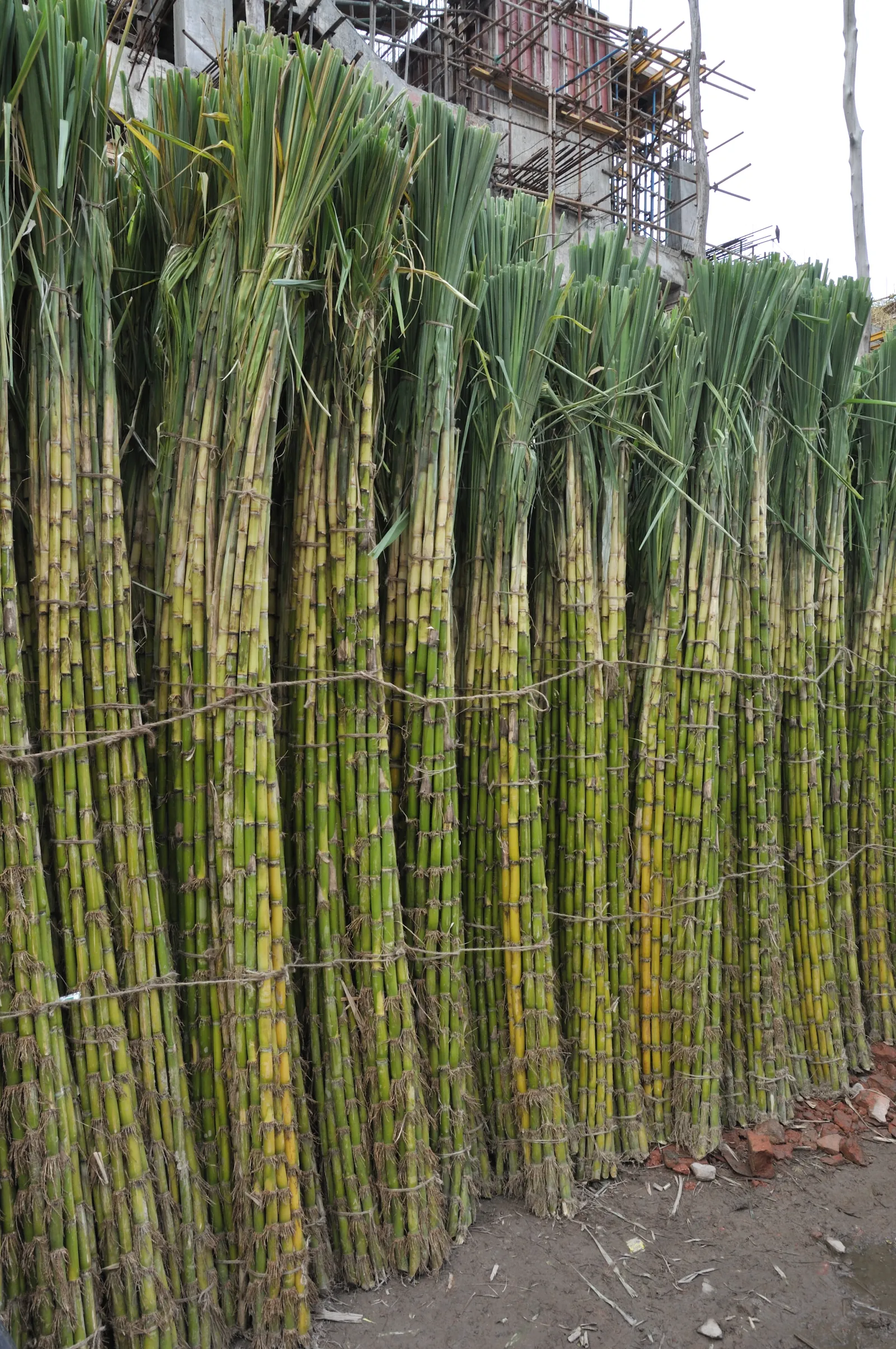
The sugarcane-to-sugar process begins with stalks that are cut short after harvesting. New buds grow at the joints, meaning stalks can be harvested for three or four years. The stalks grow several feet in height from spring to fall before being harvested. The American Sugar Cane League further explained, "All Louisiana sugarcane is mechanically harvested using either soldier or combine type harvesters. Soldier harvesters cut off the cane tops, cut the stalks from their attachment to the row, and lay them on heaps behind the machine. After the cane heaps are burned to remove excess trash, cane loaders place the cane in large wagons for transport to the raw sugar factories. Combine harvesters cut the stalks into short pieces or billets, while extractor fans remove a portion of the leaf trash. Billets are then transported to the factories."
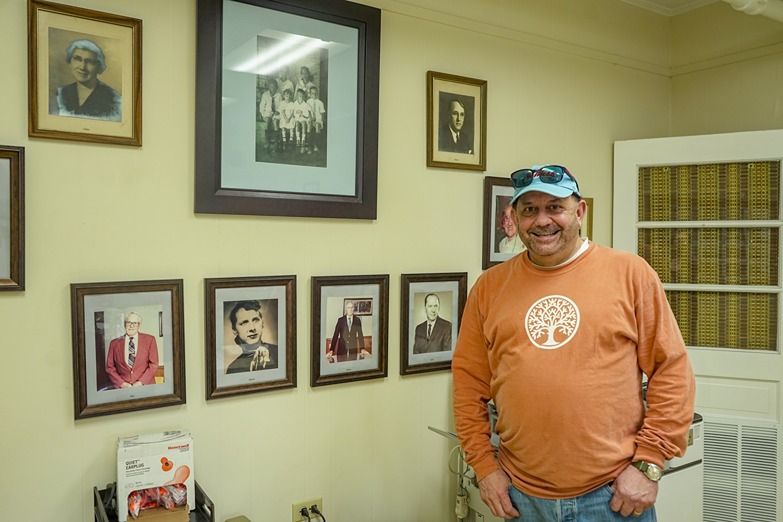
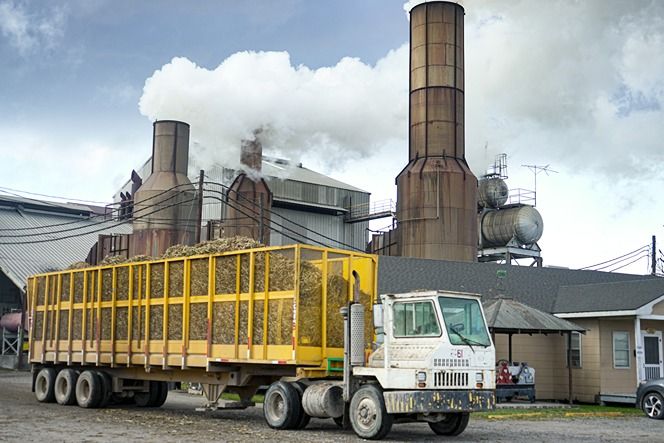
At the Lula Sugar Factory in Belle Rose, south of Donaldsonville, trucks unload freshly-cut sugarcane stalks from nearby fields onto scales that dump the product into a whirring mill that outputs brown sugar simultaneously. "It takes between 24 and 48 hours [to go from stalk to raw sugar]," Lewis Savoie, stakeowner of the mill and owner of Cane Sugar Toffee Company, said. "It's cut in the fields, then it's hauled to the mill by trucks. They weigh the cane when it comes in here. Then they weigh it again over there to make sure they have the tonnage right. The cane gets poured into a chute, and that's going into the mill. That's where the process starts."
Sugarcane stalks are washed, shredded, and squeezed under heavy rollers to extract the sweet juice from the pulp. The pulp, called bagasse, can be used as a biofuel, substrate, or many other things. The cane juice is strained and clarified with lime to remove mud and impurities before being boiled to turn it into a syrup. When the syrup is heated under a partial vacuum, crystals begin to form. This substance is moved to a centrifuge, which separates the crystallized sugar from excess syrup, a.k.a. molasses. Molasses, in this form, can be used for livestock feed or to produce liquor and vinegar.
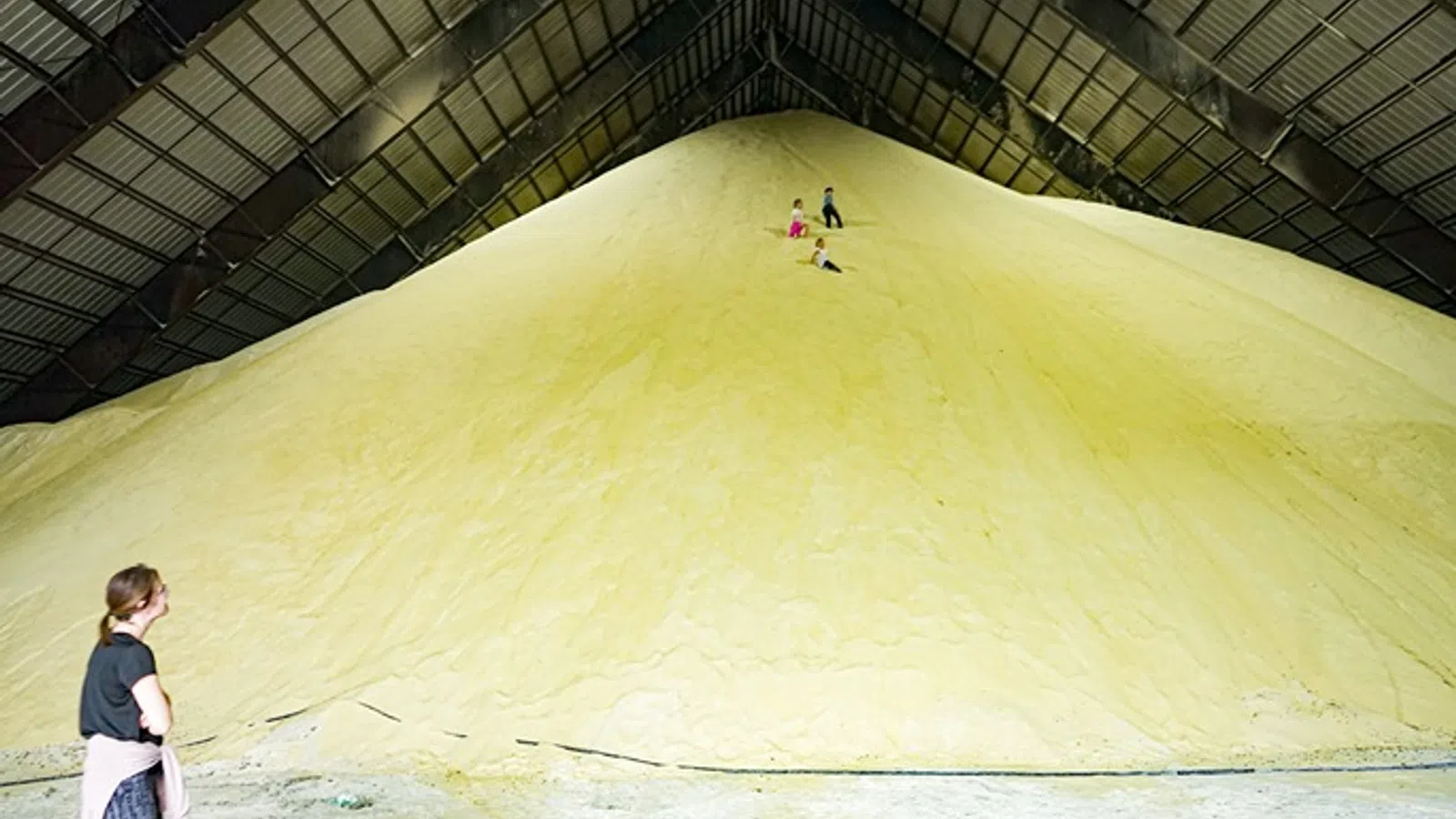
The raw sugar crystals are moved over to a warehouse, where it is heaped into a pyramid-shape that can reach up to 60 feet high. It is then transported to a refinery that turns raw brown sugar into white sugar through a process of melting and re-crystalization. Molasses can be added back to the white sugar in 5-15% quantities to create brown sugar. "It's bigger than what people understand. It's really a huge process," Savoie said.
Lewis and his wife Lynn opened Cane Sugar Toffee Company, the popular raw sugar toffee company in Donaldsonville's historic district, in 2024, and they often sell out of the namesake sweet treat. Though Lewis' family worked in sugarcane farming and milling for generations, he worked around the nation before returning to his hometown. "Something happened about 20 years ago, and it just dawned on me that I'm very much a part of the land. I'm a part of the sugar industry even though I never worked in it, my family did. I decided that I was going to come back and promote this industry, and that's how we started making toffee. It's from that that I've learned more about my family and their interest in it and the contribution of the farm to the table. There's a lot of small businesses that exist today because of the sugar industry. It's a major economic boon to this state and to the country."
Louisiana grown and processed sugar and its byproducts can be found in many locally-made products. Steen's Pure Cane Syrup bottles sugarcane syrup, as well as molasses, cane vinegar, and cane sugar pepper jelly. Sugarfield Spirits in Gonzales, Bayou Rum in Lacassine, and Oxbow Rum in Baton Rouge all proudly use Louisiana grown and processed sugarcane products to craft their spirits.
There could be even more uses for Louisiana's sweetest crop in the future. Sugarcane can be used to make natural glycolic acid, a popular ingredient in skincare products. Brazil has even been fueling cars with sugar-derived ethanol for many years.