Geauxing Green
Louisiana boasts beautiful coastal marshes and waterways, but, for all of the state's natural beauty, protecting it seemingly isn't always a priority.
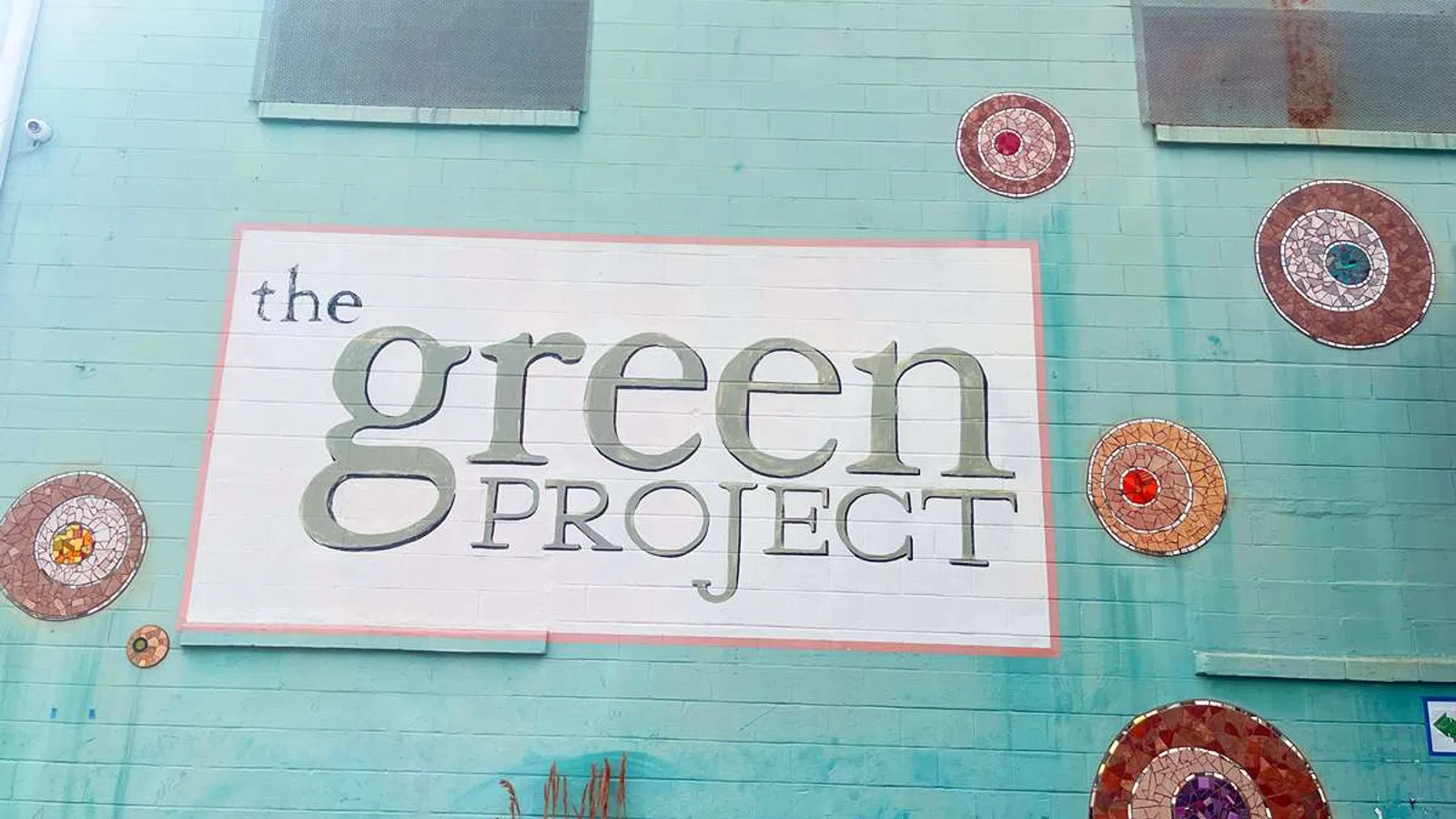
You're more likely to come upon a broken bottle on the sidewalk than one in a recycling bin on the streets of New Orleans due to the fact that the city doesn't even accept glass in curbside recycling pick-ups. But the dedicated team of environmentalists at the Green Project have made it their mission to preserve as much of our natural resources as they can with multiple recycling, reuse, and educational programs designed to get everyone in the community to participate in that effort.
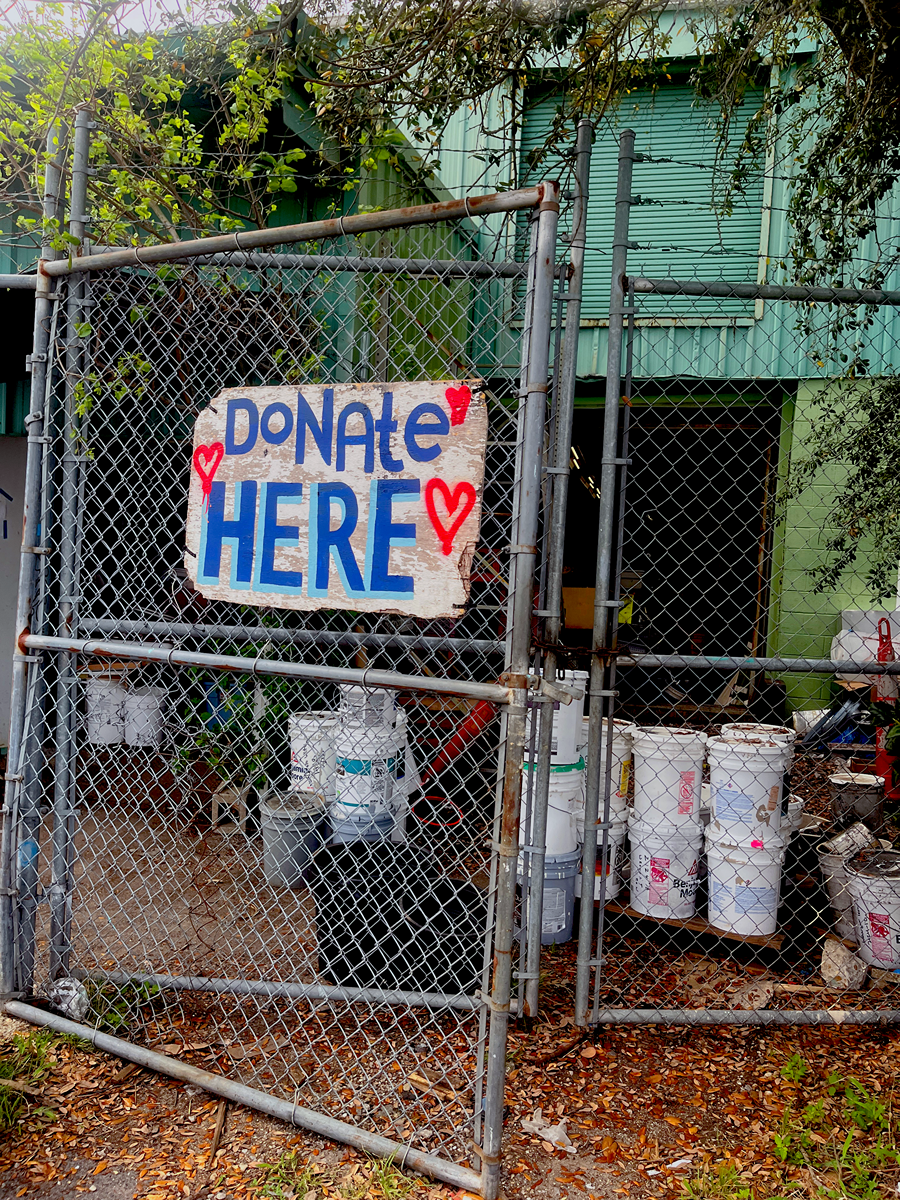
Linda Stone, a former researcher with the Lake Pontchartrain Basin Foundation, and her artist friend, Suzanne Durham, founded the Green Project in 1994. On a return visit to her native California, Stone had visited San Francisco's transfer station and its Artist in Residence program, where art and sculpture were created from items found in the landfill, and an East Bay paint recycling center, where they mixed old latex paint into new batches. The Green Project started as a paint exchange program to combat the problem of urban runoff, the paint people pour down drains that get into the local waterbodies and becomes a major pollutant. When the paint began coming in, Durham developed an art program for kids, as well.
The paint-recycling program educates the public on proper paint disposal in order to prevent water contamination. Bad paint can't be thrown away in liquid form due to leakage concerns and ensuing environmental problems. It first must be dried out and hardened. Latex paint is water based and therefore is safe to recycle. Stain or oil based paint is flammable and not recyclable. It is considered household hazardous waste.
Formal classroom lessons were instituted in 2012, covering a range of sustainability topics based on teacher requests. The Environmental Education program, open to grades K-12, prompts students to consider the questions of who should be required to pay for disposal costs—the companies who made and sold something, the individuals who bought it, or the local government—as well as what happens to unwanted stuff. Contamination of the recycling stream, when something that can't be recycled is mixed in with materials intended to be recycled, is also covered.
The student-led recycling initiative, a free semester-long program that takes place in schools and is led by a "Green Team" of students, involves practical learning and helps the school connect with a recycling company to establish a recycling program.
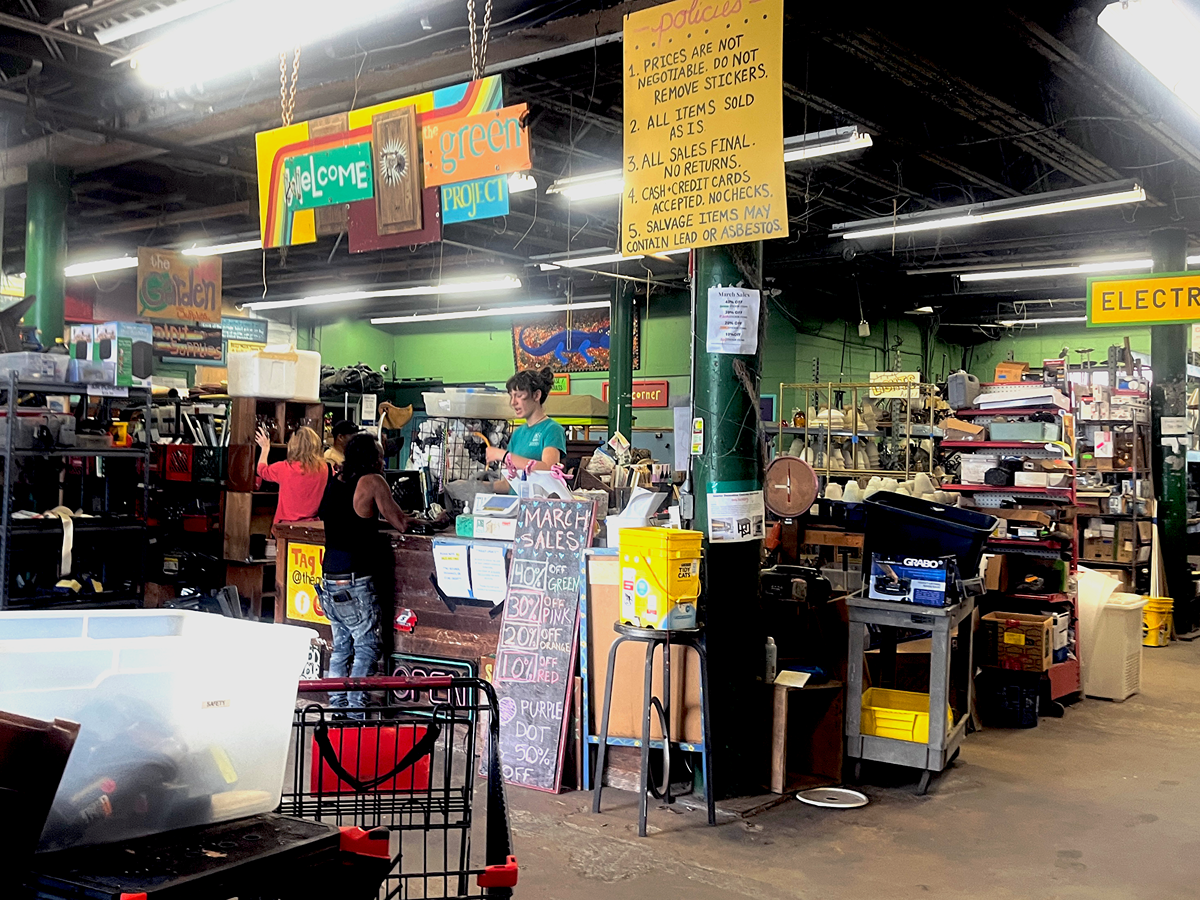
After the facility relocated from Mid-City to the Bywater in 1998, another major component of the project was added called the Salvage Store, a retail operation born from the project's Building Materials Exchange program. The store sells architectural salvage, which can be reused or repurposed and helped the project become profitable.
It also netted a grant from the Environmental Protection Agency. Local architect Daniel Winkert was the one who wrote the grant proposal, according to Stone. The new program proved to be less labor intensive, as well. It was a lot of work sorting through the donations and organizing them for sale but not as much as mixing the paint. To date, 2,000,000 pounds of material has been saved from becoming landfill.
Salvaging building materials is not only a benefit to the environment, it's a boon to local culture, as well. In the wake of Hurricane Katrina, many architectural building parts that would have been wasted were donated and eventually used in new construction. Salvation, an annual design competition featuring original art, furniture, lighting, and other functional objects made from reclaimed materials, takes place each spring, with the winners announced at a gala in the fall. It has featured work produced by over one hundred Louisiana designers. The winning entries are auctioned off live and the proceeds get split between the designers and the Green Project.
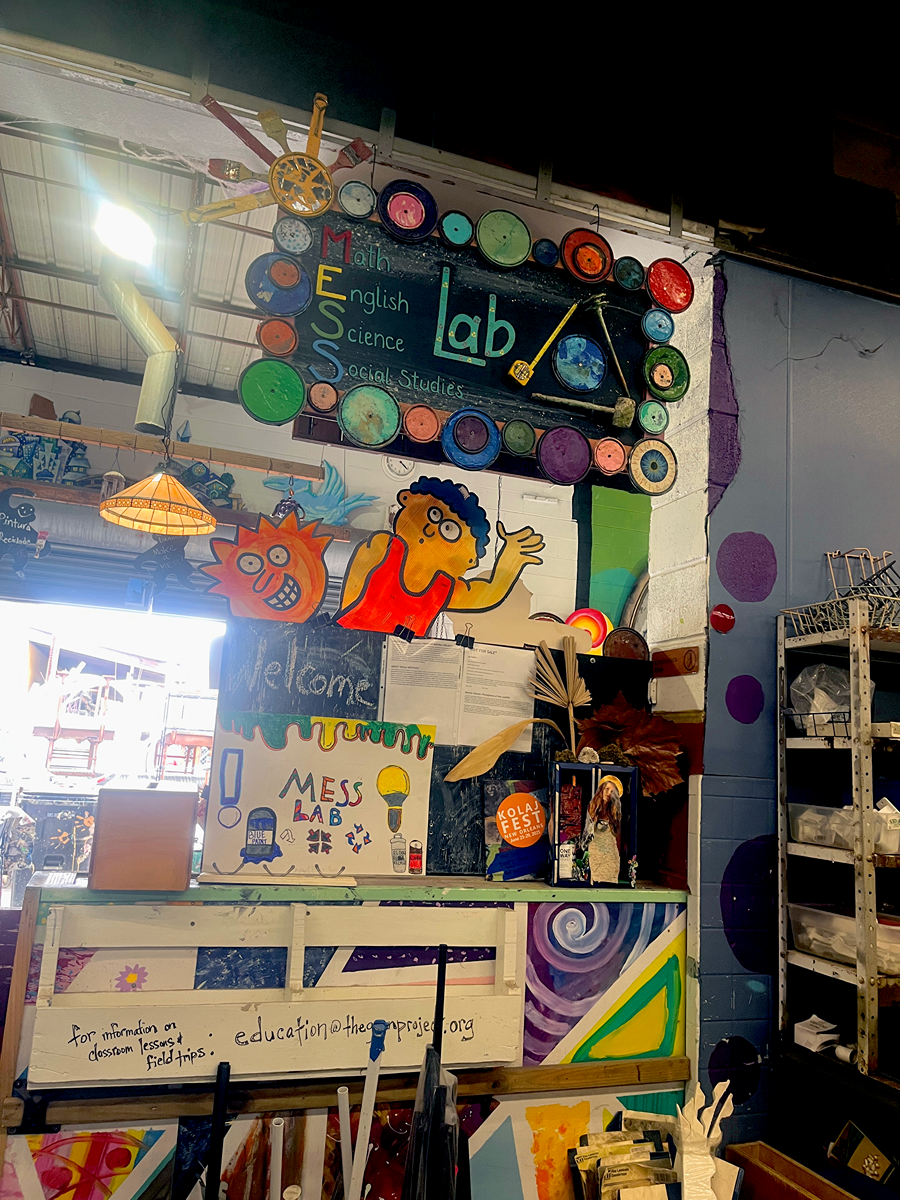
Launched in 2021, the M.E.S.S. Lab (Math, English Language Arts, Social Studies, and Science) uses the project's paint recycling program as an opportunity for students to learn about recycling by taking a more active part in it. The key feature of the M.E.S.S. Lab is the hands-on experience with the recycling process that it provides, with students collecting paint and creating a new product from it and then marketing it to the community. Students work in small teams to make five gallons of their chosen color. Old containers of paint are poured through a screen and combined with an electric mixer to recreate colors or make new ones, producing five-gallon, one-gallon, and quart-sized batches of paint. The resulting colors can't be exactly matched or reproduced, so buyers need to know how much paint they're going to need and purchase accordingly.
While the in-class lessons are a passive learning experience, the lab offers program participants experience with a sustainable business model and a circular economy as they work in a team to create a recycled product from a community waste stream that people will buy for use in their homes. Proceeds from paint sales help to keep the program sustainable, and the customer can further the goals of the program by sharing a picture with a hashtag and a description of how and where the paint was used.
The various programs are all designed to encourage people to think about reducing first. If over-consumption can be reduced, then there is no waste material to be dealt with.