Throw Me Som'thin', Mista!
Living in South Louisiana automatically qualifies you to understand certain phrases and situations that are not known to residents of anyplace else.
You know the answer to the question, "What school did you go to?" never includes the name of a college. You know that traditional compass points are of no use. You know how to properly pronounce the name of the French Quarter's Burgundy Street. You know that hurricanes have a season.
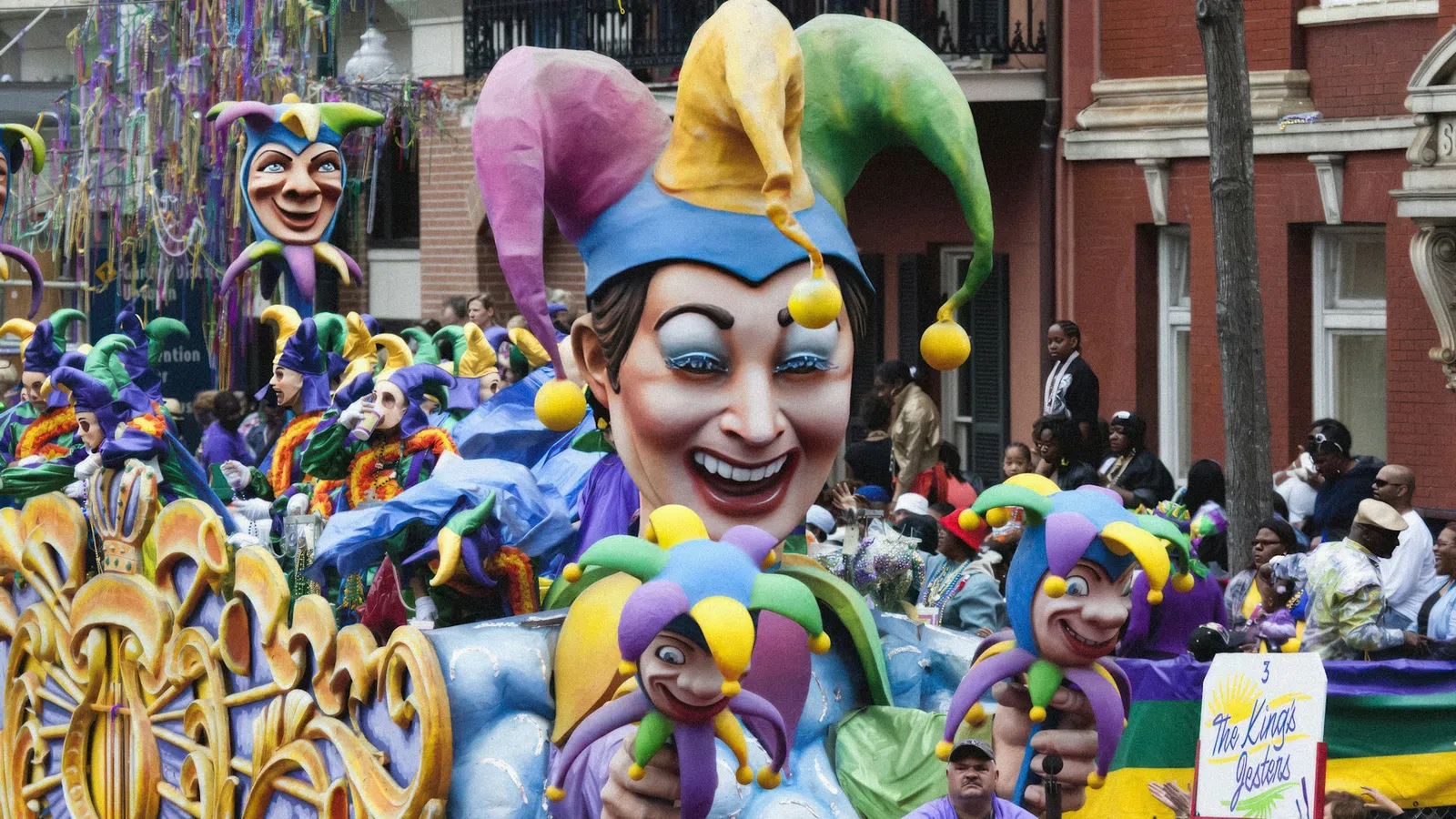
You also know, from the time when you were just a baby, that parades are never just a spectator sport. You will always come away from a parade with more merch than when you arrived. What you likely do not know is how tossing goodies from parade floats into a crowd of spectators began. You wouldn't be thinking about origins when you are being pelted by hard pieces of plastic, which you will ultimately wear to prove your parade prowess to all who will see you immediately after the spectacle and maybe for days to come. Wearing beads is proof that you were in that number during the parade and successfully scored coveted prizes.
In the ancient world of Greece and Rome, huge public celebrations were held in the fall, celebrating harvest, and in the spring, celebrating the end of the cold, winter season. These festivals usually included a public statement from nobility and land owners showing the top rung of the caste social system affirming their place in society—namely, at the top. The celebrations would also pay homage to certain gods.
When Christianity came into the picture, by coincidence, the Christian days of importance mostly coincided with the previously celebrated pagan days of joy. Parades were the preferred method to bring together the upper class and the lower class in the same place without changing the economic dynamic.
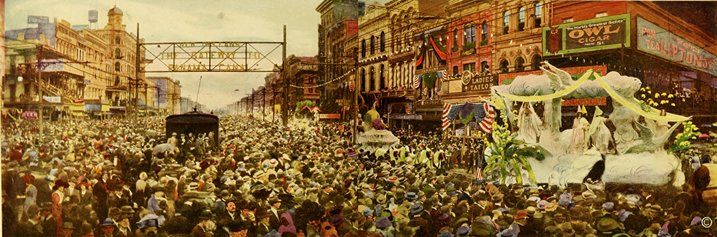
From its earliest days of discovery and establishment, New Orleans celebrated the end of the lean season of winter and into the lean season of Lent. The Carnival traditions of Europe made the journey over the ocean into the New World of Louisiana.
In 1710, the Boeuf Gras Society was formalized by Jean-Baptiste Le Moyne Iberville, founder of Louisiana; however, the celebration took place almost from the moment in 1699 when he landed and declared the founding of Louisiana at Bayou Mardi Gras, now in Plaquemines Parish on the Westbank. Bayou Mardi Gras, near the community of Buras, is the oldest place name—other than Native American names—still in existence in the entire Louisiana Purchase Territory.
In the early 1870s, it was a tradition at parades to have Santa Claus—yes, that jolly elf—hand out beads and other gifts to parade attendees. In the early 20th century, the Krewe of Rex encouraged its members, riding floats and horses, to throw beads to the gathered throng of excited and clamoring spectators. The beads were manufactured in various places, but the glass beads from Czechoslovakia were most desired.
Here was also established the tradition of competition among spectators to score the prize. The phrase, "Throw me something, mister!" was a natural development. Often women felt they were at a disadvantage when the competition to possess the "gifts" became physical, but many solved that by exposing their breasts as enticement to be rewarded. It goes without saying, that tactic works.
Beads were mostly manufactured in the agreed-upon colors of Carnival: purple, green, and gold. Those are considered the Christian colors representing justice, faith, and power. The colors were adopted by the Rex organization for their first parade in 1872, staged in honor of the visit of Grand Duke Alexis, a member of the Russian royal family in love with an American woman. The color designation was formally adopted by Rex in 1892.
The 1960s saw a number of developments. A few of the krewes, as Carnival organizations are called, created doubloons—coins printed with the krewe's coat of arms on one side—and some designation of the time-frame in which the coin was created. These were mostly made of aluminum.
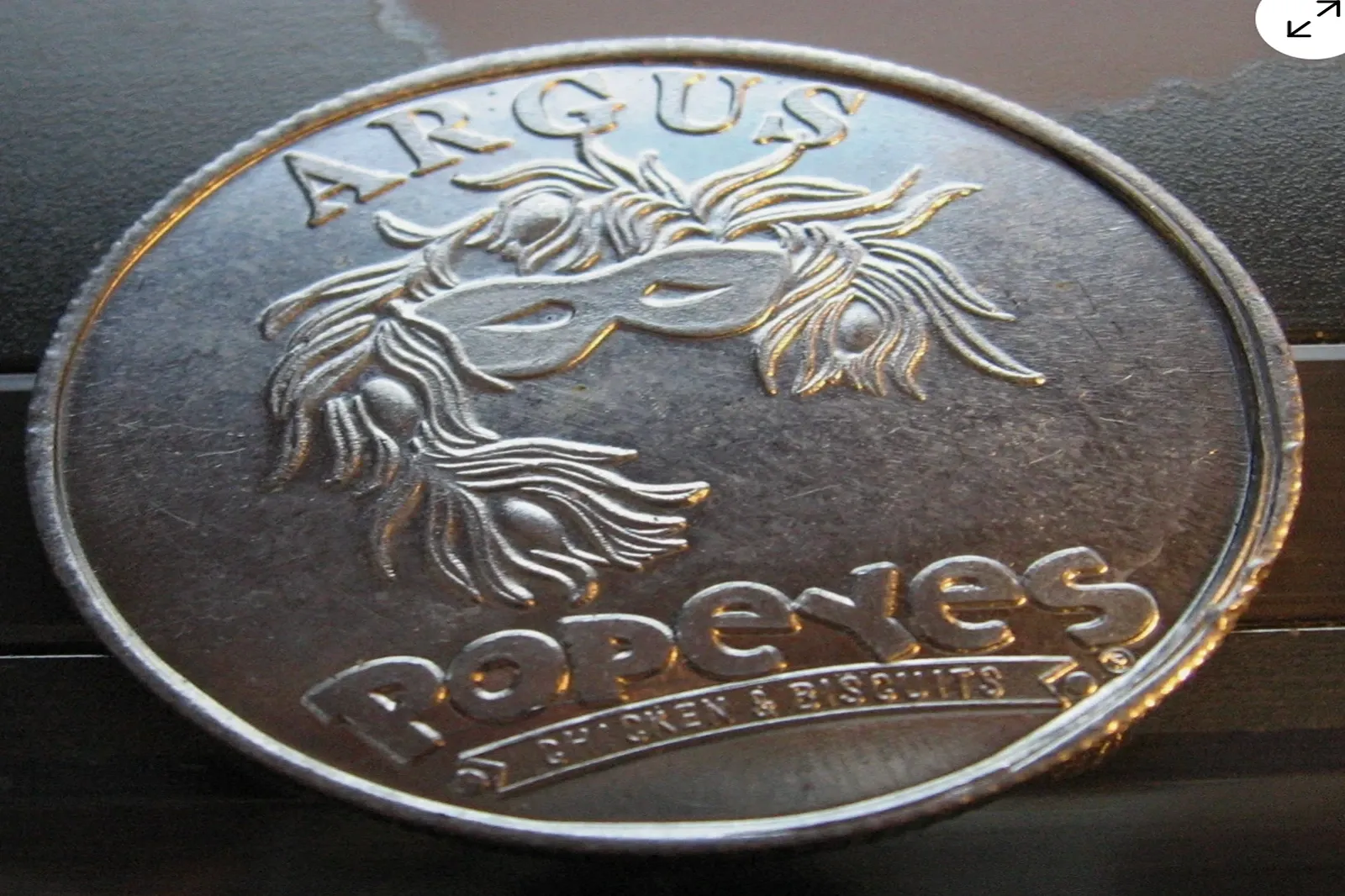
Popeyes Fried Chicken saw a special opportunity and, in several parades, tossed doubloons that were cents-off coupons to be redeemed at the fast food business' outlets. This worked for a few years, but then New Orleans' overseers determined that this program violated the prohibition against any commercial involvement within the parade itself. Popeyes was able to continue this program by giving the doubloons to radio stations' vehicles, which preceded each parade broadcasting traffic and parade progress reports. Eventually, Popeyes doubloon/coupon program ceased.
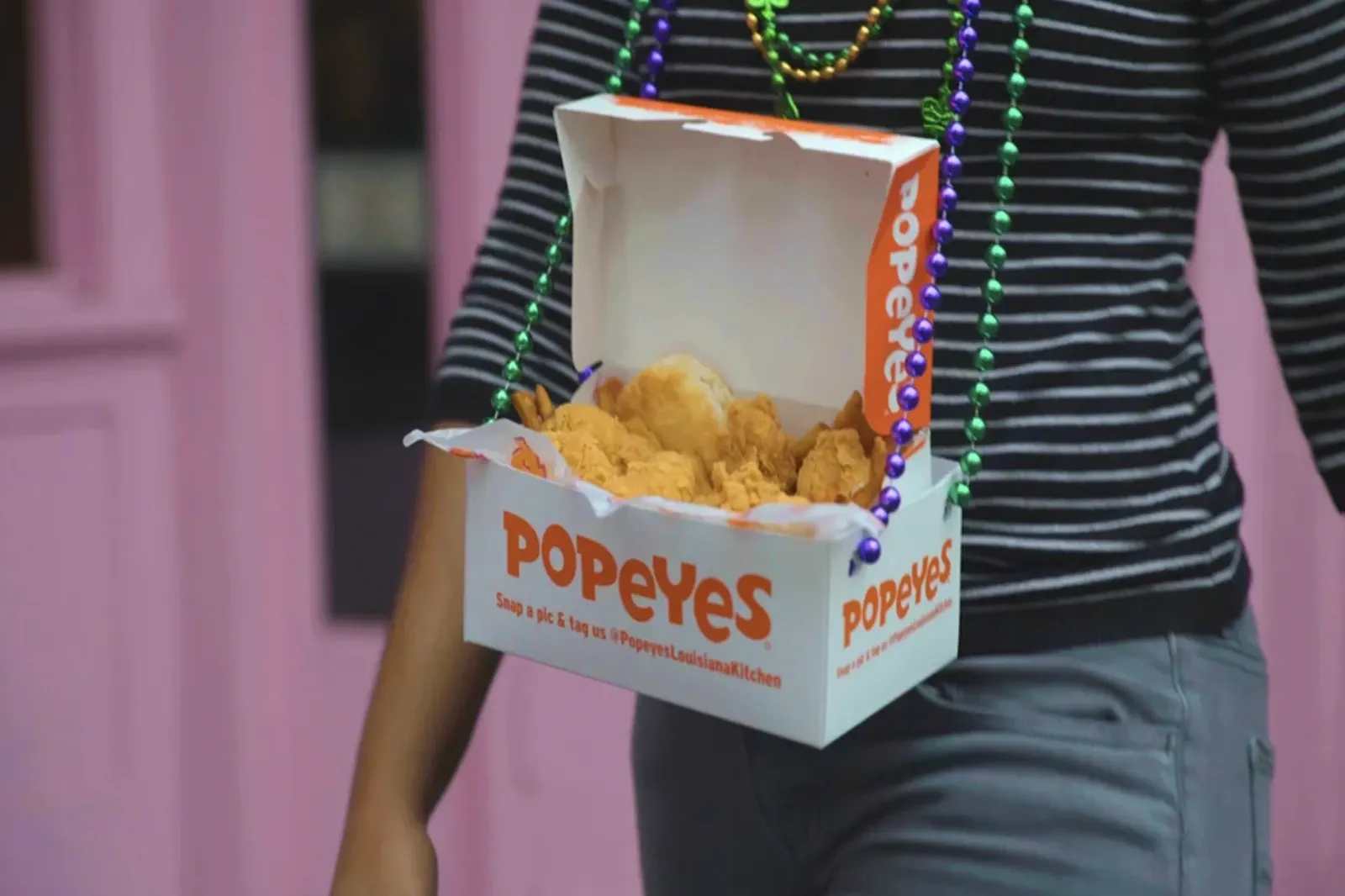
More famous is the effort by many krewes to distribute signature throws. Some of these throws are special beads with the krewe's logo or unique color schemes, but certain items have become must-catch prizes. Zulu developed the decorated coconut. The all-women group Muses encouraged its members to decorate high-heel shoes for distribution. Iris tosses signature sunglasses. The Krewe of Tucks tosses its own specially-produced toilet paper.
Stuffed animals and LED-lighted mementoes have been adopted by a number of krewes. Also, continuing on the theme of beads, there are now oversize beads and elaborately designed beads unique to the respective krewes.
It's been over 150 years of bringing an untold number of floats to the streets, but New Orleans Mardi Gras has come a long way from Santa Claus to high heel shoes and coconuts. Still, thankfully, there's no end in sight for "the greatest free show on Earth."