All About Rum
If you want to have an idea as to why citizens of the Old World, mainly Europe, embraced all the "new" brought about by sailing west off of their homeland and landing on lands across an ocean, consider today's attitudes about space exploration.
We are spending vast amounts of money, devoting huge sums of our resources, and creating new transportation vehicles to reach out and define what new bits of progress can be accomplished by establishing a solid presence in the areas surrounding Earth and beyond. The commitments to space exploration we have laid down are exactly what our ancestors did when it was discovered that land existed, previously unseen, across a large body of water, where new outposts could be established and prosper.
Thinking of the New World/Space Race in this way puts us in the same frame of mind as our ancestors. While the commercial advantages of agricultural products were more self-evident with the establishment of manufacturing facilities in the New World, in the Space Race, we are creating known product manufacturing in a more advantageous physical environment away from our home planet.
The main point here is to drive home the statement that anyone who thinks the Boston Tea Party was about tea does not know real history. The Boston Tea Party, a seminal event in America's Revolution against England, was about tariffs on products we New World denizens produced and that were shipped back to the Old World.
Primarily among those products was rum. The heavy tariff paid on this side of the Atlantic was particularly upsetting since the other side of the Atlantic could not properly produce rum anyway. The European environment did not provide enough sunlight nor the proper amount of rain to grow rum's key manufacturing ingredient—sugar cane.
Sugar cane is a tropical plant. It likes strong heat, porous soils, and lots of rain. These three qualities were available in abundance in the islands of the New World and were even available on the continent itself. Native peoples, long before Europeans arrived, made rums because the necessary components were right outside of their tribal villages.
Like tobacco, Europeans took a liking to the new products made with "tropical" ingredients. For the monarchies in the Old World to then step up and place a heavy tax on goods, which could only be produced on this side of the Atlantic, was insulting and even, as it turns out, revolutionary.
There were, to be sure, attempts to make rum from sugar beets, which can be grown easily enough in Europe; however, the product is entirely different, lacking in depth and an elegant aroma. Now, making a spirit called rum with sugar beets is against international law. Rum must be made now from sugar cane.
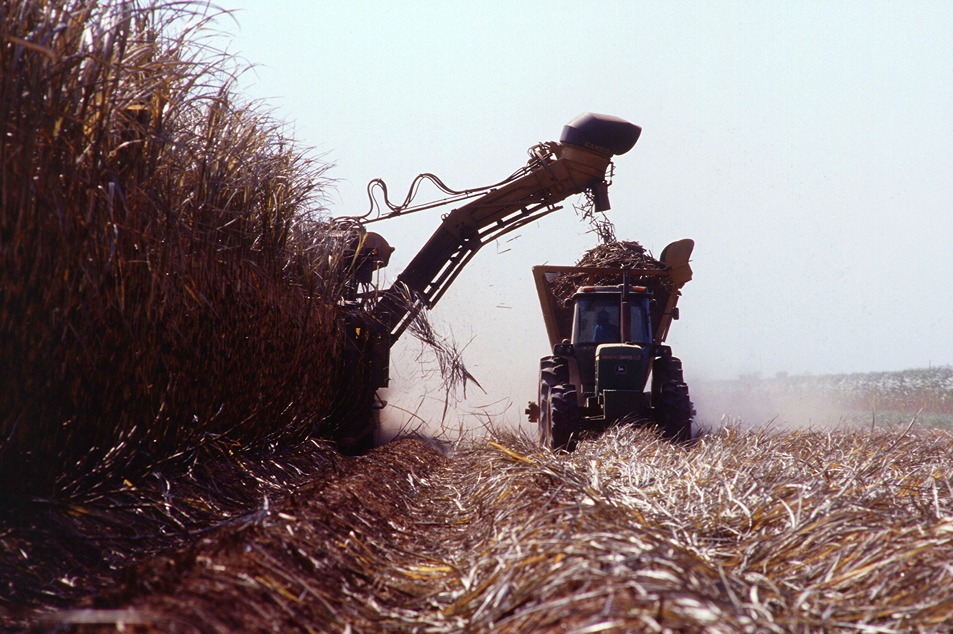
The cane is harvested at one crop per season. Harvesting time is determined by sucrose levels in the stalk, and today, harvesting is usually done mechanically.
The stalk is then quickly taken to a mill where it is crushed and the resulting juice, a thick, dark syrup, is boiled. Sometimes at this point, depending on what the target product is going to be, molasses, also a product of the cane pressing, is added. During this fermentation stage, water and yeast are introduced to the syrup. The yeast consumes the sugars, and the result is alcohol.
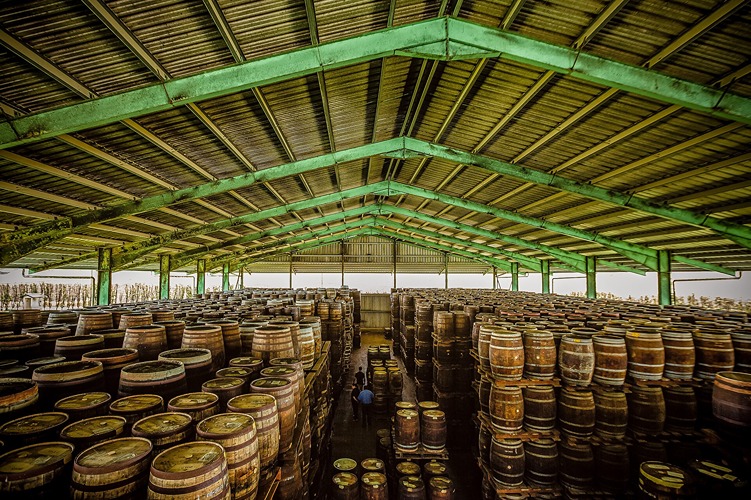
The fermented liquid is heated in a still, the style of which determines what kind of rum will be the result. Lighter rums experience column stills, and if a heavier product is desired, a pot still is used. The end result after this process is a clear, alcohol liquid, which is then placed into a wooden barrel to age. At this point, the clear liquid takes certain characteristics from the wood, including color, aromas, and flavor depth.
There are several types of rum made and marketed today:
White Rum: Filtered for clarity, actually only used for cocktails. Never served straight.
Gold/Amber Rum: Aged mostly in oak barrels. Smooth, rich, adds important tactile flavors/aromas to cocktails.
Dark Rum: Achieved through the addition of molasses or caramel. Exclusively used in high-end cocktail or culinary efforts. Sometimes preferred for sipping.
Spiced Rum: Infused with spices such as cinnamon, vanilla, or nutmeg or a proprietary blend known only to the distillery.
Overproof Rum: The initial pressing is boiled at a much higher temperature, which yields a rum that is measured at 50% to 60% alcohol by volume or more instead of the usual 40%.
Rum cocktails are usually the easiest and quickest cocktails to make. The rum does all the work providing great flavors and aromas. Unlike vodka, which is, by definition, flavorless and only present to add alcohol to the final effort, rums are tropical and have a "presence" in the mixing efforts.
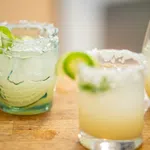
Mojito
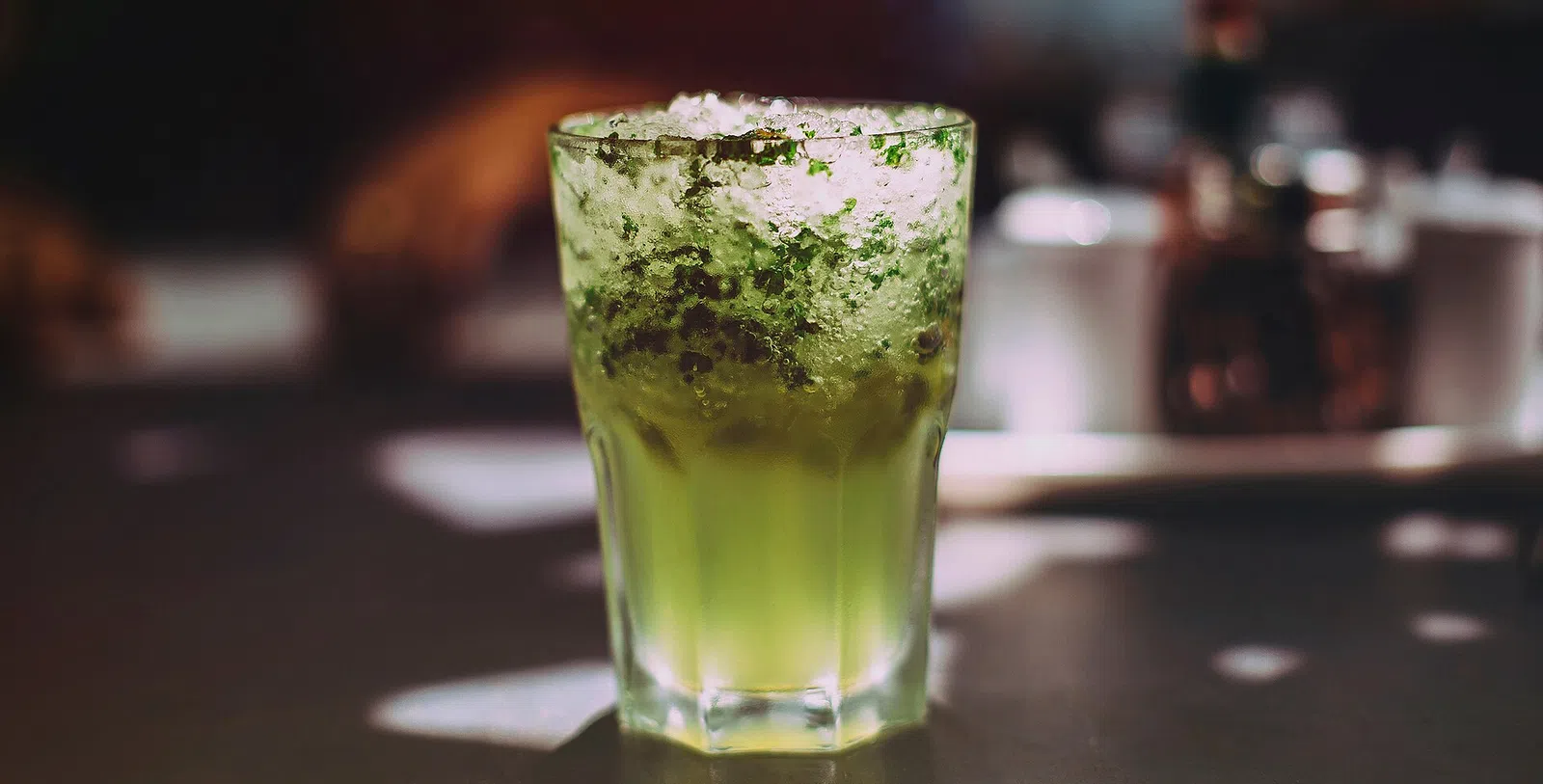
A Cuban-born cocktail, specifically Havana. This drink consists of only five ingredients.
2 oz. White Rum
1 oz. Fresh Lime Juice, or to taste
2 tsp. Sugar or ½ oz. Simple Syrup
6 to 10 leaves Fresh Mint
Muddle ingredients. Mix in a tall glass filled with ice. Top off with club soda.
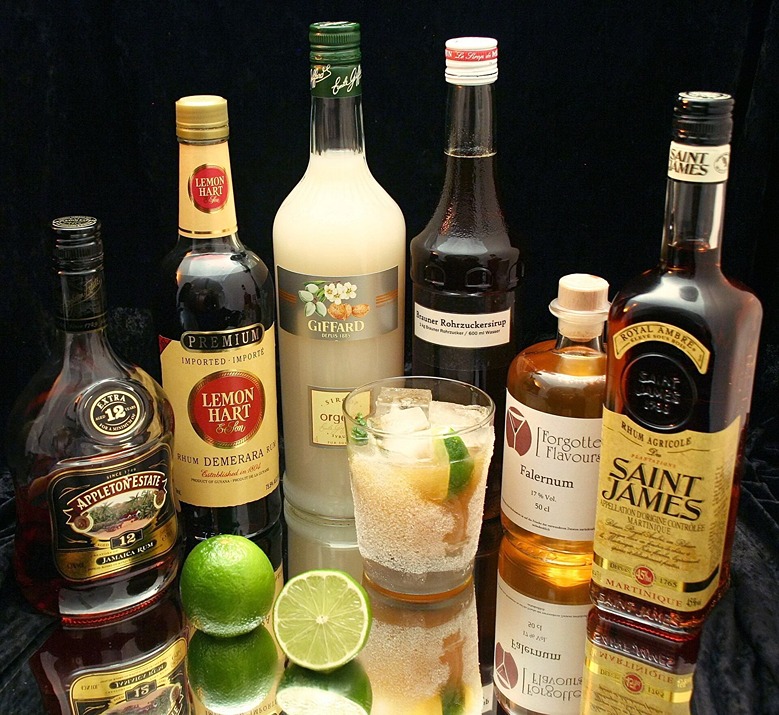
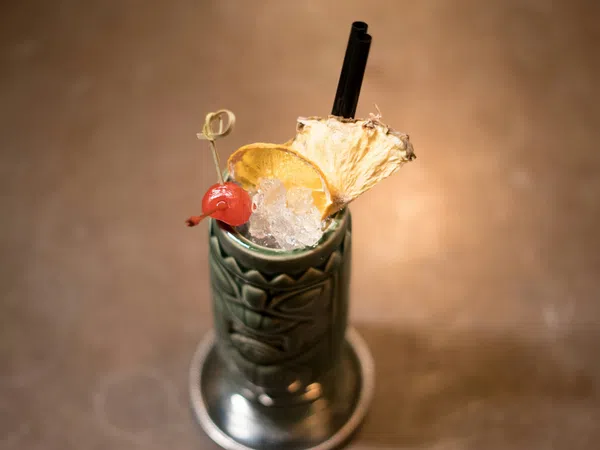
Mai Tai
Created in Jamaica as the perfect seaside beverage on a hot day.
2 oz. Jamaican Rum
1 oz. Fresh Lime Juice
¼ oz. Orgeat Syrup
¼ oz. Simple Syrup (for an added treat, add a drop or two of vanilla)
Mix in a shaker with plenty of ice. Pour into a tall glass filled with ice. Garnish with fresh mint or lime slices.