For Change
New Orleans' most colorful, hopeful, and wide-reaching company is one you might not have heard of yet.
They operate out of a lab on LSU New Orleans' campus but their designers, developers, makers, and customers live all over the globe. A 501(c)(3) nonprofit, Make Good was founded only five years ago by creator and Louisiana-native Noam Platt, and it has been the answer to an enormous question.
If you or your loved one is in need of a mobility device but the average cost for one is $1,000 to $10,000, not fully covered by insurance, not readily available, and something that might be outgrown and need to be replaced, what do you do?
Platt put the question out to the internet and, after a wave of cynicism, he found a few designers who decided to put their heads together and tackle the conundrum. Slowly and thoughtfully, the Make Good design team, with community input, created 3D printer blueprints to build these devices that were easy to follow; designed for low cost, everyday consumer printers; assembled as simply as LEGOs; and completely free to anyone who needs them. Their mission became "to make life-changing assistive technology accessible to everyone, regardless of income, insurance, or geography."
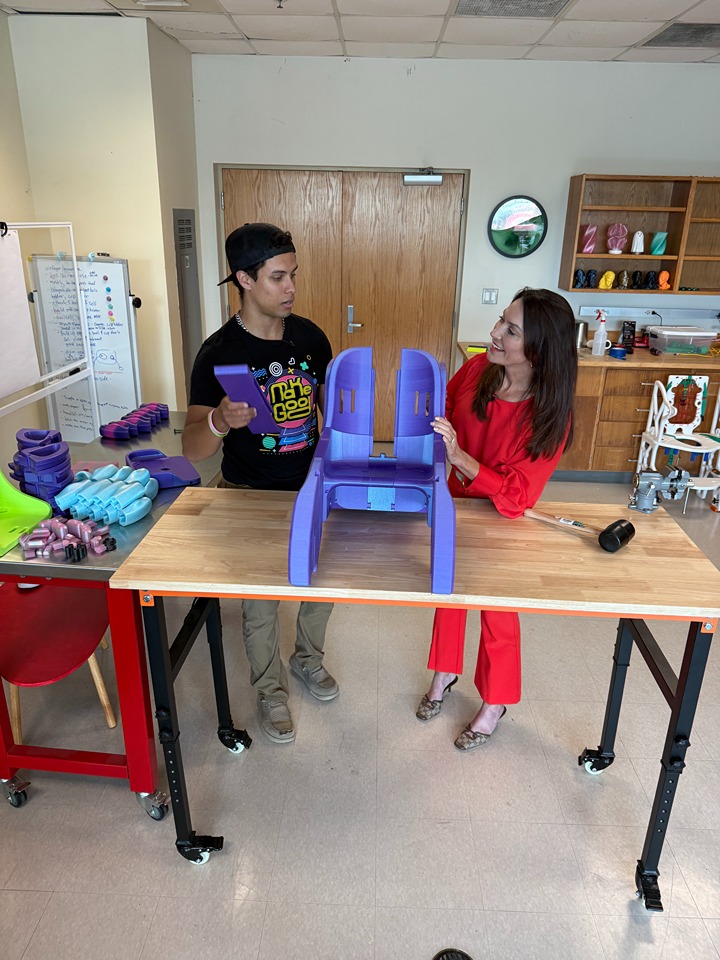
Because there is no intellectual copyright and no prohibitively expensive commercial materials or tools needed to make these devices, each 3D printed wheelchair can be made for under $200; that's 2-20% of the market value. Numbers like that are game changers, not just to families but to entire communities. For those who need it, a wheelchair is not a luxury item—it is a daily necessity.
Make Good has a website (3d-mobility.org) that is dedicated to cutting through the red tape and matching families directly with makers. Families can request their child's favorite colors and tailor the chairs to their needs for free, makers can access all the instructions, and anyone generous enough to donate can sponsor a build kit to cover the cost of materials, which are safe, durable, and tested. The site also shows video examples of builds and explains how it all works together, as well as telling the success stories of happy families who often see their makers as heroes and world-changers.
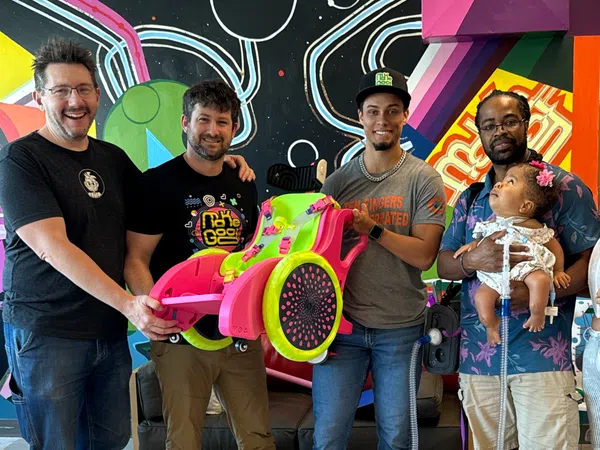
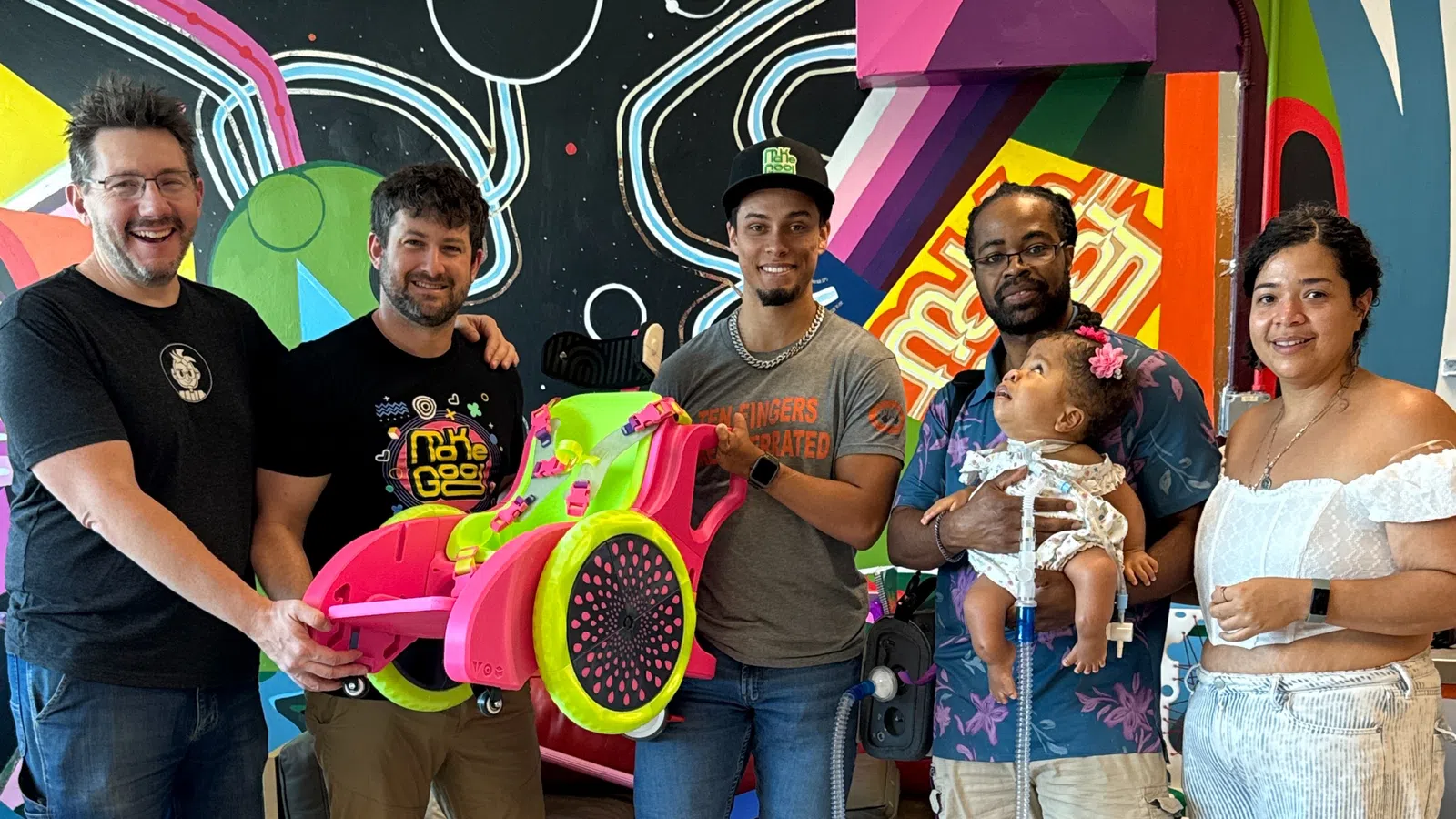
One very public example of a family touched by this project is well known to most New Orleanians. In 2022, Kermit Ruffins, a beloved New Orleans' culture bearer, suffered an unthinkable tragedy. His girlfriend, Harmonese Pleasant, was shot in a random act of gun violence and forced into an emergency delivery of their gorgeous little girl, Blossom. Baby Blossom was born with a spinal cord injury that meant she might never be able to walk unaided. Four years later, Blossom is now an invaluable part of the Make Good community. She tests chairs, and she's fast, agile, and an absolute pro.
While Make Good's most popular device is its TMTs (toddler mobility trainers), often needed for cerebral palsy, spina bifida, balance disorders, down syndrome, generalized muscle weakness, and post-surgery recovery, which can be printed in every color and variation and are unique to every maker, there are many other assistance devices they've designed. The community is constantly creating new solutions for all sorts of assistance.
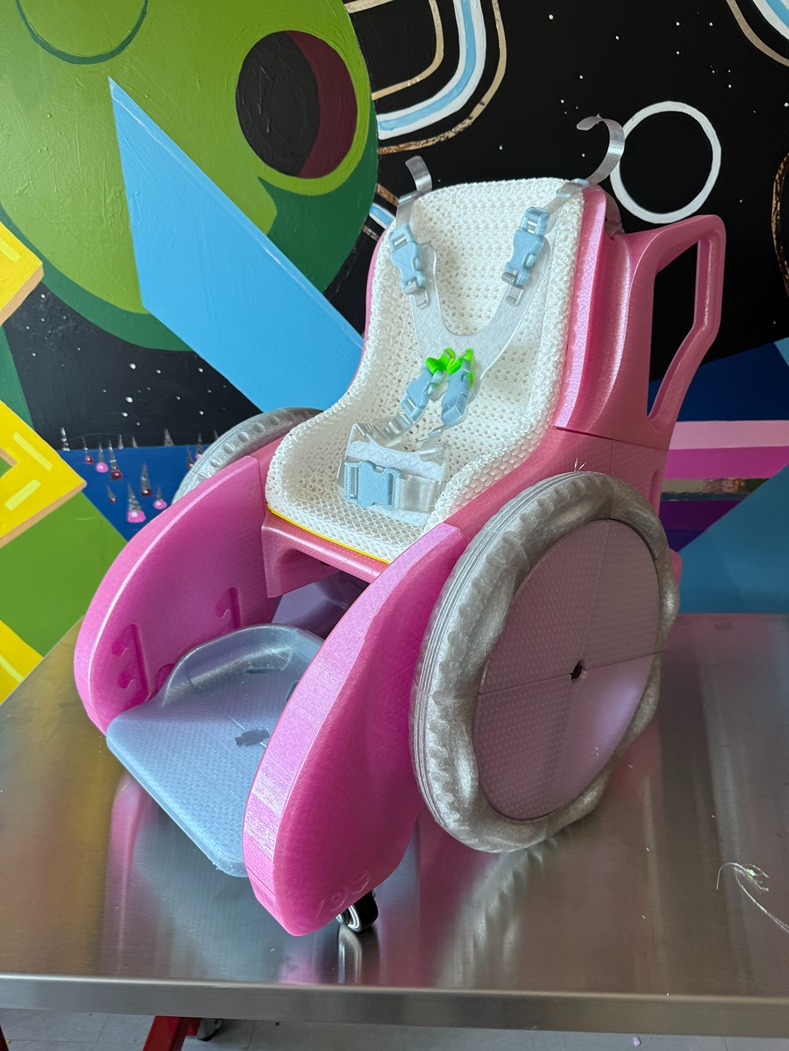
On their main site (MakeGood.design), you can find the instructions for printing multi utility holders that can hold pens, toothbrushes, or even guitar picks, signature guides, writing handles, seat belt straps, cup holders, cochlear implant covers, slot readers, phone cuffs, pen balls, card holders, and shoe lace simplifiers. There's an iPhone holder blueprint that they even presented to Apple, as it allows anyone with any sort of grip issues to hold their phone and it costs shockingly little to make. Apple had no answer as to why they didn't offer a product like that to the general public, as it could help millions of people interact with their product more comfortably and effectively.
While the original idea of Make Good was to connect makers directly with users, hospitals have also been grateful for access to the affordable and colorful devices. They are using the chairs for patient transport and recovery but also to give children more access to playing outside.
The reason that these prints can be done at home on a basic 3D printer and don't require commercial grade technology is that even the largest designs are made up of small prints that are put together with really innovative joinery. The builds are so purposefully simple that kids as young as 8 years old have been able to put them together from parts. Senior staffers can snap together a print in 10 minutes. This makes them portable, shippable, and accessible in so many ways.
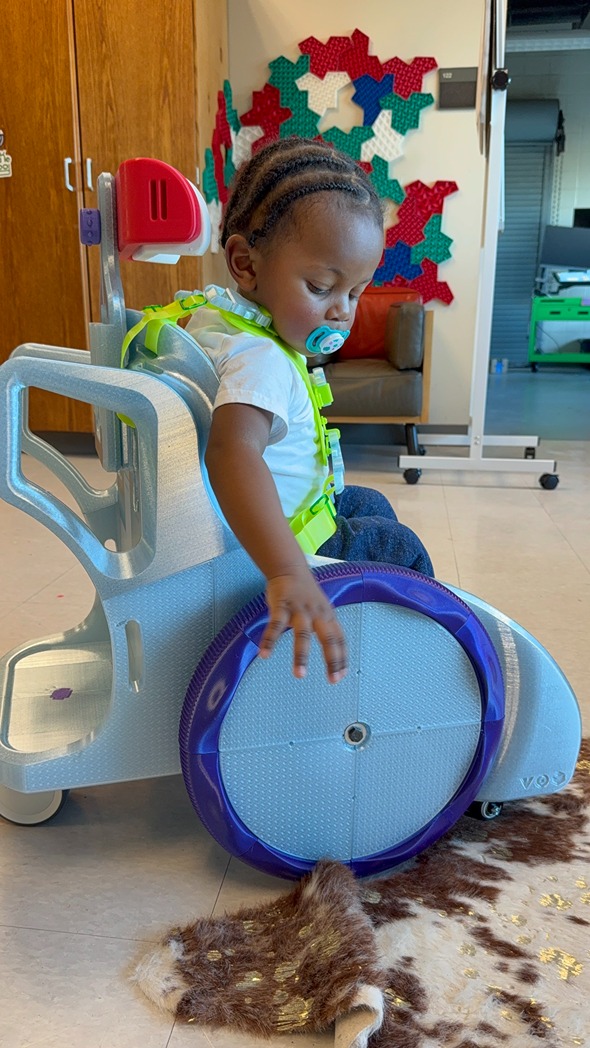
Make Good is even updating their classic design and working on a new chair called "TMT Active," which is a little lighter and more maneuverable for kids to play sports in. Wheels have been designed with a push rim for those with the upper arm strength to push themselves, and there is a handle option of varying heights for parental assistance. Each of Make Good's updates is based on user feedback and maker ingenuity. Many of the makers themselves come from the disability community. These designs have helped them and now they're finding ways to help the world. As this company grows, even the youngest of users might grow to be designers and carry on the tradition.