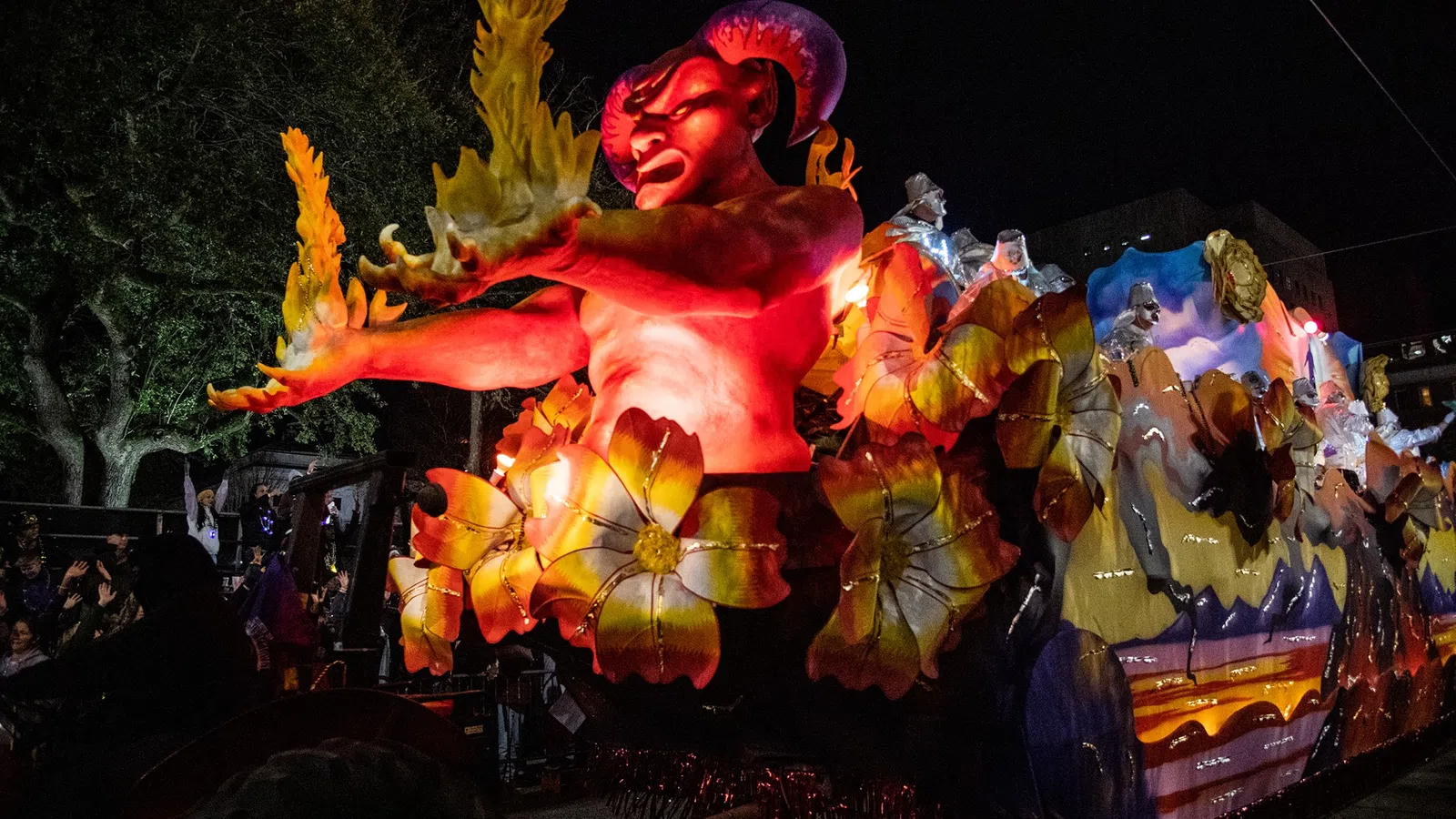
Messenger of the Gods, Masters of the Mardi Gras
Although the humdrum majority of America will see February 13 as the unlucky Friday the 13th, the date is quite lucky for the people of New Orleans as this year's Vendredi Gras—the final Friday of the Carnival season.
Although the festivities have been escalating for weeks since their beginning on Twelfth Night, "Epiphany" for the humdrum majority, this final week is when the season leaps from arcane calendar observances into the very air of New Orleans.
For some, this Friday is when the season ramps up into a days-long celebration in the streets, where liquor is more common than water and plastic beads fleetingly become infinitely more than the sum of their parts. For others, this is the peak of the social season, when Carnival balls become stages for the most graceful and choreographed pageantry anywhere in North America, and family heirlooms are bequeathed in the quiet splendor of pearl and cloisonné. If Carnival is the paradoxical existence of these worlds as two-sides of the same doubloon, then the first parade of Vendredi Gras, named fittingly for the Greek god of commerce, proves to be masters of both.
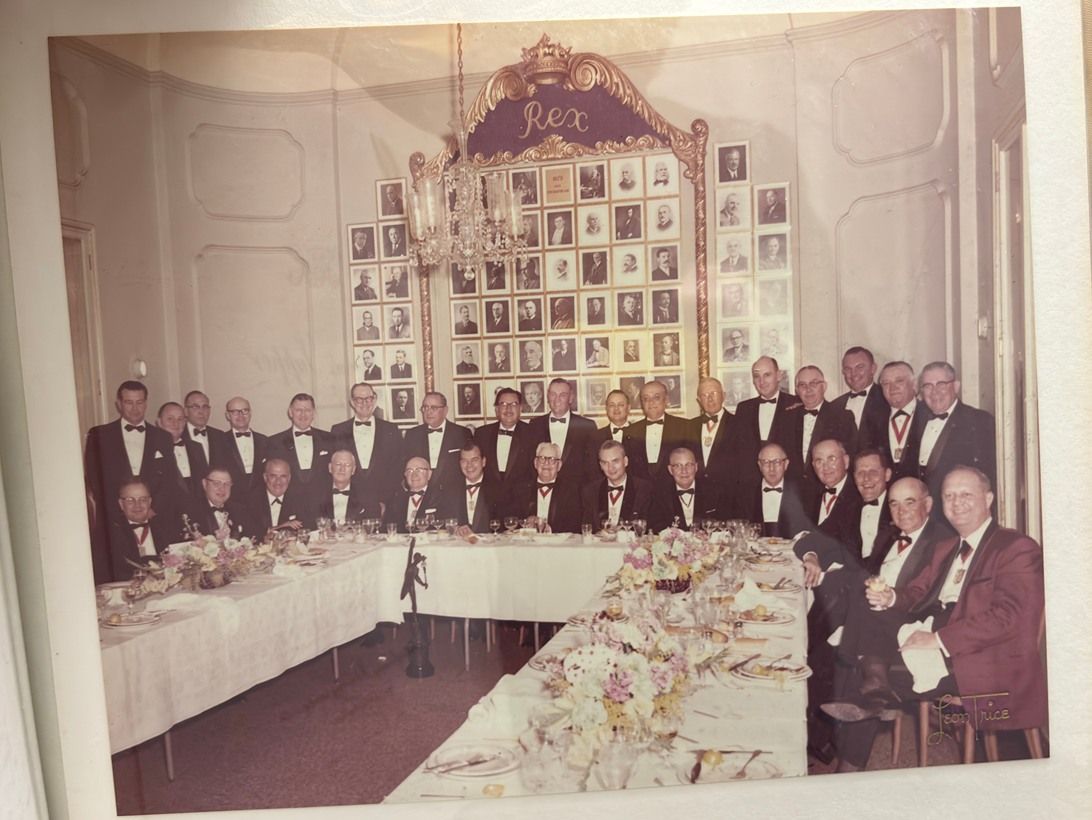
Founded in 1937, the Krewe of Hermes, romanticized as the "Knights of Hermes" in older materials, proved itself in the rough task of bringing cheer during the throes of the Great Depression. With its Friday night slot bringing the parading to five consecutive nights, at that time considered a massive quantity of parading, Hermes played a major role in boosting the national reputation of New Orleans Mardi Gras at a time when many industries were in a slump. The civic-minded tradition of Hermes became a major component of the parade's identity, with a membership drawing extensively from the business and civic communities of the city.
Named for the tutelary god of crossroads, the Krewe of Hermes occupies a respectable intersection across the generations of Carnival tradition. The krewe was formed after parading had already been firmly established, yet it is firmly an elder both in age and style to the "super-krewe" tradition, which changed the dynamics of parading in the mid-20th century to emphasize massive scale and huge quantities of riders and throws. The Vendredi Gras "triple-threat" of Hermes, Le Krewe d'Etat, and Morpheus, of course, allows each individual parade to focus on its own quality, with three parades being able to match the scale of subsequent nights of the season.
On the old-school end, Hermes prides itself on putting on an intimate and exquisitely-detailed presentation. On the side of innovation, Hermes was among the first night parades to utilize neon lighting to illuminate its floats along the route—a major change from the earliest days when kerosene flambeaux torches were the only illumination along the nighttime routes. The themes of Hermes are only revealed once the floats roll, a component of the traditional secrecy of older Mardi Gras krewes that also precludes public identification of the reigning King Hermes.
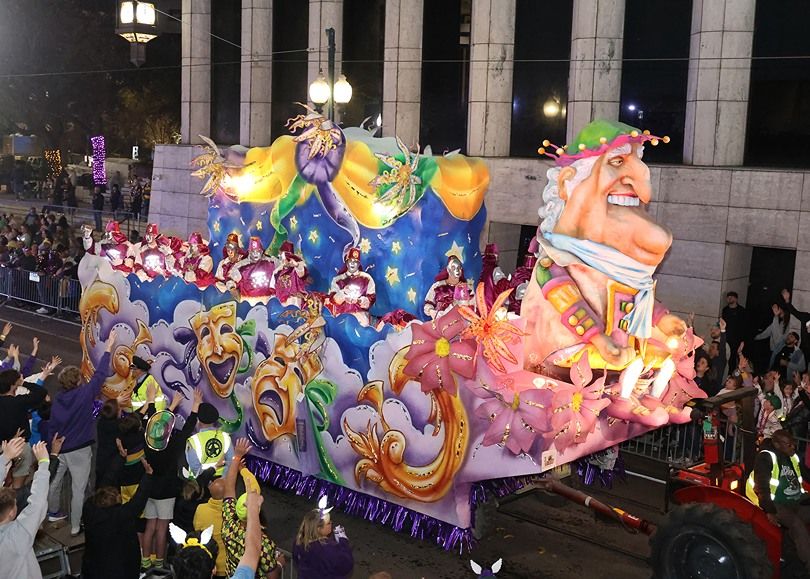
Over 75 years of parading will naturally exhaust a multitude of themes, and Hermes has gone through its share of eras. Mounted over float chassis belonging to the old, 1800s parading incarnation of the Phunny Phorty Phellows, the earliest floats and themes of Hermes eschewed the more erudite aspects of old-line parading in favor of light music and fantasies. Popular themes over the years have included "The Forty Thieves," The Little Mermaid, as there always have to be merfolk somewhere in Carnival, and even a celebrated collaboration with long-running adventure newspaper comic Prince Valiant, which saw creator Hal Foster invited to the ball tableaux, trivia to this day amongst enthusiasts of the printed page and/or neutral ground.
Kept secret, as is the tradition, the 2026 theme is best teased as a combination of literary legendarium and whimsical storytelling. The theme will be right at home between classical Carnival artistry and the stylish fun that made Hermes a hit to begin with all those years ago.
Given its history of civic-mindedness, the Krewe of Hermes has for years met the needs of local public institutions. The Hermes Beyond the Parade Foundation has provided funding to assist EMS services and the New Orleans Fire Department, as well as extra funding for auxiliary units of the New Orleans Police Department including horseback officers, canine units, and mobility-forward all-terrain-vehicles to navigate the tight, centuries-old streets of the French Quarter. The more trivia-literate would be tempted to imagine the ATVs as, in some abstract way, a vestigial response to a 1973 city ordinance barring large-scale parades from rolling in the older parts of the city such as the French Quarter.
Speaking of the Vieux Carré, the krewe lent its name to one of its most prestigious watering holes. The Hermes Bar at Antoine's serves as the liminal god's doorway between the jocular Royal Street and the fine-dining restaurant more ingrained into New Orleans Mardi Gras culture than perhaps any other public establishment. With royal costumes, beads, and classical ball invitations on display year-round, the Hermes Bar is a wonderful spot to sip a Boulevardier while watching the Kentucky Derby or overhearing a tour guide define what exactly a "banquette" is. During the Mardi Gras season, the krewe rents out the restaurant for its annual pre-parade walk and party, sandwiched between the preceding night's grand ball and the parade rolling into the winter sunset. The time for that roll has come.
Vendredi Gras is upon us, and travelers from the world-over are to descend upon St. Charles Avenue for the greatest night of the greatest time of the year. The god of travelers, or at least his namesake knights, do a fine job bringing them in.