From the Canary Islands to Greater New Orleans
New Orleans has always been shaped by the people who arrived, stayed, and folded their stories into the city's soul.
Long before modern migration waves began, the region's earliest Spanish immigrants settled in the marshes of St. Bernard Parish. It was there that Canary Islander families became known as Isleños, a tight-knit community that carried their language, food, music, and traditions across generations. The Isleños' presence became the quiet foundation for a broader Hispanic story that continues to grow, stretch, and expand throughout the Big Easy today.
The Isleños community is centered in St. Bernard Parish, but its influence extends into Orleans and Jefferson Parishes as well. This area has been shaped by later waves of Hispanic families from Honduras, Mexico, Cuba, and the Dominican Republic.
Archives, oral histories, and cultural memories have been passed down through these communities, helping to preserve the traditions and stories that originated here, rooted in the rich history of the Greater New Orleans area. Visitors can discover the history and learn about the Isleños at the Los Isleños Museum and Historic Village in St. Bernard Parish. With preserved homes, artifacts, and oral histories, the museum vividly showcases the community's story and its Hispanic roots in Louisiana.

The first wave arrived long before New Orleans became the city we know today. Canary Island families quietly settled into the marshes of St. Bernard Parish in the late 1700s, carrying their traditions with them. Recruited by the Spanish Crown from 1778 to 1783 to strengthen the colony, the Isleños settled in four main communities called San Bernardo, Barataria, Valenzuela, and Galveztown, though only San Bernardo to today. Spain sent Isleños to Louisiana with a single purpose, which was to protect and expand the colony for the Spanish Crown. They ended up building something far more personal than what the Spanish had in mind.
Life in these marshes demanded a different type of resilience, which the Isleños built through community, music, and memories. Their lives were centered on fishing, trapping, ranching, and surviving the unknown of this new land. The Isleños preserved a unique Spanish dialect, poetry, and oral storytelling, which endured hurricanes, isolation, and time. Elders passed down history by voice to younger generations. Décimas, 10-line poems sung in Spanish, were also a big tradition. The main language spoken was a Spanish dialect that was passed down and preserved for centuries. They had traditional foods such as caldo, paella-like rice dishes, and fried fish.
For the Isleños, history is alive in the way stories are told, as much of it did not survive in books or archives. The elders serve as the keepers of the past, holding stories that traveled from across the Atlantic Ocean to St. Bernard Parish. Décimas, a traditional form of verse, carry these narratives through melody during celebrations, events, and funerals, helping to foster community and preserve their rich language. Even hurricanes and generations of displacement could not wash these traditions away; families rebuilt and recounted what was important to them. Many of these moments occurred around kitchen tables, on porches, and at fishing camps, where voices carried further than any written word ever could.
Today, you can still hear echoes of décimas at gatherings in St. Bernard, serving as proof that this vibrant culture has survived because someone kept sharing stories and someone else continued to listen. This is not just one story, either. It is a living heritage that stretches from the marshes of St. Bernard to the neighborhoods of Orleans and Jefferson parishes. What began with the Isleños has evolved into something larger and more complex, enriched by generations of families who made their way to this area.

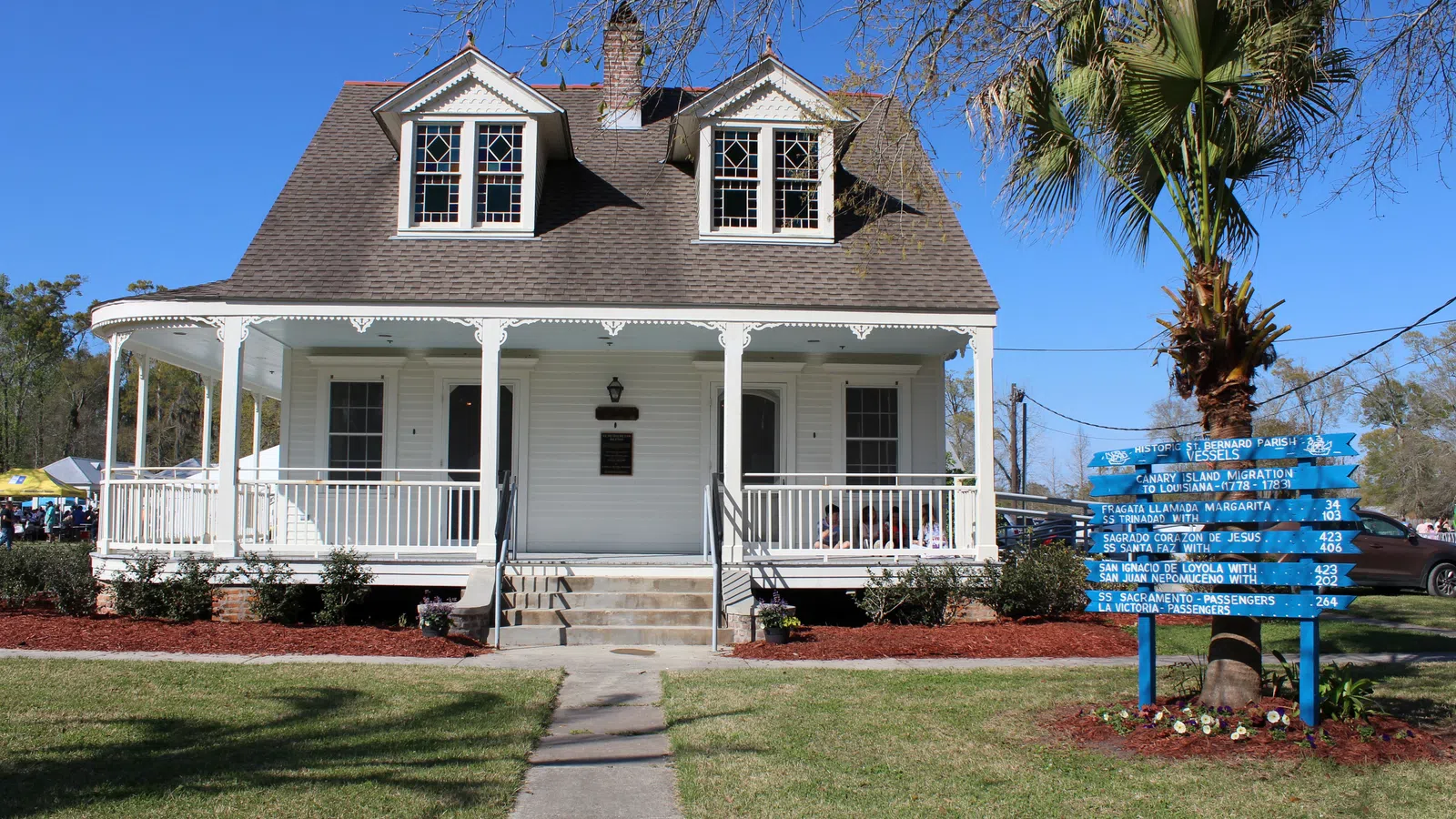
Much of the Isleños' culture is preserved at the Los Isleños Museum and Historic Village in St. Bernard Parish, which has hosted an annual Los Isleños Fiesta for 50 years. This is where the community's story is told throughout a series of restored historic buildings. Visitors can step inside the Melerine Trapper's Cabin, the outdoor kitchen (Estopinal-Salles House), and the Coconut Island Barroom. Each space is filled with tools, furniture, and everyday objects that show how people lived along the marsh. The 22-acre property also features a restored 1840 Creole-style cottage, which serves as the main museum. The main museum holds the Isleños' genealogy, hurricane recovery, and crafts and migration from the Canary Islands, which offer a deeper look at how the community adapted to Louisiana's landscape.
The museum offers a vivid, grounded look at the traditions that shaped the earliest Hispanic roots of Louisiana. At the same time, the newer generations from Honduras, Mexico, Cuba, the Dominican Republic, and elsewhere have infused their own colors and traditions into the culture of New Orleans. Across the parishes, Hispanic culture is evident in everyday life, whether through gatherings, music, shared meals, or the way families cherish memories to create something new.
These vibrant communities have flourished by preserving and passing down rich traditions that forge deep-rooted connections among their members. The branches of their heritage extend far and wide, tracing back to the early days when they first established a colony under the Spanish Crown. What began as a humble new beginning has blossomed into a culturally rich and diverse phenomenon known as the Big Easy, renowned for its unique blend of history, music, and cuisine.
To dive deeper into this captivating history and witness it firsthand, be sure to visit the Los Isleños Museum and Historic Village at 1357 Bayou Rd. in St. Bernard. It provides a window into the past, showcasing how these traditions have shaped the community's identity over the years.