Vamp Dat
THE ORIGINAL NOLA VAMP
In 1902, a man calling himself Jacques St. Germain arrived in New Orleans from France and quickly ensconced himself as a French Quarter-based bon vivant at a residence located at 1039 Royal St., which is between St. Philip and Ursuline.
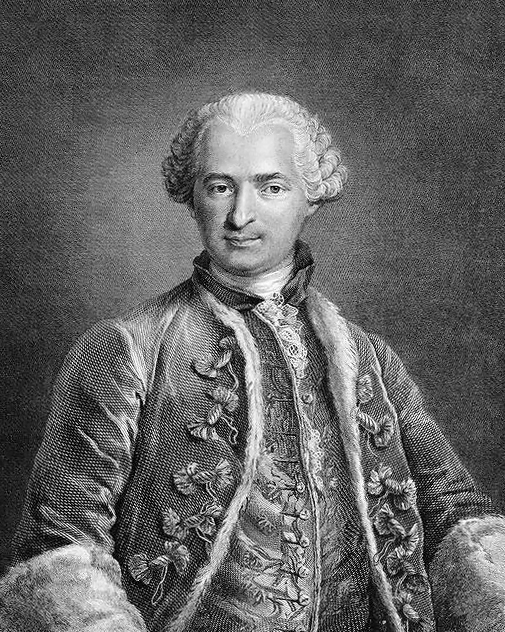
Due to his hosting of lavish soirées, which included luxurious spreads of food and wine, he successfully penetrated the French Quarter's upper echelon as, simultaneously, women surrounding him and his guests began to go missing. According to an article on ghostcitytours.com entitled "The Legends, Lore History," St. Germain, dubbed "The Immortal of Royal Street," reportedly never ate at his events but only sipped a red-hued liquid that guests initially assumed was red wine.
After approximately one to two years of these lavish habits, one evening, neighbors heard screaming from the St. Germain residence, and a woman hurled herself off the balcony. While injured, she was coherent enough to report that St. Germaine had bitten her neck, which also had puncture wounds. Though hospitalized, she would later die due to her injuries.
When New Orleans police arrived at the St. Germain residence the next day, they found it deserted as St. Germain had apparently "fed and fled." Reports state that no food was found on-site, while analysis of the red liquid found in bottles was determined to be a mixture of wine and human blood.
St. Germain was never found, though it is believed he continues to haunt Congo Square. It is also thought that he is the primary inspiration for Anne Rice's infamous vampire Lestat in her The Vampire Chronicles series.
CASKET GIRLS
A May 2025 article in Fodor's Travel entitled "Did Vampires Once Walk Freely in the French Quarter?" asks, "Were NOLA's 'casket girls' mere brides-to-be or actually vampires?" These were young women, sometimes "undesirables" and sometimes prostitutes, sent to New France to marry colonial men and potentially stimulate population growth. They traveled with small trunks that contained their belongings but also resembled coffins.
According to Kyleigh Celeste Nowen, the French Quarter "vampirist" of French Quarter Phantoms (frenchquarterphantoms.com) based on Royal and who is an expert on all things that might not always be seen as traditional, there were three tiers of women shipped from the Old World to the New World: criminals, undesirables, and those looking for better lives, or whose families simply wanted them gone without paying dowries.
Upon arrival to the colonies, the girls were placed under the supervision of the Ursuline Order, which ensured protection and morality before they were wed. Due to the intense nature of the transatlantic trip, which included a stopover in Haiti, where mosquito bites caused yellow fever, as well as their being unaccustomed to the hot and humid weather, these young women developed blistered skin and stayed indoors to maintain their pale pallor.
Being housed in the Ursuline manor also gave the young women a cloistered, supernatural aura that was key to the vampire rumors that remain to the present day. The Ursuline Convent, the oldest structure in the French Quarter, is one of the primary locations on the beloved, supernatural-themed vampire tours and did survive the infamous fires of 1788 and 1794.
The prevalent theory is that these sickly and mysterious young women were either vampires themselves or transported the essence of vampires within their caskets. Upon marriage, the Ursuline nuns would place the caskets inside the attic of the Ursuline Convent, which remained sealed via 200 silver nails blessed by the then-pope and remained sealed for approximately 200 years.
In 2025, the Friends of the Catholic Cultural Center of New Orleans opened the attic for public tours.
THE BROTHERS CARTER
Per Yesterday's America, in 1932, police intercepted a panicked female fleeing a residence on Royal and St. Ann who claimed that brothers John and Wayne Carter held multiple people captive and left during the day to return at night and consume the blood from people bound in their residence.
Upon apprehension, they confessed and pleaded to be executed as they claimed their hunger would never be satiated. The still-alive victims, whose wrists were bound with blood-soaked bandages, were fed upon each night, wounds redressed in a repeated act of daily feeding.
Both brothers were tried as serial killers, found guilty, and executed.
SUPERNOVA
While New Orleans is a city steeped in lore and legend, it is still a fully-operational, modern metropole and, like other cities, has incorporated its historical context into present-day practices. The "French Quarter vampire situation" is no different.
Basically, these historical characters have been incorporated into the modern troupes of civics, tourism, restaurants, entertainment. From the New Orleans Vampire Cafe (nolavampirecafe.com), located at 801 Royal, which serves, obviously, red-colored shots out of IV bags to the various tours, the French Quarter vampire is entrenched with certain subculture organizations, even planning food or, obviously, blood drives.
The most well-known group of "other-kin" is the New Orleans Vampire Association (neworleansvampireassociation.org), where, with proper consent and medical clearance, participants can consume small amounts of human blood.
While there is no "Vampire Act" making vampirism illegal, Louisiana Revised Statutes § 14:107.1 criminalizes "ritualistic acts" including the consumption of "human or animal blood." Violators can face up to five years in prison, a $5,000.00 fine, or both.
French Quarter Phantoms offers a combination Ghost + Vampire walking tour nightly throughout the French Quarter. Tickets booked online retail for $22, and there are two tours beginning at 6 p.m. and 8 p.m. CST.