
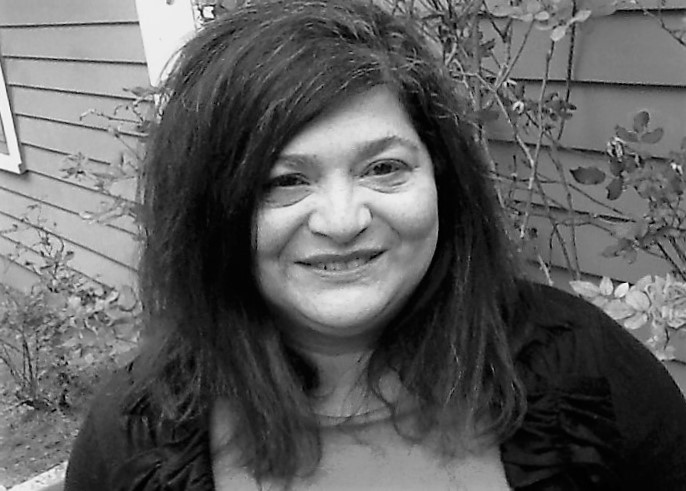
Gina Ferrara, Poet Laureate of Louisiana
Born and raised in New Orleans, Gina Ferrara is an associate professor of English and creative writing at Delgado Community College as well as the current poet laureate of Louisiana.
She is the author of many books of poetry and edited an anthology of local poets. She curates the long-running monthly Poetry Buffet reading series, usually held at Latter Library, and will be the judge of the upcoming 2026 Tennessee Williams Poetry Contest.
Over tea and a caramel frappe at Rue De La Course on Carrollton, we talked about being a good poetry citizen, how Sylvia Plath is like Jimi Hendrix, the unexpected beauty of leper colonies, and more.
Where Y'at: What first made you interested in poetry?
Gina Ferrara: I started writing when I was in high school. I didn't show anybody anything. I started journaling in college, and I would write, write, write and not think about it. In the mid-'90s, I was in a relationship that went totally sour, which became the subject of many poems. A bunch of the poems I wrote got published, about six or seven of them.
Then I started going to the NOLA Poetry Forum. It was a group of us meeting regularly to workshop on Wednesday nights. At that time, there were readings going on every night. It was a really tight-knit group, and we all stayed in touch after Katrina. I met my husband there. People were generous about attending even when they weren't reading. There was a lot of what I call good poetry citizenship.
WYA: Is there a poet who particularly means a lot to you?
GF: When I was in high school, I was first exposed to the work of Sylvia Plath, and it changed my trajectory in life.
WYA: In life?
GF: In life. I was just amazed by what she was doing. It was maybe like the way someone might feel listening to Jimi Hendrix for the first time—that virtuosity. And still, even now after all these years, I keep her poems close by.
WYA: What contemporary poets would you recommend poetry newcomers read?
GF: Gosh, there's so many. Yousef Komunyakaa's poetry is really accessible, and he's doing such interesting things, whether he writes about Vietnam or music or relationships. J. Bruce Fuller, a former Delgado student, often writes about his relationship with his less-than-perfect father. He's a poet that students really connect with. Karisma Price—I've recently started reading her work and there's a poem where she really looks carefully at the crawfish and examines it so closely, which is incredible.
Skye Jackson's work shows a lot of vulnerability, and the students really relate to that. And then I love what Carolyn Hembree has done. She's got such a strong voice, her work surprises me often. I love to be surprised.
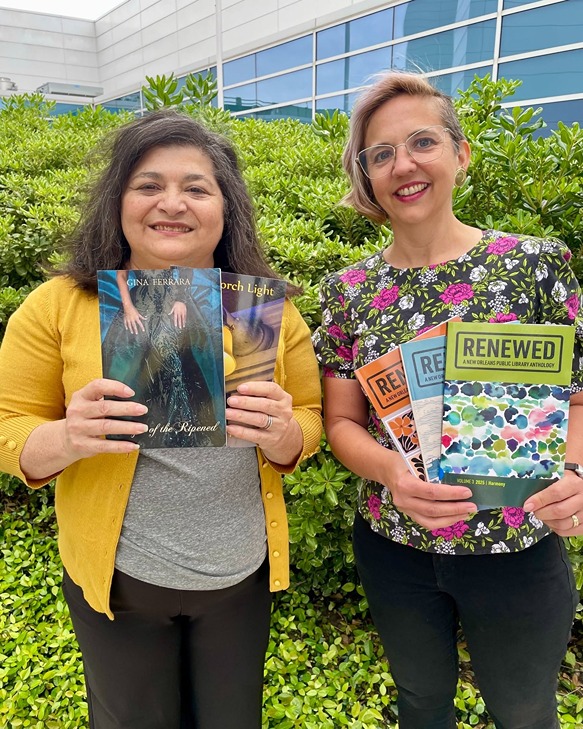
WYA: What's a book of yours which is especially significant to you personally?
GF: One collection, Carville: Amid Moss and Resurrection Fern, was based on the leper colony in Carville, LA. I'd heard about it and went there in about 2012. As soon as I set foot there, I could feel something about the land itself. It was the place where people were sent with leprosy, with Hansen's disease. Lesions on the skin, people had lost the use of their limbs. A cobbler would make special shoes for people. There's this kind of armadillo motif on the grounds. As you go in, you see these beautiful ancient oak trees. These strange corridors lead to different buildings.
People lost contact with their families, their loved ones, when they were sent to Carville, but they made the most of their situation. They had a baseball team, supper dances, Mardi Gras balls, and tea hours—their own newspaper. It was hard for them, but it wasn't a total loss. Those stories were incredible to me. I still have plans to go to leper colonies around the world and write about them, which hopefully will happen soon.
WYA: People tend to be kind of hostile towards poetry. They don't feel like they get it, or they feel that it's too abstract or above their heads. Do you ever see that?
GF: I know exactly what you're talking about. A lot of times when I'm teaching, I tell the class that you're going to read some poetry today, and there's this look of panic which comes across their faces. There tends to be this very weighted response to it. It happens with teachers, too.
People should find the kinds of poems that they like. Maybe you like poems that rhyme, or are about nature, or are autobiographical in some way? We all love song lyrics, so maybe the type of songs you might like could lead you on the path to poetry, as well. Sometimes the emotions you might feel in songs are the emotions that you could feel in poems. As a kid, my parents loved Simon & Garfunkel and the Beatles, and those things seep into your brain and your experience.
I might use paintings as a prompt, or write about them, or address some aspects of the composition. I once published a collection about Marc Chagall's paintings. You can't have any indifference in poetry or really in any kind of art. Poetry is always open to a lot of possibilities. Write about what matters to you.