Travis Hill School
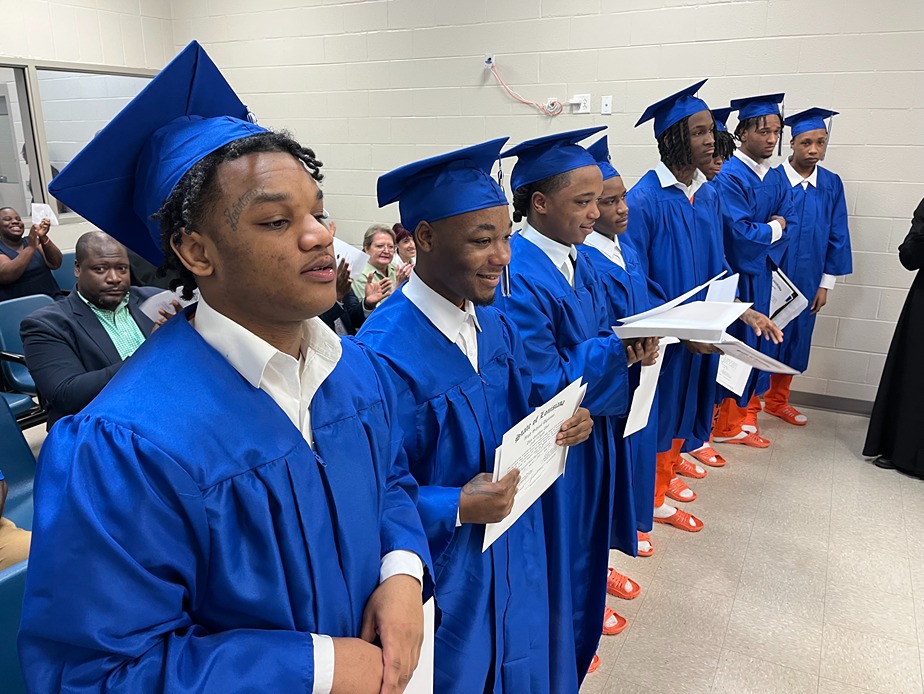
In a country where the financial profit of incarceration is more valuable than the societal profit of rehabilitation, there is a group of people defying the odds and committing to educating incarcerated youth in New Orleans.
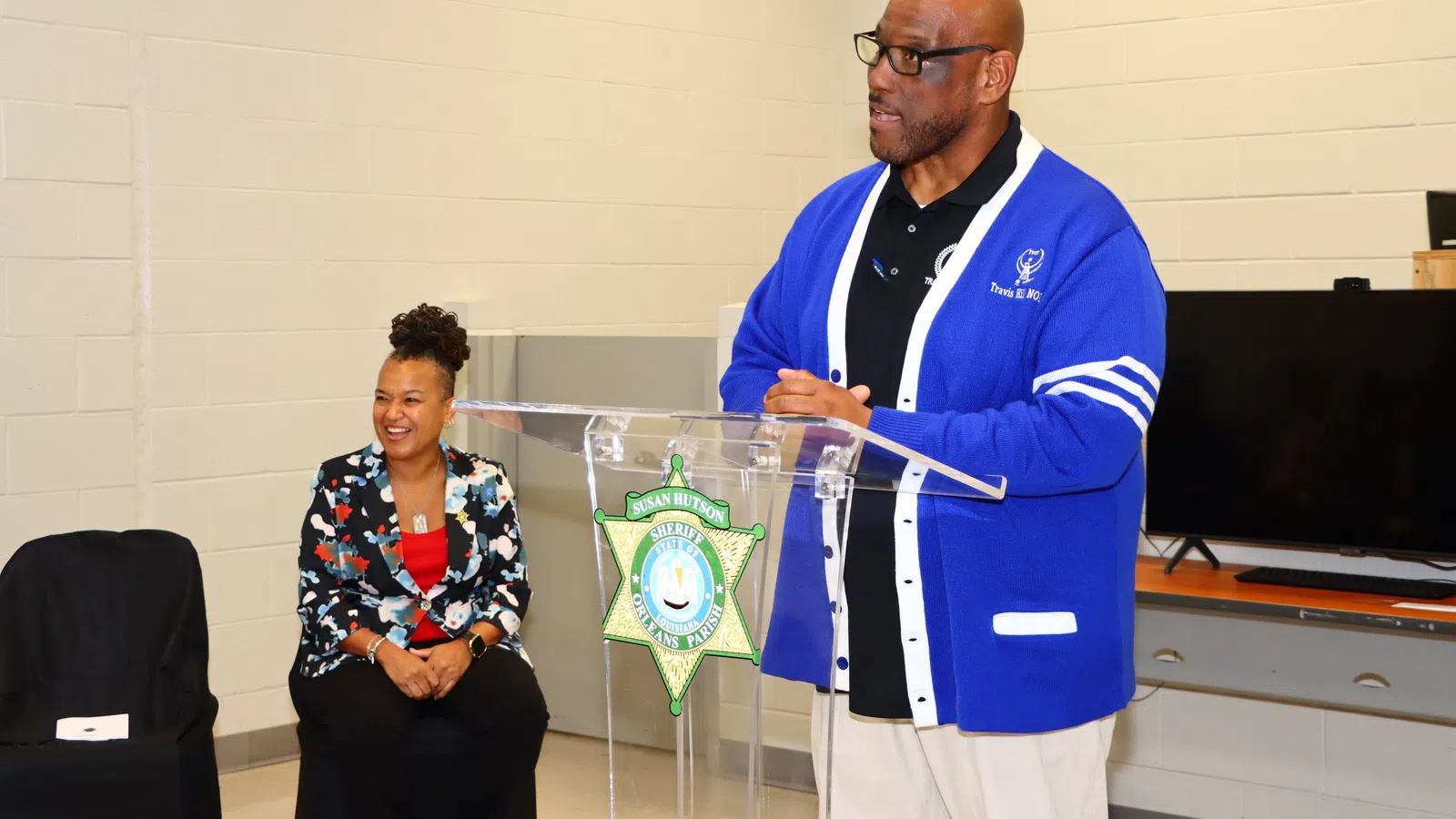
Byron Goodwin, president and CEO of Travis Hill School, recently discussed how their school fills the educational void in the Orleans Parish Jail and the Juvenile Justice Intervention Center. He was able to relay information about the humble beginnings of a school with the mission to "create a transformative learning environment" for their youth.
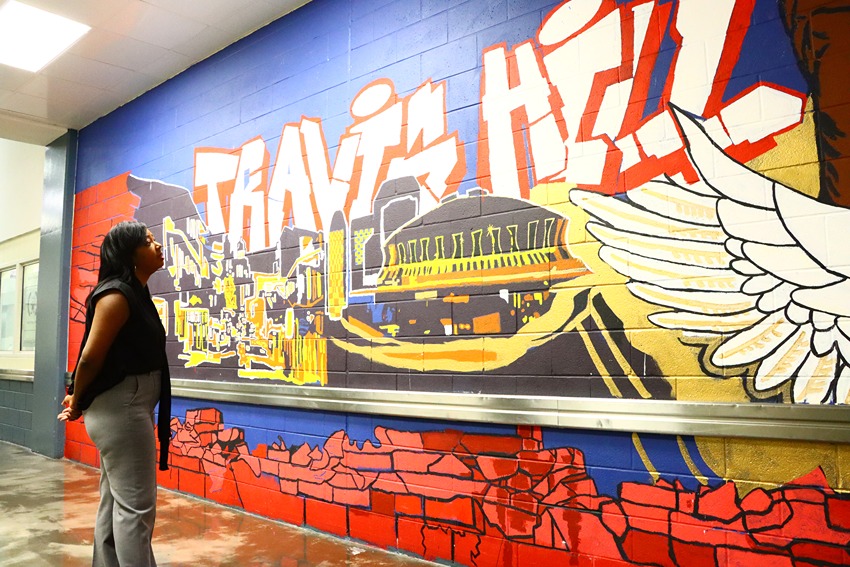
Where Y'at: Please tell me about yourself and how your life's journey led you to Travis Hill.
Byron Goodwin: I was born in a family of educators. My father and uncle were both educators, and my siblings are all in the education realm. Being that I [have] always been a part of education [with] coaching, teaching, mentoring, [I] have always worked with at-risk youth. Growing up, I watched my father be a [role] model for a lot of kids. I felt that my father wasn't paying enough attention to me until I got older, and people would share with me how my father changed their life.
During the time that I was in this education arena, my younger brother was incarcerated. That pushed me to be a part of this kind of work. We had resources to pay attorneys and support him. I thought about kids who end up in the system with no resources. How can we best help them?
Most kids who are jailed struggle with finishing high school, whether it's the kids not wanting to return or the school not allowing them to return. We originally started with a transition process of helping the kids get back into school after they have been released. We would call the school and home to check on the kids. In 2015 during the consent decree, the [Orleans Parish] school district brought in consultants inside the jails to evaluate the current education system. In 2016, an RFP [request for proposal] was issued [by Break Free Education] to run Travis Hill inside of the jails.
The current school district still oversees [Travis Hill]; however, everything else is contracted out to provide the education for the youth.
WY: Do you still keep in contact with formerly incarcerated youth who graduated from your program?
BG: Yes. I keep in touch with both—those who have graduated from the program and those who have gone home and continued their education. I also keep in contact with the youth who unfortunately go into the DOC system. I stay in contact with the wardens of the jails my kids are in.
As a matter of fact, we received our first young ladies [who] went into the DOC system a couple of years ago. We definitely do the check-ins. Before they were transferred to St. Gabriel [prison for women], I would take the drive to visit them in Baton Rouge. The warden and I talk twice a week.
I have kids who are rappers now and some that went to college. It is very rewarding to see how well they do. You know that your work is not in vain.
WY: In a world that pushes to demonize youth who have made a mistake, what humanizing message would you give the world?
BG: I would remind the world that a mistake is an action, not an identity. Young people are still becoming who they are. When we choose to see their humanity instead of their worst moment, we create space for accountability and transformation. Every youth deserves a chance to be seen, taught, and believed without being written off.
WY: Can you please share with Where Y'at one of your fondest memories you've had with one of your students?
BG: In 2017, I had a group of kids testing on a Saturday. It was in an open space [juvenile pod in OJC]. After they finished taking their test, they did not want to go back to their pods just yet. I asked them what do they wanted to do. They wanted to play hide-and-seek.
Now, imagine a big open space with just desks. There is nowhere to hide. I sat back and watched as they just ran around trying to catch each other. I ordered pizza for them and just watched them have fun for four hours. That moment refined my purpose. That moment was kids just being kids.
WY: When you think of Travis Hill's future, what do you envision?
BG: For Travis Hill, I see us standing as the national model [for] equitable trauma informed education and secure care. That can be achieved if we truly invest in our young people. We won't just change outcomes. We will change the way young people see themselves.