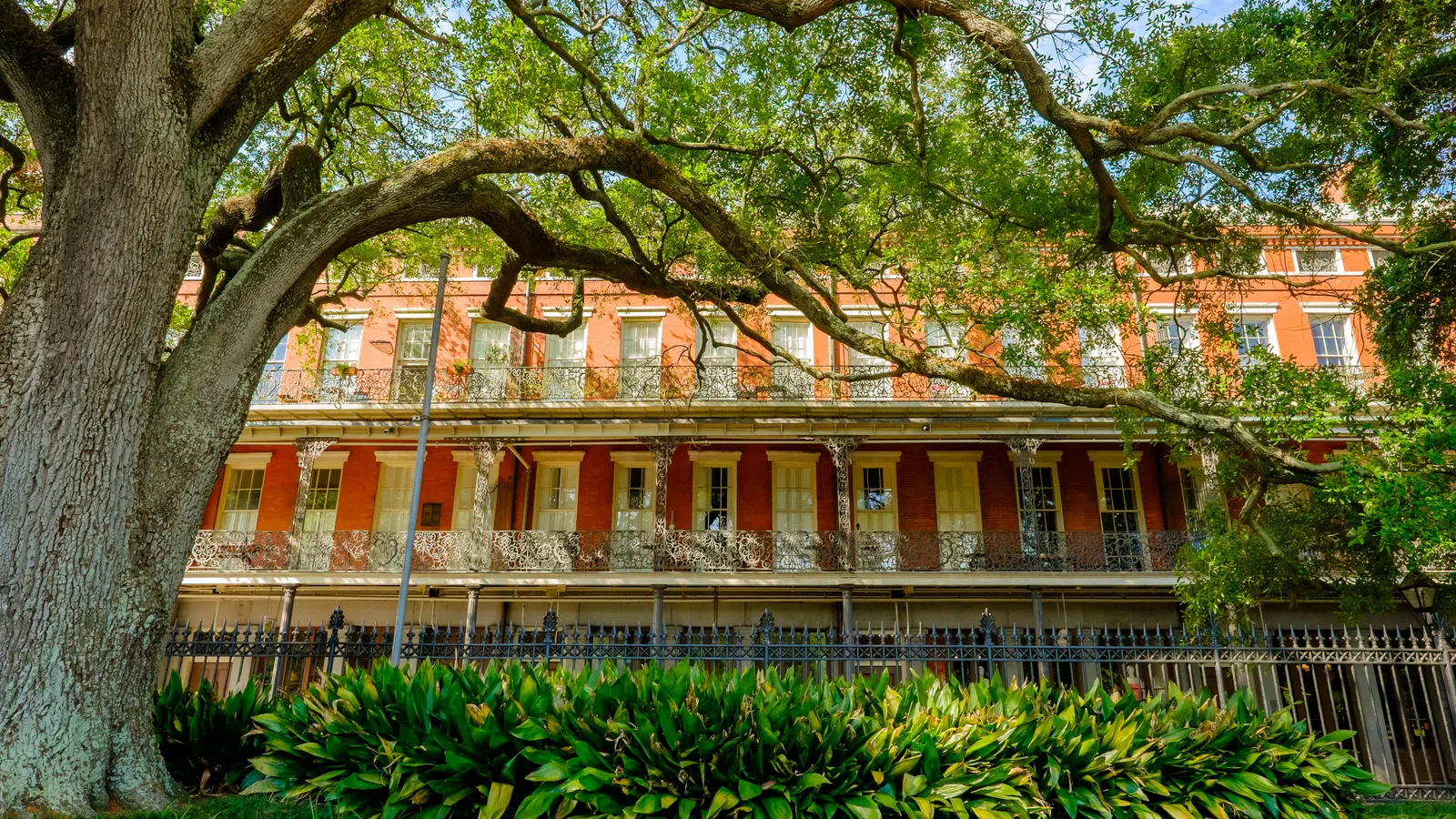
Spanish Architecture in NOLA
San Fermin in Nueva Orleans' famous Running of the Bulls, taking place on July 12, is one of the few New Orleans celebrations centered around the city's Spanish heritage. This appreciation of Spanish culture can lead to further appreciation of the other remnants of colonial Nueva Orleans, including the French Quarter's Spanish architecture.
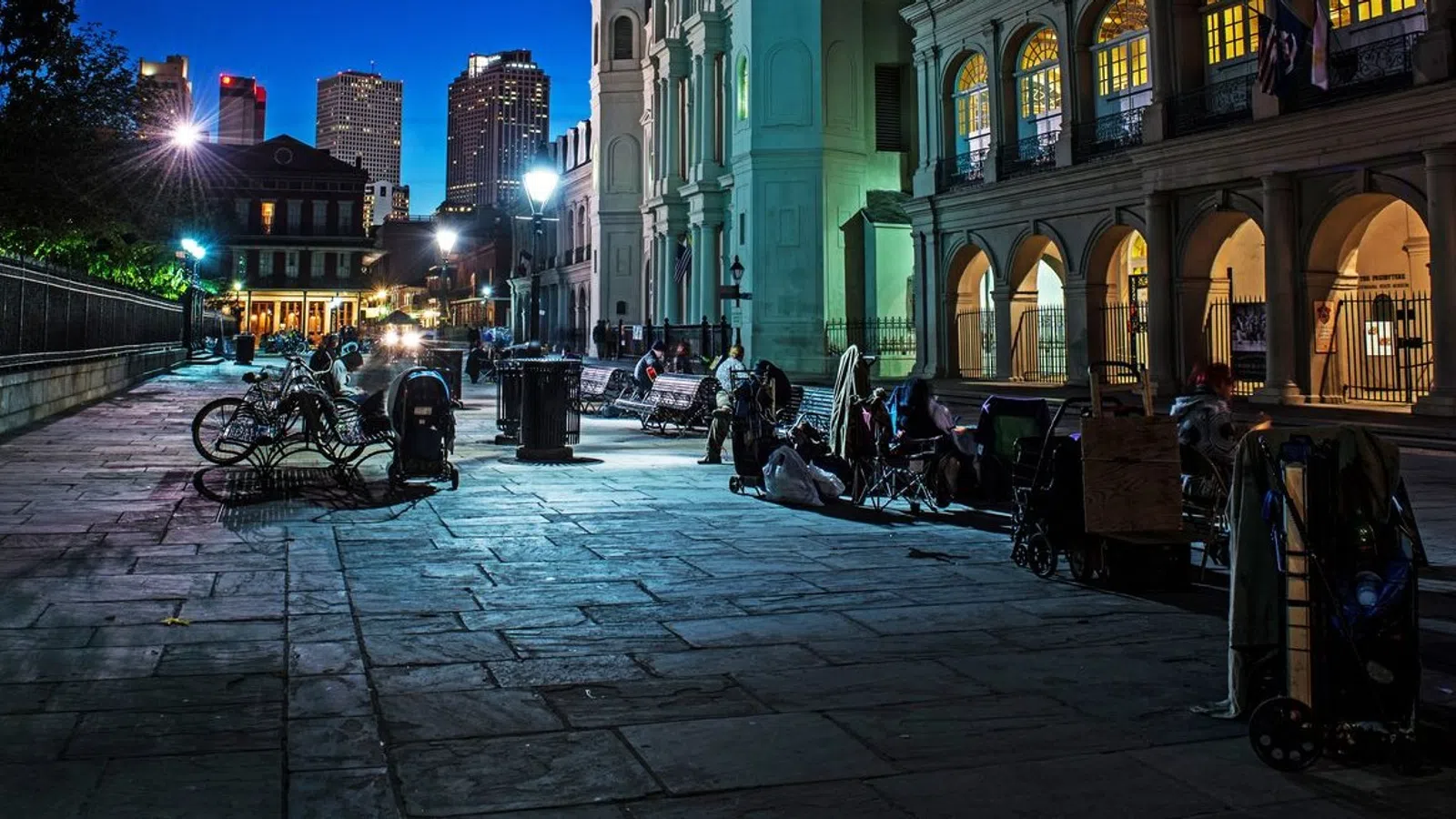
Spanish New Orleans' most notable landmarks: the Cabildo, the Cathedral, and the Casa Curial (Presbytère), are the most iconic Iberian historical legacies in New Orleans.
Together, these three Spanish architectural jewels are the "Holy Trinity" of the most notable civic center in America. Besides these Spanish architectural landmarks, there are approximately 50 Castilian architectural gems still standing today in Nueva Orleans.
Let's start at Chartres and admire the Magnificent Seven—seven amazing Castilian buildings the Spanish Dons left for the world, and New Orleanians, to enjoy. Beginning at the corner Chartres and St. Peter, let's walk towards Canal.
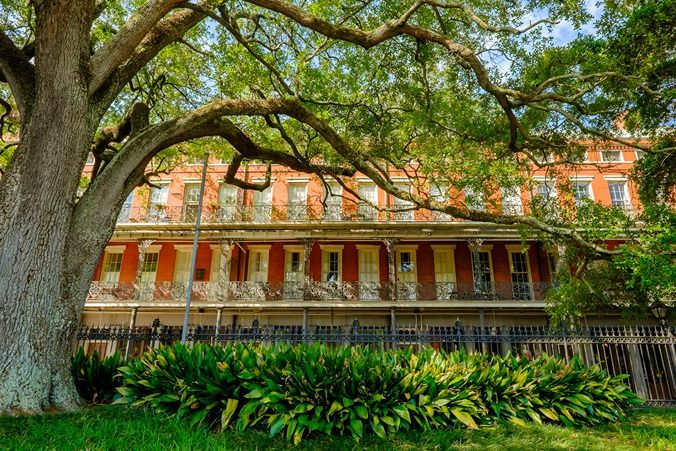
Casa Orúe-Pontalba | 600-616 St. Peter, corner of Chartres | 1789-1795
Casa Orúe-Pontabla, one of the finest examples of Spanish colonial architecture, has experienced many razzings, reconstructions, and reincarnations over its more than two century life. It was built in 1789 by architect Gilberto Guillemard, builder Hilaire Boutté, and iron worker Marcelino Hernández for Don José de Orué y Gorbea, the Spanish treasurer of Colonial Nueva Orleans. Severely damaged by the December 8, 1794, fire, the unfinished building was sold by Don Orué to the wealthy Andalusian Don Andrés Almonester y Roxas in 1795. Although restored in the 1920s, the Spanish colonial building was razed and reconstructed in 1962. In 2011, Le Petit Theatre sold 60% of the building to the Brennan family.
Casa Gálvez (Bosque House) | 617-621 Chartres | 1795
Walk half a block upriver towards Canal and stop at the intersection of Chartres and Wilkinson. The building at 617-621 Chartres is the famous Casa Gálvez (Bosque House). José Montero de Pedro, former Spanish consul general in New Orleans from 1976 to 1980 and author of The Spanish in New Orleans and Louisiana, claims this house should be known as Casa Gálvez because Spanish Governor Bernardo de Gálvez lived here for three years. The disastrous 1788 Good Friday fire started here, incinerating 856 structures.
The building is named after Spaniard Don Bartholomé Bosque, a native of Palma, Majorca. He rebuilt this house in 1795 after the second inferno of 1794, which consumed 212 homes. Bosque was a Spanish mariner, merchant, and shipowner. The Arabesque wrought iron railings feature a "B B" monogram turned backwards when read from the street.
Casa Reynes | 601-607 Chartres | 1795
Walk towards Canal on Chartres until you reach the corner of Chartres and Toulouse. Here, you will encounter one of the fascinating, yet frequently overlooked Spanish colonial masterpieces. Built in 1795, Casa Reynes retains such Spanish details as a wrap-around wrought-iron mirador (balcony), corner pilasters, and bold bandings around the upper windows.
Erected by Spaniard Don Joseph Reynes in 1795, this great Castilian building is one of the landmarks of the Old Square. Don Reynes purchased the property from Don Pedro Jourdan in May 1793, but it was destroyed in the 1794 fire. Constructed in 1795, the Reynes family lived in this handsome townhouse for 35 years until 1830. Victor Valentenien purchased the corner property in 1896 and opened a restaurant named Victor's Café, which operated until 1955.
Reynes' Almacén (Warehouse) | 605-611 Toulouse | 1795
Turn right at the corner of Chartres and Toulouse—adjacent to Don Reynes' corner townhouse—and you've reached his almacén, or warehouse, located at 605-611 Toulouse. In 1793, Don Reynes purchased the property from Don Pedro Jourdan, according to Cabildo records. In 1794, the second fire on Royal turned most homes here to ashes. In January 1795, Reynes signed a building contract with Joseph Duguet to construct a warehouse. Undoubtedly, Reynes began building the corner townhouse at 601-607 Chartres Street sometime around this date, as well.
Maspero's Exchange | 440 Chartres, corner of St. Louis | 1795-1810
Where Chartres meets St. Louis, look towards the river side of Charters and admire one of the most ancient and stately Spanish colonial masterpieces in the old Barrio Español. Maspero's Exchange, a two-story entre suelo storehouse, is a Spanish colonial style townhouse common in the 1790s. Castilian shopkeeper Don Juan Paillet purchased 440 Chartres on June 9, 1788, from Don Narcisco Alva, as well as the house next door at 434-436 Chartres. The first-floor has high elliptical arches and fanlights with vertical iron gills.
One of señor Paillet's tenants—Pierre Maspero—operated a bar and slave exchange known as Maspero's Exchange. Contrary to popular belief, Maspero's establishment was located diagonally opposite 440 Chartres, where the Royal Orleans Hotel stands today. Erected between 1795 and 1810, the Paillet family owned the building until 1916.
Casa Rillieux-Waldhorn | 335-341 Royal, corner of Conti | 1795-1800
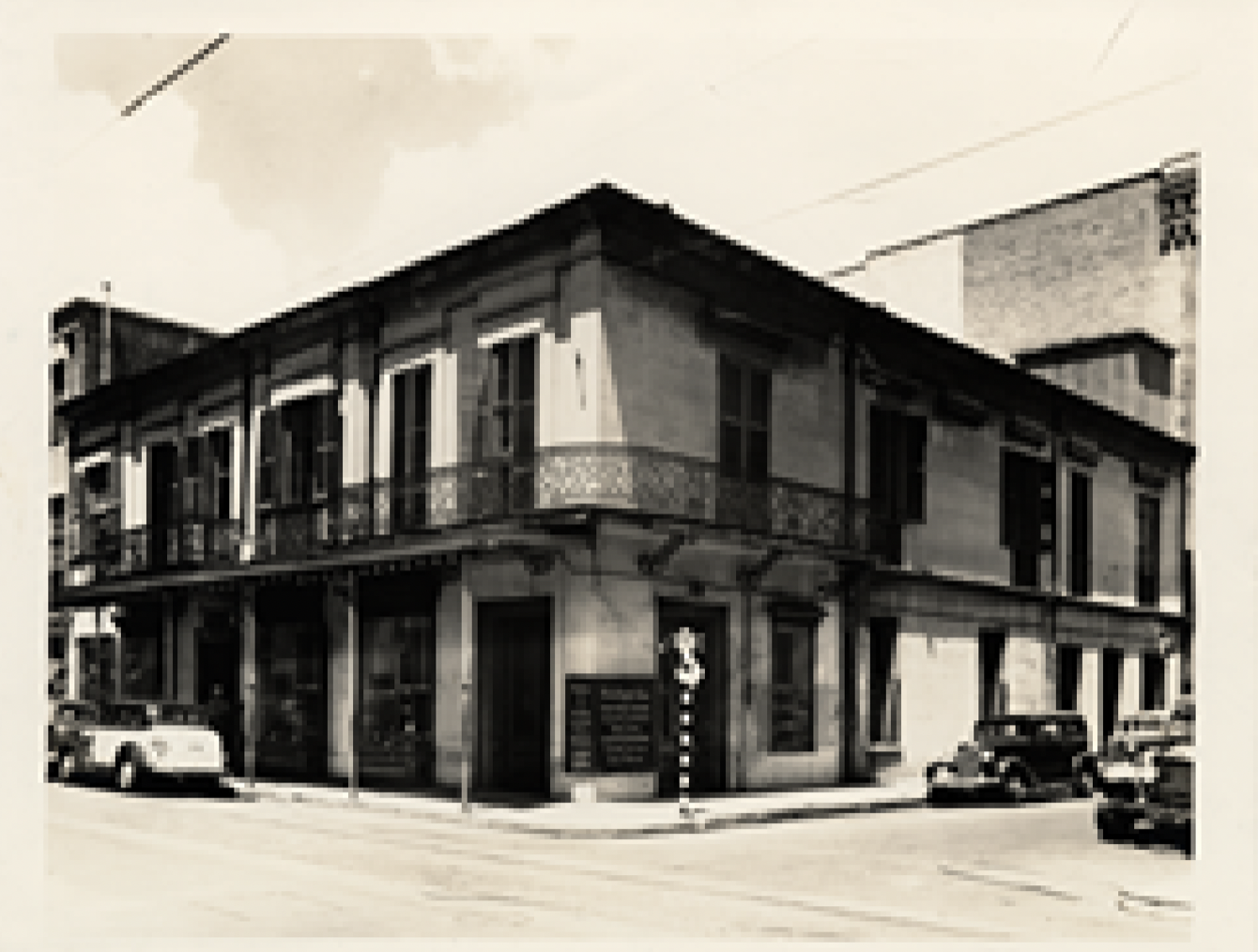
Unquestionably one of the most interesting Spanish colonial buildings is located at the corner Royal and Conti. Here, on the lake side of the corner, you will encounter Casa Rillieux. Although the exact date of its construction is unknown, its builder was most likely architect Barthélemy Lafon.
Vincent Rillieux—whose home was at 600-610 Bourbon—built two fine houses on Royal—one 335-341 Royal and another at 417 Royal. After the 1794 fire, Rillieux, a prominent merchant and plantation owner, constructed this venerable corner residence sometime between 1795 and 1800. One of the architectural delights of this villa Española is its beautiful wrap-around wrought-iron balcony. Note the bold S-shaped brackets supporting the cantilevered balcony.
Louisiana Bank | 417-425 Royal | 1795
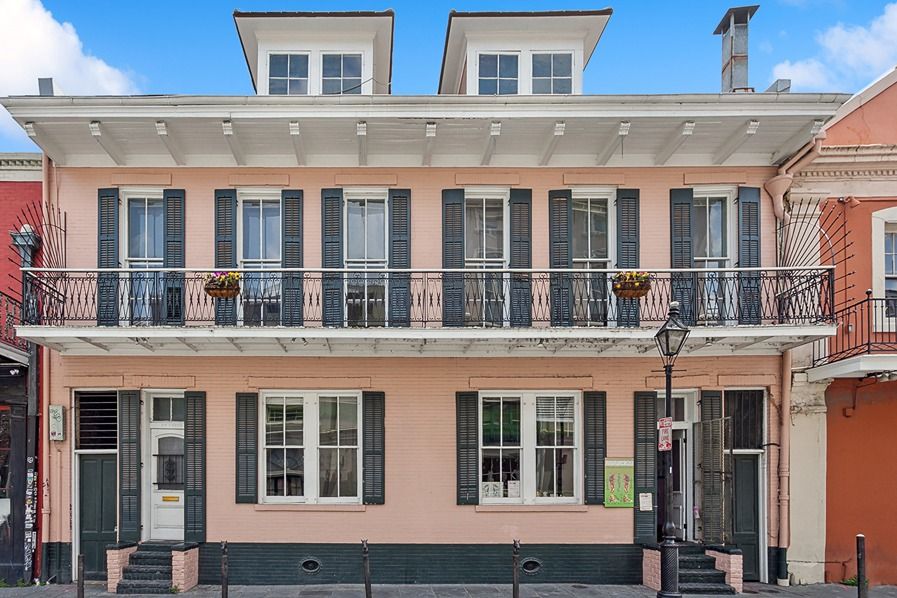
Walk along Royal towards Esplanade, stop in front of the Louisiana Supreme Court at 400 Royal, look across the street, and notice the pink Spanish building at 417-425 Royal.
Vincent Rillieux purchased the charred ruins at 417 Royal on January 8, 1795, one month after the December 8, 1794, fire, paying the owner 1,900 Spanish piastres for the pile of burnt rubble. He then built this townhouse in 1795. In 1805, the Louisiana Bank purchased the property for 25,000 Spanish piastres. From 1841 to 1891, the Spanish two-story townhouse was the residence of Judge Alonzo Morphy, whose son, Paul Charles Morphy, was a world chess champion. The long balcony features a graceful "L. B." monogram—representing Louisiana Bank. The mirador's S-shaped supporting brackets are among the finest in the old Spanish Quarter.