1.6 Miles, Over 10 Bars & Restaurants, One Park, All connected with RTA Service
From what some would say was a dingy, at best, and dangerous, at worst, corridor; the changing of a thoroughfare to a main street evokes the bustle of the French Quarter mixed with the community of Tremé.
In recent years, North Rampart has become a food and beverage designation with avant-garde bars and restaurants, gaining national attention in the same vein as Magazine, Oak, Frenchmen, and Freret streets.
Food & Beverage du Jour
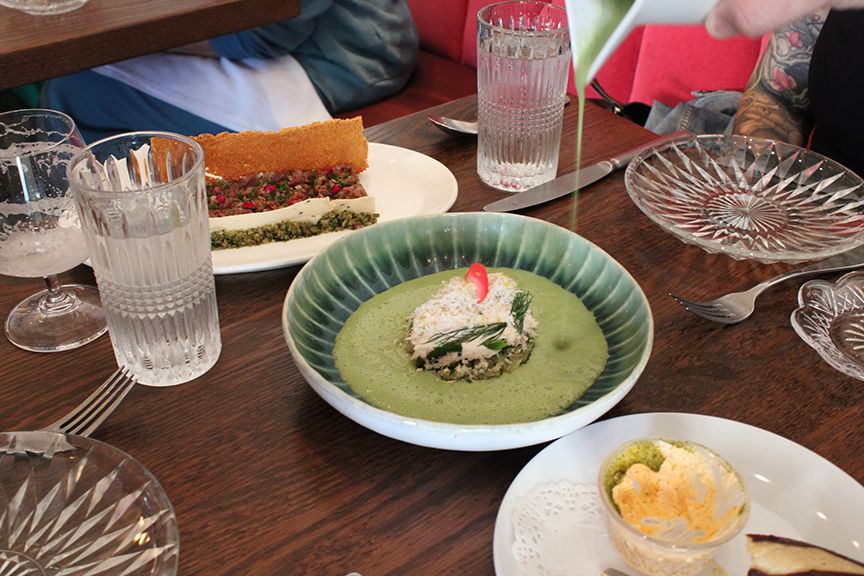
MaMou (located at 942 N. Rampart in the location formerly Meauxbar) opened in November 2022 and has usurped the claim as Rampart's most recognized restaurant. A significant amount of PR has resulted in making the "Best Restaurant" lists of The New York Times, Bon Appétit, Wine Enthusiast, and Wine Spectator.
The restaurant's website, mamounola.com, echoes this, stating, "The European continental cuisine draws on the Creole influences of [Chef Tom Brannigan's] childhood in southern Louisiana, as well as shows his appreciation for French technique." Laurie Werner, a travel editor with Forbes, says it's a "French brasserie but with some seriously local overtones."
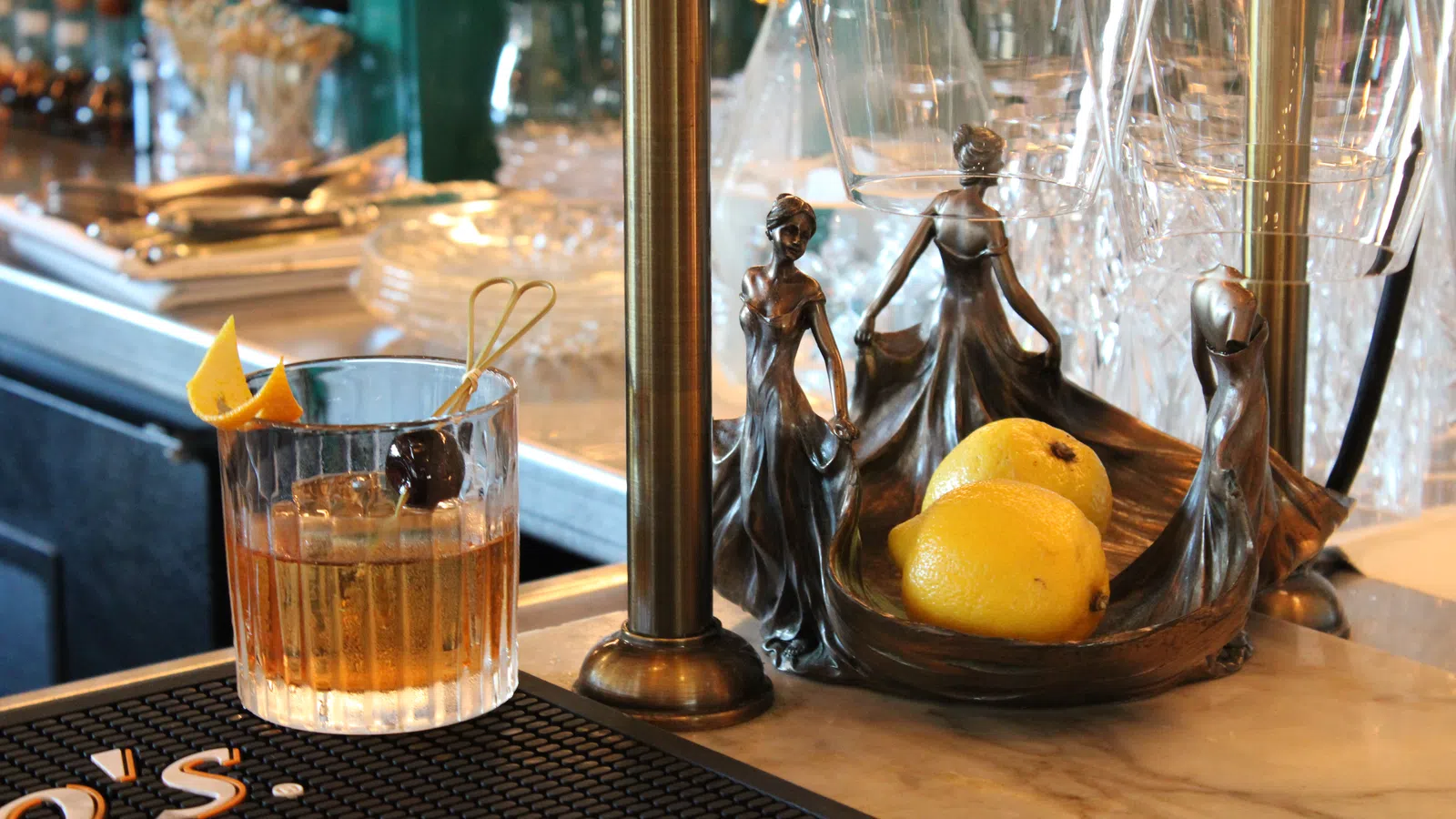
If MaMou is the newer kid on the block, than it is Bar Tonique (820 N. Rampart), which opened on August, 8, 2008, that locals credit with kickstarting the "Rampart Renaissance."
Other noteworthy locales include Black Penny, Palm & Pine, Rampart Treehouse, and Habana Outpost. These destinations range from dive bars (Black Penny), New Orleans born and bred (Palm & Pine), eclectic ambiance (Rampart Treehouse), and global reach (Habana Outpost).
"Trees Of Green"
Like the ever-expanding MSY, Armstrong Park's namesake is beloved musician Louis Armstrong and hosts a variety of events from festivals to weddings.
Further solidifying its musical roots, South Rampart, which basically encompasses the CBD portion of Rampart and has been dubbed the "Harlem of New Orleans," is frequently cited as the birthplace of jazz in New Orleans. "The strip was filled with businesses—many run by Jewish, Italian, and Chinese merchants—catering to a Black clientele," WWOZ's A Closer Walk states. "Among these were dance halls, juke joints, tailors who outfitted bands with uniforms, and pawn shops that bought and sold instruments."
"Hard Knock" Life
Unfortunately, like most tales—especially in NOLA in the post-pandemic world—not all have a happy ending. Though officially a Canal Street address, the 18-floor Hard Rock Hotel was under construction and was the biggest tragedy to strike the French Quarter until the 2025 New Year's terrorist attack occurred. According to Wikipedia, "On October 20, 2019, the attempted implosion of one of two damaged tower cranes on the site of the collapsed Hard Rock Hotel caused the jib of one of the cranes to fall vertically onto Rampart Street, effectively impaling the street near its intersection with Canal Street." The accident left three dead, though the NOLA's Justice Department is not pressing any charges.
Like all of NOLA, this location is no stranger to having its place in history. As the former Woolworth's Department Store, it was the location of a prominent Civil Rights protests in 1960, where activists held one of the first of the era's sit-ins at the segregated lunch counter.
The City Council has unanimously voted to historically designate the area. "This isn't just about having a plaque," mayor-elect Helena Moreno said. "It's about what we can do to ensure that whatever goes there next is appropriate based on what happened there in 2019 and also in 1960."
700 Club, just across Burgundy from the recently-revived Gold Mine (of #FlamingDoctorPepper fame) was an inclusive LGBTQA+ bar on Burgundy Street, which runs parallel to Rampart. After 700 closed due to the landlord's refusal to renew the lease, owner Matt Hayes created a new incarnation with Betty's Bar & Bistro. Hayes told WDSU's Aubrey Killian, "I started my own business in this building a few years ago when it was the 700 Club." Hayes leased 700's Faubourg Kitchen from owner Matt Giglio. "It's hard to see your family go through this. We are going through it together. None of us really knew how to move on in this pandemic in this crazy world," Hayes said.
Regardless, the New Orleans' hospitality industry is an ever-evolving (this year's Tales of the Cocktail's theme) entity focused on reinvention, rebirth, and restructuring. Mark Schettler, the former GM of Bar Tonique and now a consultant, quotes a former teacher, saying, "'If you don't cannibalize yourself, someone else will.'"
If there's one lesson New Orleanians understand, it's change. Schettler concluded, "The sky's only falling if you refuse to look up to see change on the horizon before it smacks you in the head." The class system of NOLA is twofold with locals and tourists, which have a symbiotic relationship based on camaraderie, curiosity, and codependence. It's part of what makes New Orleans "New Orleans," as well as seeing that change is constant, and it's exemplified perfectly in the Rampart Connection.