In the Books
From the beginning of New Orleans, founded in 1718, we were different from the rest of the country in which we were located.
Jamestown, Virginia, founded in 1607, marked the establishment of European-based communities in North America, which happened quite a bit before our establishment on the banks of North America's greatest river. There were some significant differences as to the manner in which both areas were populated and the reasons for the colonial establishments far across the large body of water separating us from the homelands.
Many of the early English settlers were not happy with matters back home. The English did not feel they had a concerned monarch in James I. To be fair, King James had a lot on his plate, including the combining of England and Scotland. He had been King of Scotland, the son of Mary, Queen of Scots, so his priorities were a little bent in that direction.
When it came to the establishment of New Orleans, a much loved monarch, Louis XIV, was on the throne. Known as the Sun King, or Louis the Great, he was admired by his subjects during his reign. His successor, Louis XV, was also appreciated and was known as Louis the Beloved. Louis XV was too young to take the throne when Louis XIV passed in 1715, so Philippe I, Duke of Orléans, acted as monarch until 1723 when Louis XV came of age.
This is important to know in the context of why New Orleans was different from the other European settlements to the north and east. While both France and England "used" their New World holdings to secure goods, the English approach was to continue the harsh rule of the monarchy while the French approach was to implement a gentler presence but still under the ruler from Paris.
This, in a generalized way, explains the revolutionary direction of America to legally, and even violently, separate from the English monarchy, while the French presence was to extend their more benevolent royal influence to their new home. It also explains why the indigenous natives of South Louisiana befriended their "invaders," while, further to the north, the natives were restless and felt oppressed.
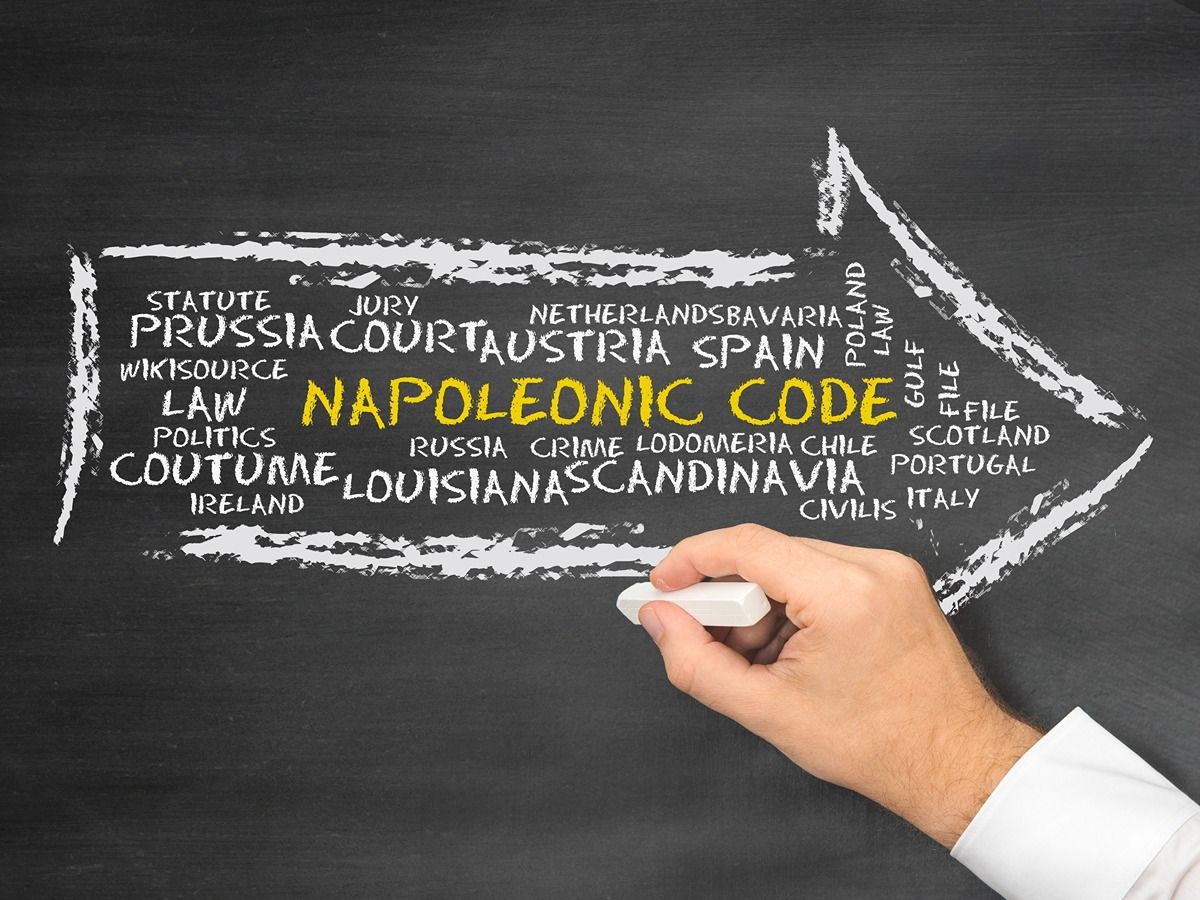
This different approach to colonization also explains why the English legal system, which heavily relied on precedence of laws and court judgements, was not the guiding principle of law in the Louisiana territory. That law, known as the Napoleonic Code, was the embraced legal force of the French and Spanish lands.
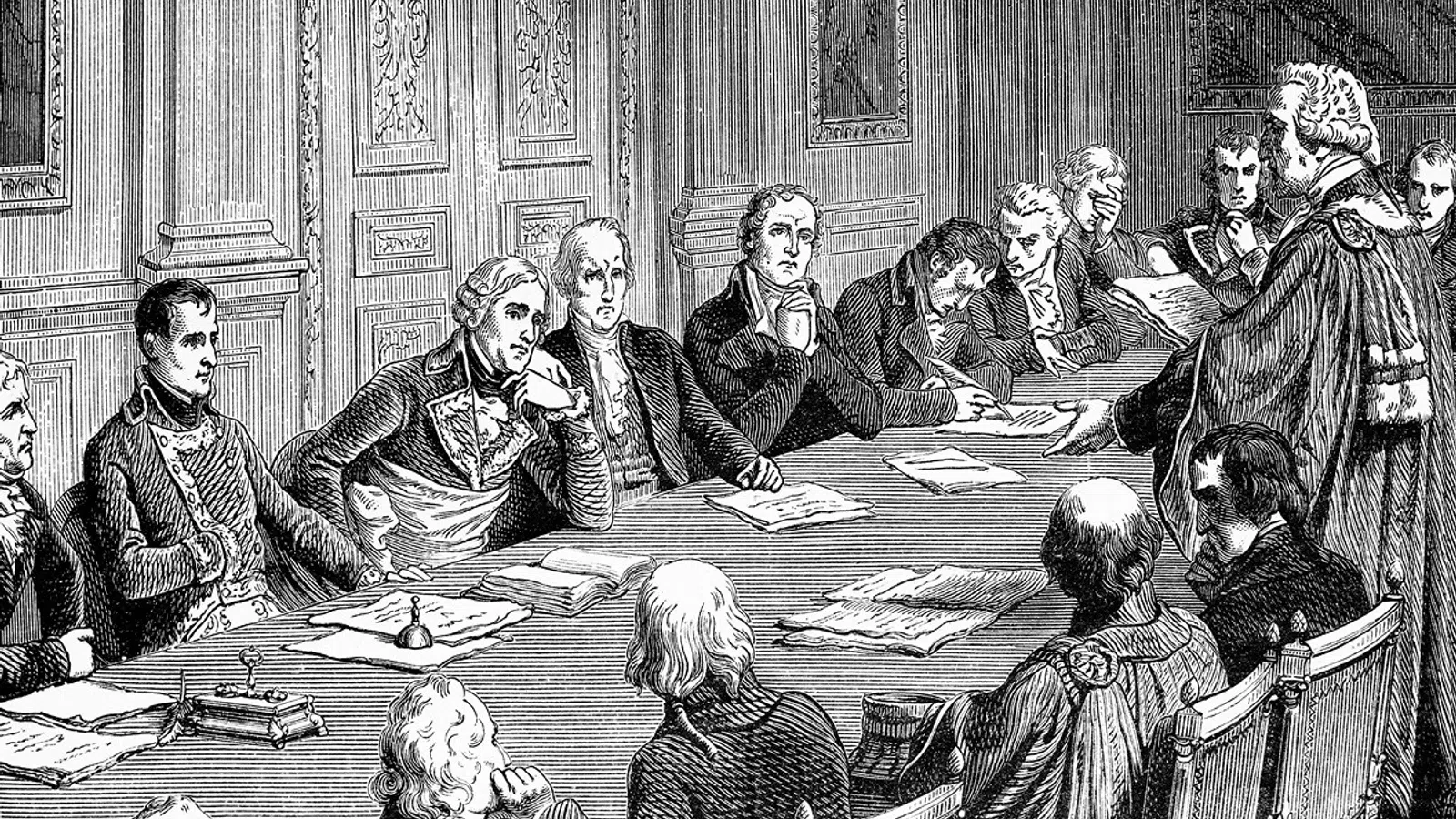
The French Civil Code, up until the formal adoption of the Napoleonic Code, was unwieldy and vast, often contradicting itself within the same document. The Napoleonic Code, adopted in 1804, sought to lay down a viable legal base on which the monarchy, state, and country could settle matters equitably, consistently, and resolutely.
The Napoleonic Code mainly formed the base of legal matters in Louisiana until 1976 when the state adopted a new constitution based on the standards of U.S. law; however, remnants of the Napoleonic Code still remain in the laws of Louisiana.
The Napoleonic Code streamlined and eliminated many local regulations that inhibited a common understanding of what was legal and where. The code established the laws regarding private property and what were the limits of the state. The basis of the Napoleonic Code stated that all men are equal under the law—which should sound familiar. However, it did not eliminate slavery, and it restricted the rights of minorities. It also did not grant full rights to women. Although, it did expand their rights from many local restrictions such as property ownership and commercial involvement. The code also addressed, with some mixed restrictions, the rights of Jews.
The code established secularism without giving any religion legal preference. The right to own property and use it for individual advantage, within reason, is probably the single most important item that still holds sway over Louisiana's modern contemporary legal and governmental system. Also of great importance is that the code was based mostly on government decrees, while the English system, ironically known as Common Law, is based on legal court rulings and precedent.
There continues to be a misunderstanding of the code by citizens in Louisiana and in France, both of whom still have legal bases established in the code. The Napoleonic Code did not eliminate slavery and did not expand the rights of women within the law, nor did the code establish the right for slaves and women to vote in public elections.
It is important to keep in mind the historic era when the code was written and adopted. During the reality of the French Revolution, overall freedoms were not going to be expanded. On the other hand, the code has been amended many times. Today's French Civil Code bears little resemblance to the 1804 original document, thereby making comparisons difficult, but the basis of the law for Louisiana is mostly based entirely on precedents with the input of government decrees that have amended the code.
Ultimately, the fact that Louisiana's historic past was involved with the Napoleonic Code continues to make us a bit different from our neighbors to the north. If you are here, you probably don't need to be told that how we live and the results of our elections are not usually in tune with what other American areas are doing. Our traditions and style of living differences cannot be attributed in their entirety to prior and current influences of the code; however, our past has set a tone for how we proceed even today. One does not have to dig deep to find examples of a way of life that could only have evolved, and continues to happen, here.