Long before Jazz Fest posters became collectibles and the crafts tents stretched wide, a handful of local visionaries set up modest booths in the early 1970s.
Self-taught street preacher and painter Sister Gertrude Morgan brought her spiritual visions, jewelry icon Mignon Faget displayed silver treasures inspired by the Gulf South, and Louisiana Coushatta basket weavers carried forward ancestral techniques rooted in centuries of tradition.
What began as a small artists' corner has grown into a sprawling network of crafts, villages, and marketplaces. It has truly become one of the most important art markets in the South. Today, hundreds of jury-selected artists fill tents with original paintings, sculptures, fine photography, leatherwork, blown glass, woodcraft, fiber arts, and handmade instruments.
You don't just buy a necklace there. You meet the person who hammered the silver. You don't just admire a painting. You get to know the story behind the painting from the artist themself.
Congo Square: The Pulse of Heritage
At the heart of it all sits the Congo Square African Marketplace, alive with rhythm and memory. Named in honor of historic Congo Square, where enslaved Africans once gathered to trade goods, drum, and preserve culture, the marketplace carries that same spirit of exchange.
There, hand-carved sculptures, beadwork, textiles, and mixed-media paintings reflect the living traditions of the African diaspora. The air hums with drums and conversation. It feels less like a marketplace and more like a cultural homecoming.
Artists such as Brandan "Bmike" Odums embody that bridge between past and present. Known for monumental public murals exploring African American history and social justice, Bmike brings bold, unapologetic imagery to Jazz Fest. His work connects the city's vibrant street art movement to its ancestral roots.
The Congo Square African Marketplace reminds festival goers that New Orleans culture didn't appear out of thin air and that it is still being carried, protected, and transformed by new generations.
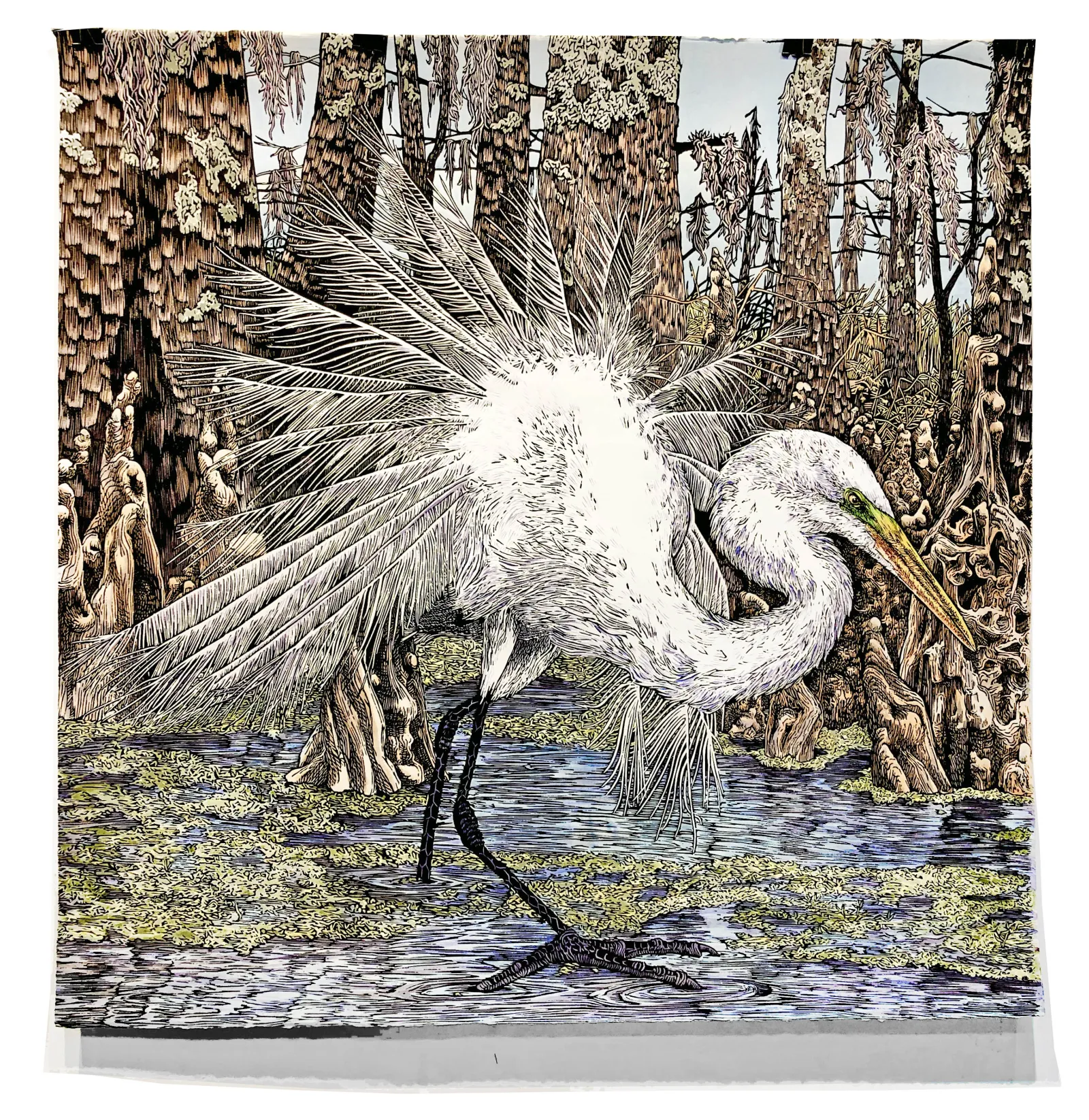
[Pippin Frisbie-Calder, courtesy of Wikimedia Commons]
Contemporary Crafts: Fine Art with Soul
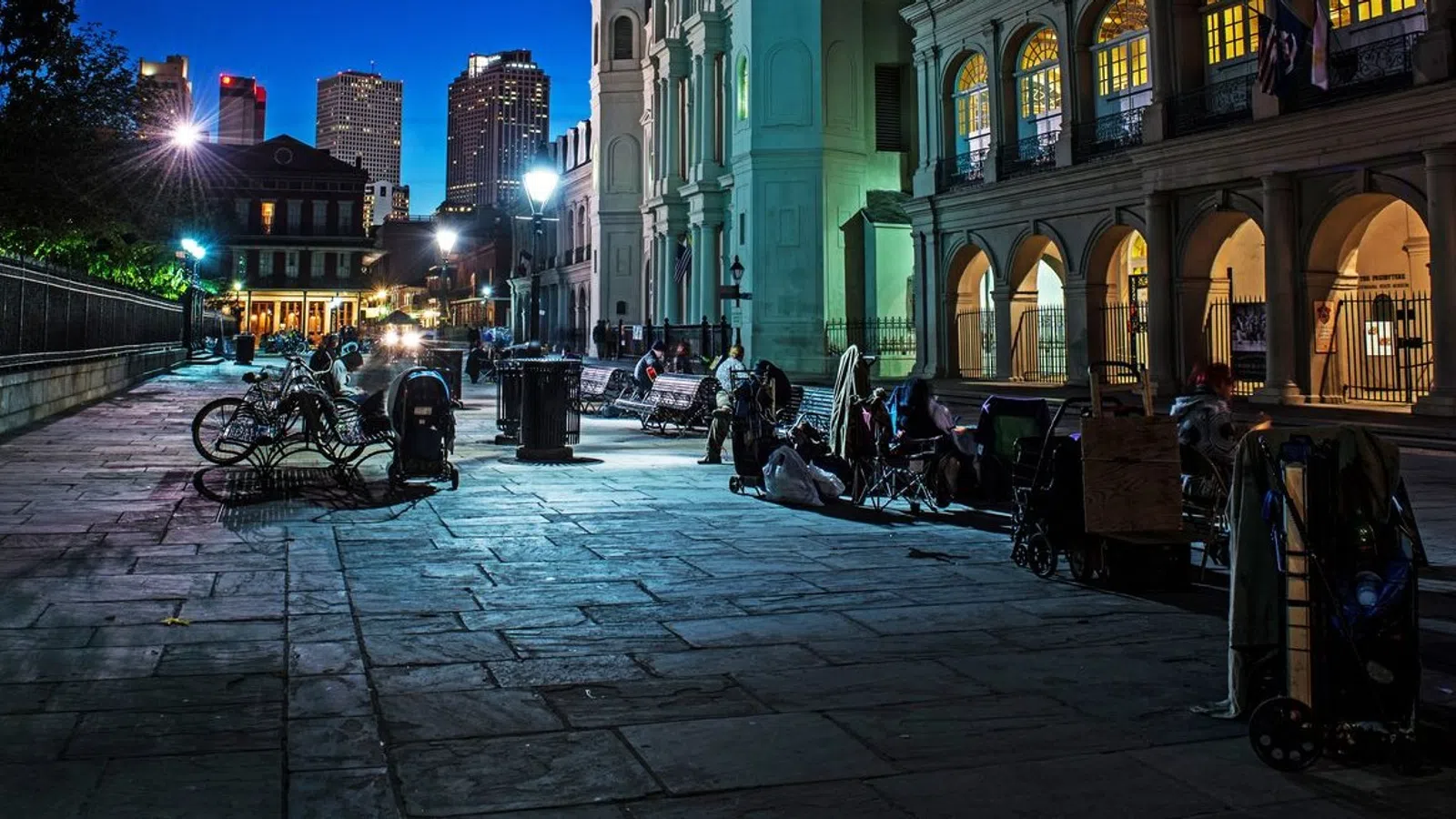
Wander over to Heritage Square and you'll find Contemporary Crafts tents, where nationally recognized makers showcase museum-quality work with a Louisiana flare: photographer Frank Relle captures haunting nighttime scenes of cypress swamps and quiet streets, glass artist Mark Rosenbaum bends molten color into luminous forms, and printmaker Pippin Frisbie-Calder carves rhythmic woodcut compositions, while painter Karen Ocker layers rich pigment into evocative scenes.
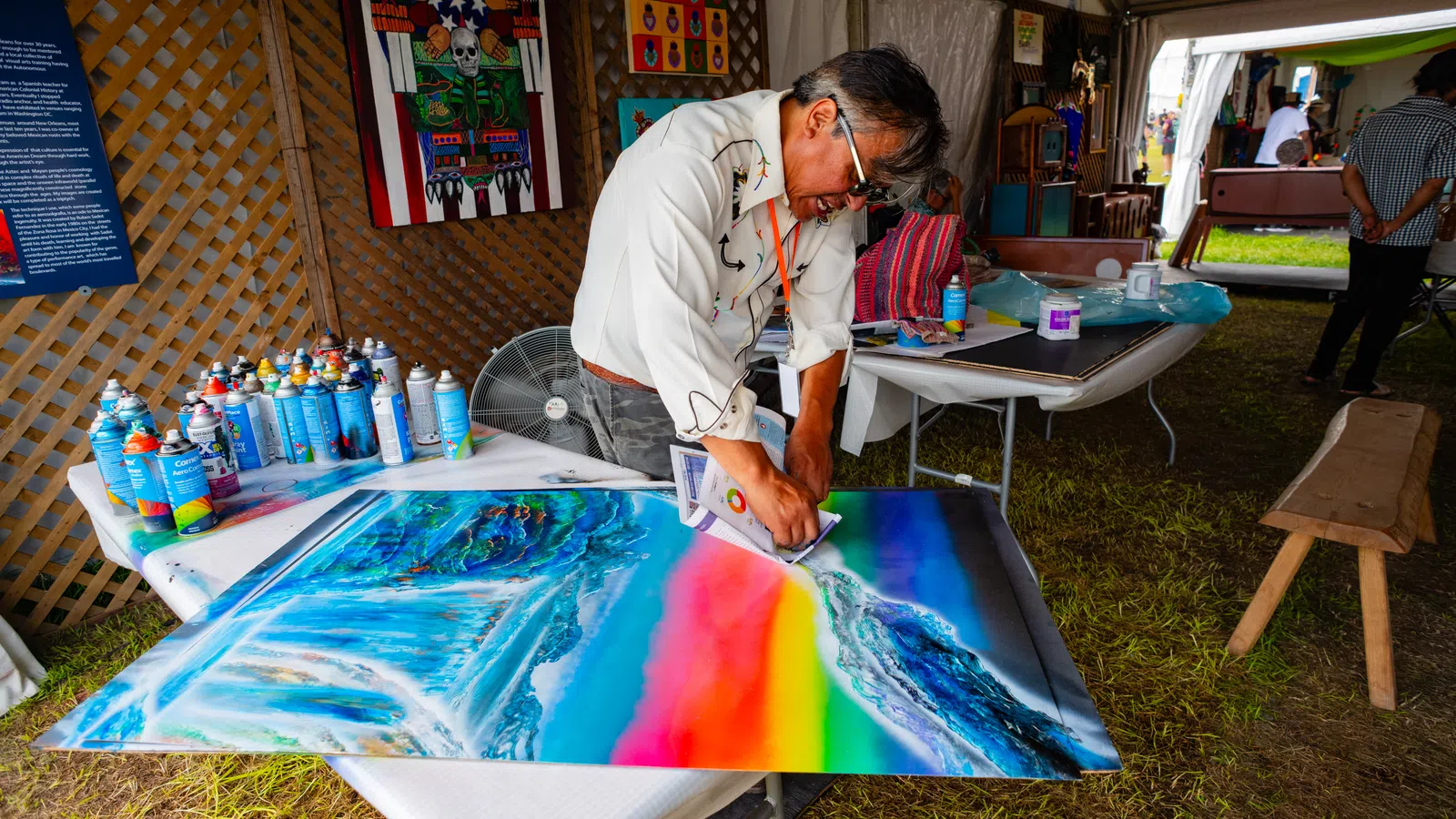
Live demonstrations add a little lagniappe. You might see a master jeweler, a woodworker shaping cypress, or visiting artisans from Mexico stitching vibrant Otomi embroidery. Sometimes, muralists such as Lapiztola share their socially conscious street-art traditions. It's an international exchange wrapped in Louisiana heat.
Then there's Terrance Osborne, whose electric paintings of second lines, city scenes, and more practically sway off the canvas. His stylized figures and saturated colors have become synonymous with modern New Orleans. As a past official poster artist, Osborne's work lives not only in private collections but in the visual memory of Jazz Fest itself.
The Louisiana Marketplace: Bayou Meets Boulevard
The Louisiana Marketplace is where rural craftsmanship is on full display. A handmade rocking chair might sit across from whimsical Mardi Gras-inspired décor. Culinary artisans offer edible art, and leatherworkers stitch pieces sturdy enough to survive festival season and beyond.
For many artists, the festival represents a cornerstone of their yearly income. Collectors, first-time buyers, and curious wanderers mingle freely, forming relationships that stretch far past the closing weekend.
The Poster That Launched a Thousand Walls
No Jazz Fest art story is complete without the official poster. What started in the mid-1970s as a modest fundraiser grew into one of the festival's most significant revenue streams for the New Orleans Jazz & Heritage Foundation.
Early imagery included work connected to artist Larry Bornstein and painter Noel Rockmore. Over time, the poster evolved into a coveted commission, with limited-edition signed prints selling out year after year.
In the late 20th century, artists such as Richard Thomas and Louise Mouton Johnson helped expand representation among official poster creators. The Congo Square poster series followed, reinforcing a commitment to honoring African American artists within the festival's visual canon. National names including Peter Max and George Rodrigue have also lent their signature styles to the tradition, blending pop art and Louisiana iconography.
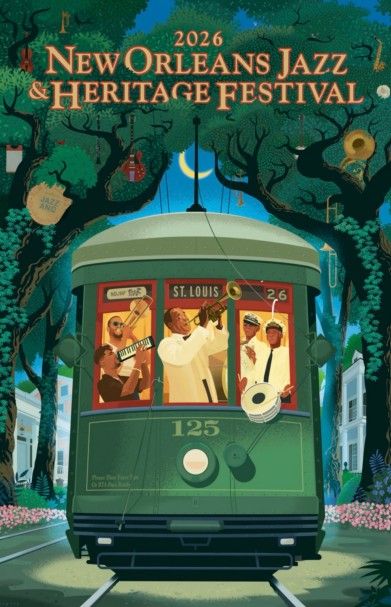
[Poster by Paul Rogers, Courtesy of Jazz Fest]
This year, the honor belongs to Paul Rogers, whose work can be seen across the globe. His 2026 poster, titled Streetcar Ramble: Satchmo at 125, displays a vibrant streetcar housed with historic local legends alongside the city's current superstar musicians including Jon Batiste, Trombone Shorty, Louis Armstrong, Treme Brass Band founder Benny Jones, and "Uncle" Lionel Batiste.
Art as Living Heritage
At Jazz Fest, there's no hard line between art, music, and food. You might leave the Gospel Tent, brass still ringing in your ears, and suddenly find yourself discussing pigment techniques with a painter or watching molten glass take shape. Culture flows freely there.
The festival proves that heritage isn't something locked behind museum glass, it's truly in your face at every corner and with every step you take. From Congo Square to Contemporary Crafts, from bayou woodworkers to boundary-pushing muralists, the art of Jazz Fest is alive.
It reminds everyone who walks those grounds that in New Orleans, creativity is not an accessory to the music. It is the music.
Sign Up!
FOR THE INSIDE SCOOP ON DINING, MUSIC, ENTERTAINMENT, THE ARTS & MORE!