Encore
Award-winning actor, writer, civic activist, and costume lover Bryan Batt has transformed himself numerous times for stage, film, and television, but he is best known for playing Salvatore Romano on AMC's Mad Men. Despite being a prominent figure on a show known for incredible 1960s fashion, one of his most memorable costumes recently managed a comeback without ever leaving Magazine Street.
Batt had several family members who died at the age of 55, so when he reached 56, an everlasting celebration was in order. He planned a gods-and-goddesses party and chose to arrive as one of his favorite immortals, Apollo. Costume designer Julie Winn helped assemble an ethereal look that included a heavily embellished gold breastplate.
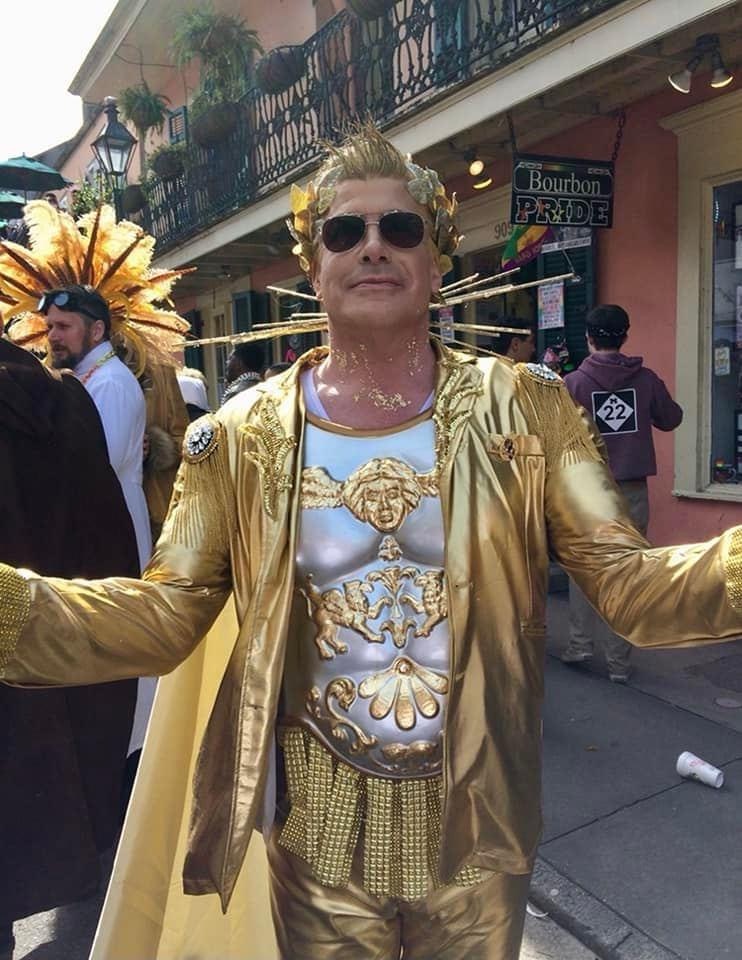
Like many resourceful New Orleanians faced with packed party calendars, Batt reimagined the costume for Jennifer Coolidge's Halloween celebration. Apollo became King Midas, and Batt added more bling, gilded makeup, and even a golden baby. After several outings, the hot glue surrendered, and Batt placed the battle-worn breastplate on top of the garbage can beside his house.
Within a week, he spotted it displayed in the window of Buffalo Exchange on Magazine Street and posted about it on social media. "I found it quite hysterical," Batt said. "I'm a firm believer in repurposing and recycling. It was fun to see. I'm glad someone else had some fun with it."
The breastplate sold, although Batt never learned who bought it or what it became next. "We'll keep this adoption silent, I guess." He joked that there was "no communication with the birth parents."
However, Batt did keep the gold pants. "You never know when you might need them for a Saints game or something"—or an average Tuesday in New Orleans, he agreed.
Batt's surprise reunion raises a question particularly suited to a city where closets often contain nearly as many costumes as everyday clothes: What happens when we decide we are finished with them? Fortunately, New Orleans has plenty of creative minds keeping costume waste from ending up like so many abandoned beads on St. Charles Avenue.
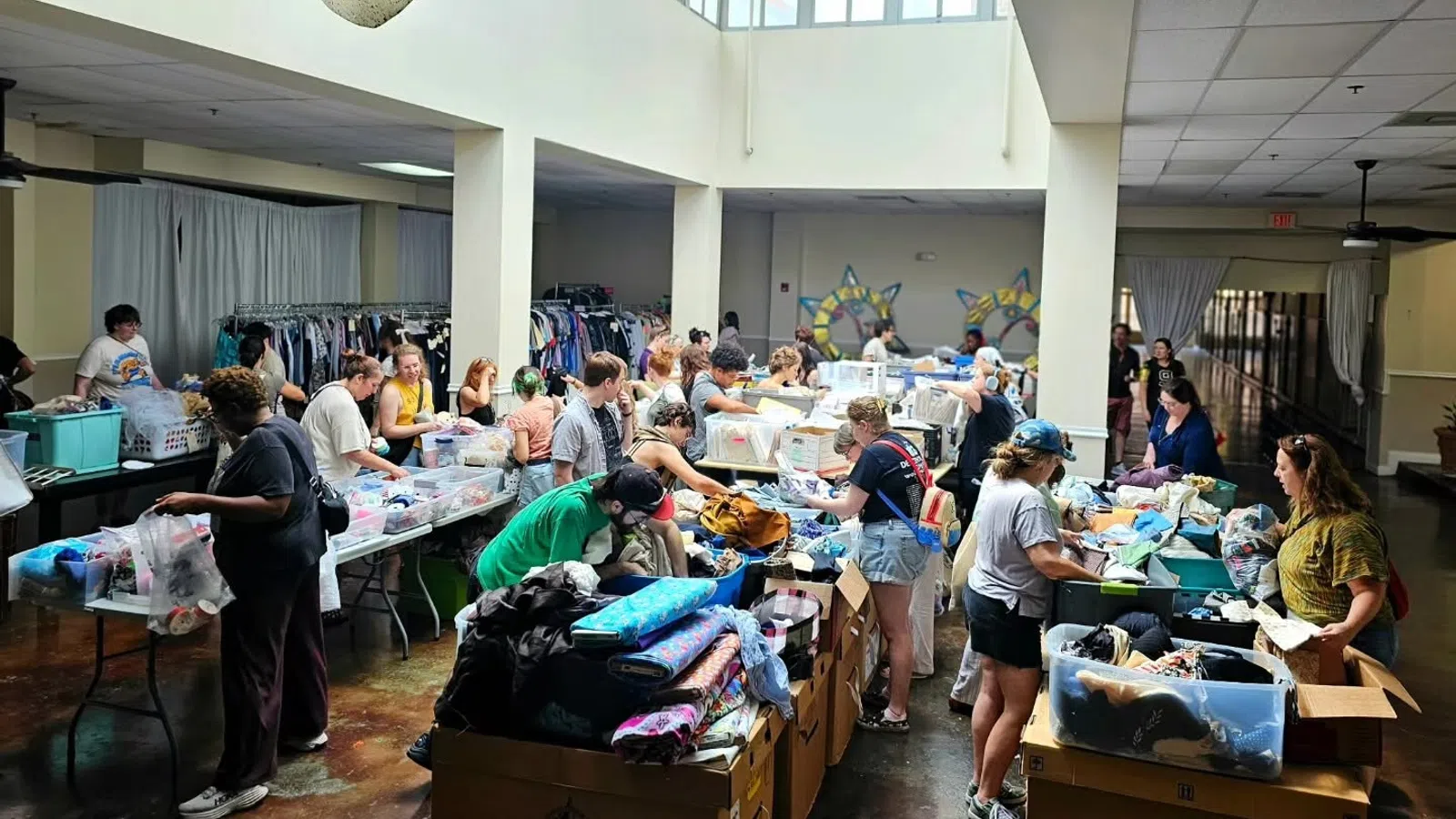
Every third Tuesday of the month, Drunk Picasso transforms the back of Saturn Bar into a glorious clothing swap. The community collective, co-founded by Carrie DeMay and Meredith Michele, promotes art, sustainability, and the idea that clothing can keep circulating long after its first discard. Organizers hold regular monthly swaps and larger costume-oriented swaps around Halloween and Carnival.
Visitors can bring or take clothing. No one is required to make an even trade, and those who don't have anything to share are still encouraged to participate. "We welcome everybody," DeMay said.
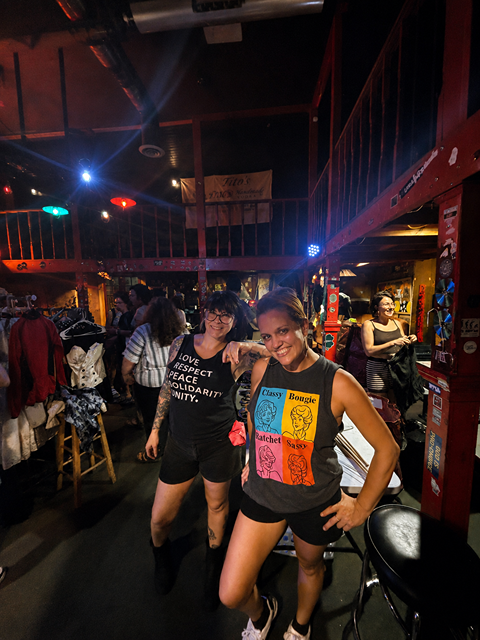
Clothing is displayed so it feels more like a store and less like a trash pile. Costumes and unfinished craft projects are especially appreciated. Feathers can migrate from one headdress to another, jackets can surrender their trim, and abandoned projects may contain the missing pieces of someone else's masterpiece. Someone donated a suit from a wedding that someone else took and painted. That transformation captures what makes clothing reuse different in New Orleans—a garment does not have to remain what its first owner intended.
The swap also helps people with changing bodies, budgets, or circumstances. Someone may need clothing after losing weight, starting a job, surviving a disaster, or realizing nothing in the closet works anymore. Organizers want the experience to feel social and dignified, not like people are rummaging through leftovers. In person, the swap felt surprisingly like an upscale boutique.
Drunk Picasso also works with the Fred Hampton Free Store and hopes to develop more partnerships with organizations that can select items their communities specifically need. The larger goal is circulation—moving clothes out of overfilled closets and into the hands of people who can wear, alter, or reimagine them. You can learn more about @drunkpicasso504 on Instagram.
ricRACK is another inclusive space that has the goal of transforming textile waste into opportunity, offering sewing classes and resources for a sustainable New Orleans (ricracknola.com). It's admirable that they don't just want to help find new homes for fabrics—they are teaching you what to do with them.
If you need additional help with sourcing, there are also loads of independent thrift stores and curators around town that always have super fun surprises. Two of which are GinaWare (ginaware.com) and Miss Claudia's Vintage Clothing (@missclaudiasvintage). The Occasional Wife and Hound and Found also offer a variety of repurposed treasures.
Costume designer Julianne Lagniappe (ladyparadise.studio) advises investing in well-made, versatile base garments, leaving you free to use recycled crowns, collars, and props to express a specific theme. Lagniappe says many of her clients commission custom bodysuits and then they're able to source their own accessories with her consultation, if needed.
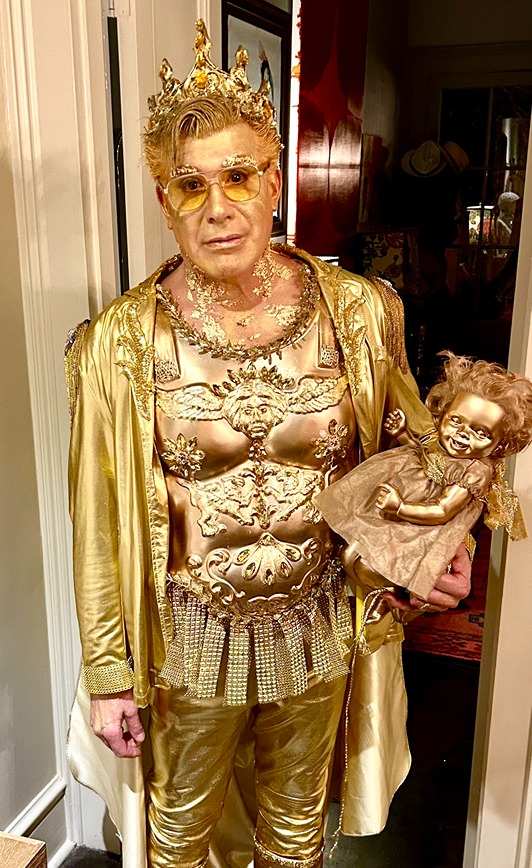
Batt has long followed a similar philosophy with his own costumes. He buys basic pieces online and then embellishes them until they become something personal. "When in doubt, drape it and bedazzle it," he said.
Batt's discarded breastplate had already portrayed two gods before an unknown shopper carried it away. Its next identity could be anything: a Carnival monarch, a Saints superfan, a disco warrior, or another deity waiting for the proper invitation. In a city that believes more is more, a curtain call does not always mean the show is over. Sometimes it just means the costume is ready for its next cast.