No BBQ Sauce Needed
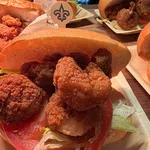
If you've ever heard a tourist ordering a barbecued shrimp po-boy, you've probably seen them be equally as shocked when their order arrived.
Imagine that, while dining, you overheard a table full of folks from Atlanta having a panicked conversation in whispers wondering if their order was incorrect and if they should take lactose intolerance medication.
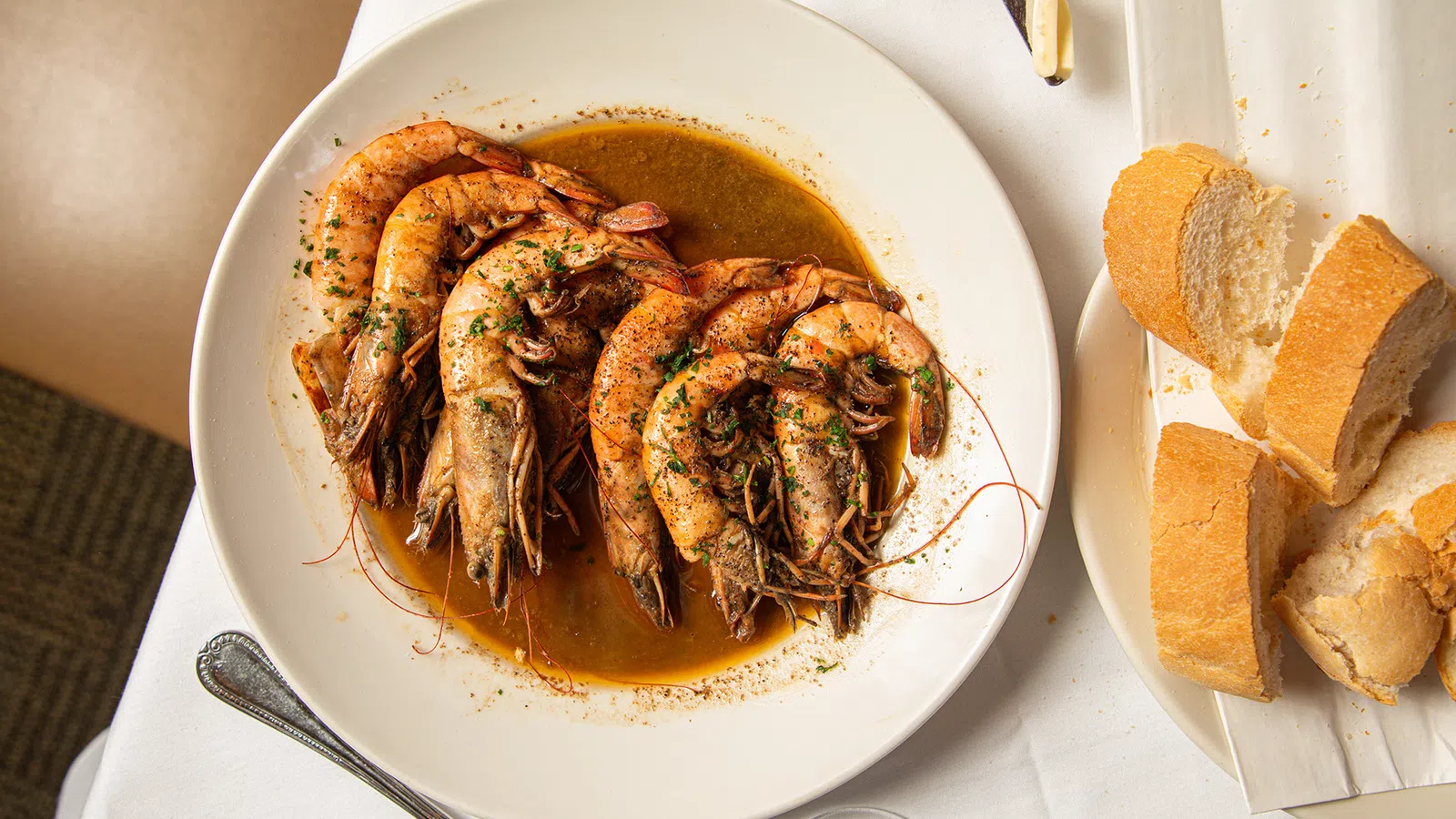
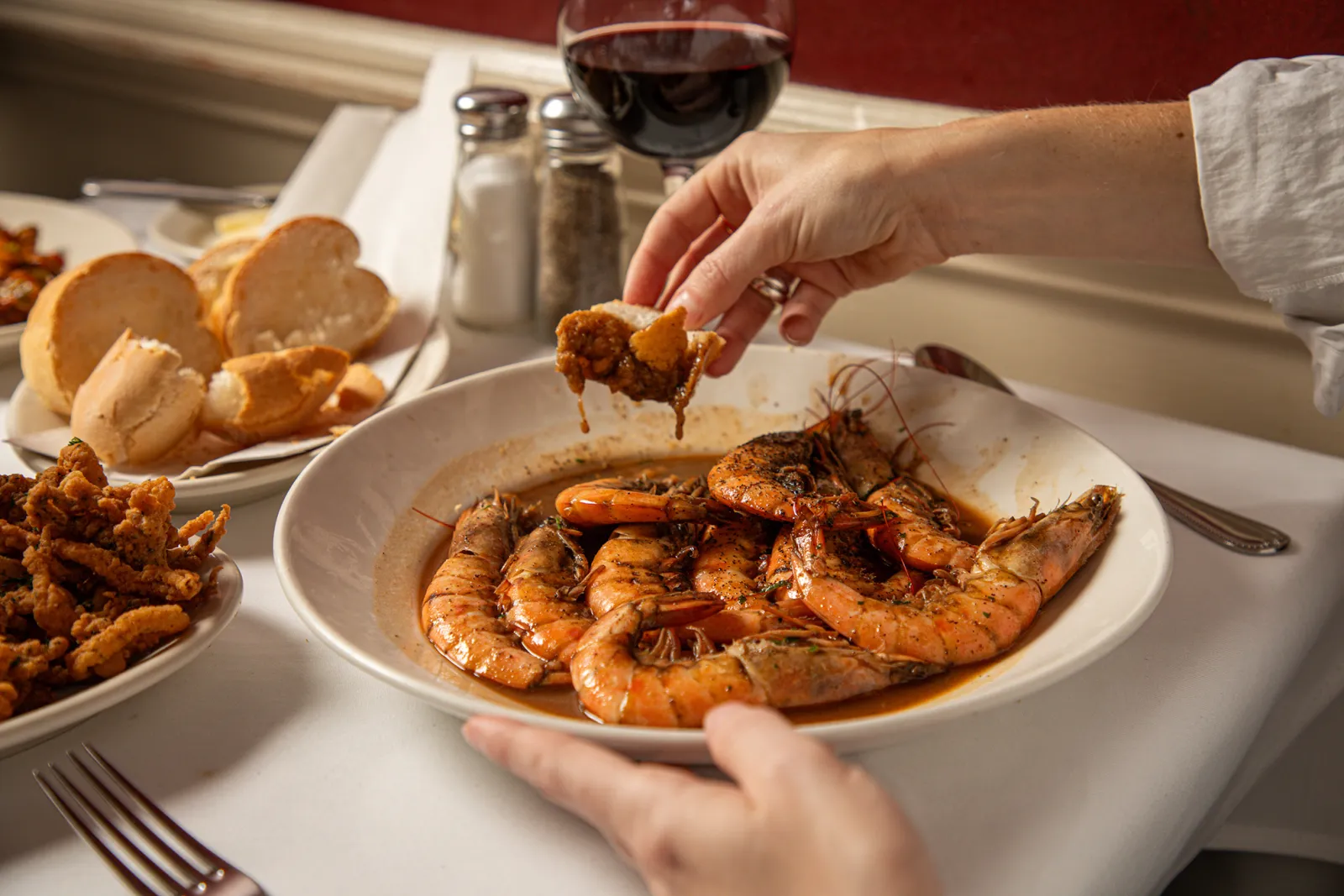
Let's be honest, the name is misleading. "Barbecue shrimp" conjures up images of a backyard barbecue or a smoky red sauce sitting next to a skewered shrimp on a grill, so to then be served shrimp—often with heads attached—in a bath of butter is a surprise to say the least. So why not call them something different? Where did "barbecue shrimp" come from as an idea, how did it become a NOLA menu staple, and how has it evolved into what we know it as now?
Pascal's Manale & BBQ Shrimp
Most people agree that the original barbecue shrimp was launched at Pascal's Manale in the 1950s. Manale's also set the standard for "red gravy," the New Orleans version of tomato pasta sauce.
Director of Sales and Marketing for Pascal's Manale Lindsay Ross said, "Frank Manale, a Sicilian immigrant, founded Manale's restaurant as a bar and sandwich shop staffed by his nephews and family members. After his death in 1937, his nephew, Pascal Radosta, took over the establishment, changing it to Pascal's Manale Restaurant." According to their website, Pascal's Manale had been owned by the DeFelice family for over 100 years, until it was bought by Jessica and Ray Brandt before his passing in 2019. Now, restaurateurs Dickie Brennan and Lauren Brennan Brower, as well as Steve Pettus, own the restaurant.
As to the history of barbecue shrimp, there are, unsurprisingly, multiple versions of the origin story. Allegedly, according to local lore, a customer returned from a trip in 1953 to Chicago where he had tried a buttery shrimp dish and asked the chef to recreate it. Some people will tell you it was New York, and not Chicago, but a 1989 Times Picayune article by Gene Bourg named this traveler with exceptional taste buds as Jimmy Sutro. According to a cookbook history of Pascal's Manale by Poppy Tooker, Pascal Radosta created the dish in 1954. Regardless of the inspiration, there is no question that the dish originated in the Manale kitchen and has been on the menu ever since, migrating to over one hundred other restaurants and to kitchens all across South Louisiana and beyond.
No one can really agree on what the best recipe is. Many argue about whether it's butter or margarine or a margarine and oil combination, whether or not to add beer or wine, and how much of each spice should be included, the common spices used being black pepper, cayenne pepper, paprika, salt, thyme, oregano, basil, and rosemary—depending on who trained your chef. In her cookbook Pascal's Manale Cookbook: A Family Tradition, which you can find at poppytooker.com, Tooker makes several delicious attempts to recreate the original recipes.
NOLA Places with BBQ Shrimp
A thread on TripAdvisor is torn about folks' other local favorites, with the front-runners being not only Pascal's Manale, but also Deanie's and Mr. B's, in no particular order. Other similar sites include positive rankings for Brigtsen's, Liuzza's by the Track, Drago's, and Oceana Grill. In almost every thread, visitors are confused about why the shrimp are not barbecued. Interestingly enough, they almost always seem to assume that they are spicy, as well, and are surprised when they aren't. Ironically, Pascal's Manale's website describes them as being served in a "spicy and tangy sauce." Though most agree that pepper is an important component regardless of which recipe you're using, many use nothing with a spicy component other than a bit of Tabasco and cayenne. It's interesting how every local that was asked about their own recipe for this article seems to be exceptionally secretive about the correct amount of butter they use, other than to say that it's quite a lot.
Manager of Deanie's Jeff Young said, "The original owner, Mr. Frank Chifici, put barbecue shrimp on the menu in 1982. His recipe is a little heavier on the basil, giving it a sweeter approach. It is served head on, so you peel the shrimp, but that makes it even better," According to Young, "The barbecue shrimp remains one of our top three most popular dishes, and people will often come in and just ask for the sauce to take home." Deanie's is located at 1713 Lake Ave. in Metairie, at 2200 Magazine St. in Uptown, and at 841 Iberville St. in the French Quarter. You can find them online at deanies.com.
Chef Frank Brigtsen of Brigsten's Restaurant said, "The first time we made BBQ shrimp at K-Paul's in 1979, Chef Paul Prudhomme explained his method to me, and I said, 'My best friend's mom, Gloria Cristina, puts rosemary in hers.' Chef [Prudhomme] said, 'Rosemary? With shrimp? She must be a good cook. Let's try it.' It's now a common ingredient for many versions of the dish. We serve ours with a savory shrimp calas, a rice fritter that pays homage to African Creole culture in New Orleans." You can try Chef Brigtsen's at 723 Dante St., and the full menu is available at brigtsens.com.
Regardless of which restaurant you choose to indulge in this sloppy mound of deliciousness, make sure to get extra napkins. One thing remains a mystery—the name. According to lore, the dish was originally dubbed barbecue shrimp because the shrimp turn a darker pink color and it reminded someone of the hue of barbecue sauce. While it would be wise to rename it, or at the very least describe it better on menus, for now it remains New Orleans' most delicious misnomer.