Cradle of the Stars
New Orleans has a long history of homegrown music, but it was the bustling, growing city of Shreveport in the northwest corner of the state that held the title of "Cradle of the Stars."
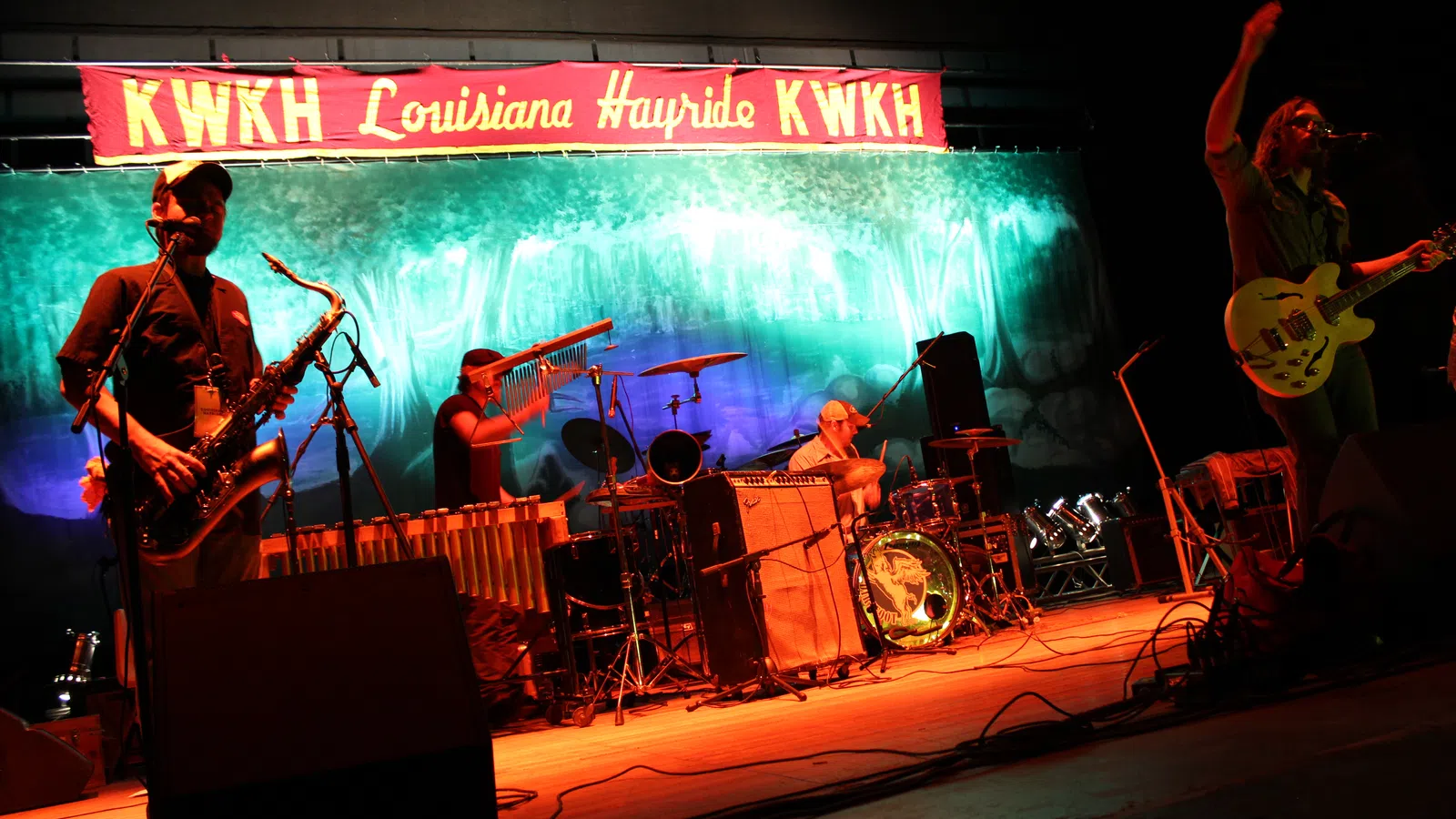
The Louisiana Hayride music showcase has an enduring history, even after its final broadcast on August 27, 1960, making 2025 the 65th anniversary of its final broadcast.
Colorful businessman William Kennon Henderson, president of Henderson Iron Works and Supply Company, ventured into the relatively new realm of radio broadcasting in 1925 when he founded a station he named for himself: KWKH. A 1923 article in The Shreveport Times from 1923 described the Dixie estate called Kennonwood "like a sentinel on guard in the forest primeval." The same article continued, "[A]s one motors from Shreveport, the fastest growing city of the country, throbbing with the whir of its multiple industries, he is impressed with the quick blending of the modern day into the landmarks of past glories."
Henderson was outspoken, preaching unabashed opinions towards government officials, chain radio stations, and the Federal Radio Commission. He would begin his broadcasts by stating, "Hello, world. Doggone ya," in a Southern drawl. W.K. Henderson filed for personal bankruptcy in 1932 when the Great Depression ravaged commercial endeavors across the nation. KWKH was sold in 1933, and Henderson passed away in 1945.
The Federal Communications Commission approved the transfer of the station's ownership to Times Publishing Co. Ltd. of Shreveport in 1935. A new transmitter building and chief engineer's house, which you can visit today, were erected in 1939. KWKH offered more than entertainment when the U.S. entered World War II. The station was guarded due to the significance of the powerful transmitter. A one-off musical broadcast featured orchestral music performed by Camp Ruston prisoners of war.
As WWII ended and more American households installed radios, KWKH grew to 50,000 watts, which could reach 28 states. The station offered a variety of programs, from news to musical entertainment. Program Manager Horace Logan knew of the popularity of the Grand Ole Opry broadcast out of Nashville that had been going since 1925. Logan used the name of Harnett Thomas Kane's 1941 book about Gov. Huey Long, Louisiana Hayride: The American Rehearsal for Dictatorship, possibly inspired by a song in the 1932 musical Flying Colors, for his live music broadcast.
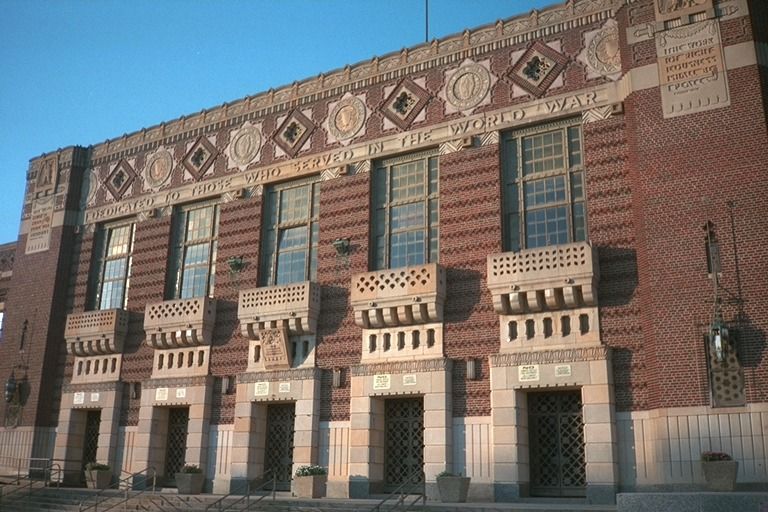
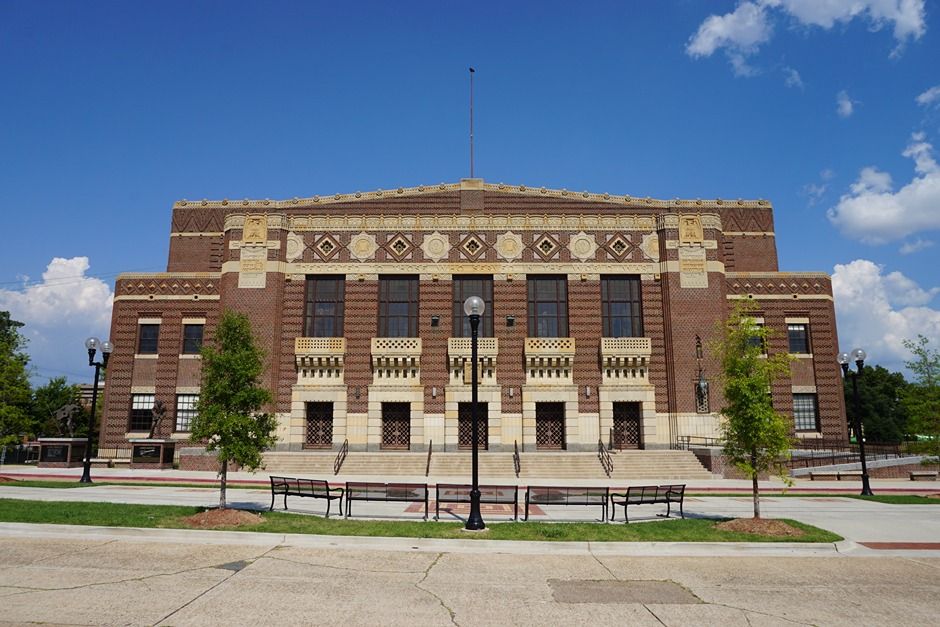
The first Louisiana Hayride show broadcasted from the Municipal Auditorium in Shreveport on Saturday, April 3, 1948. The city rented the auditorium to the station for $75 each Saturday. Admission to attend the show was just 60 cents for adults and 30 cents for children.
Louisiana Hayride began syndication on the CBS Network over the next few years, eventually being played on dozens of stations across the country by the 1950s. The show even got a slot on the Armed Forces Radio Service's Far East Network.
While the Grand Ole Opry chose more established artists that were required to pass an audition and discouraged certain instruments to maintain an old-time feel, Louisiana Hayride embraced lesser-known acts and new forms of music. Willie Nelson, Johnny Cash, and former Louisiana Governor Jimmie Davis were just some of the legendary acts to perform.
Talented country musician Hank Williams and his wife, looking for a fresh start, moved to Shreveport in July 1948. "He rode into Shreveport with everything he owned on top of an old Chrysler. He had springs and a mattress and everything," Logan said. Hank Williams debuted on Louisiana Hayride on August 7, 1948. Due to his success in Louisiana, he finally got invited to Grand Ole Opry on June 11, 1949. He rose to wide acclaim on that show but lost his status due to personal issues in July 1952. Hank Williams returned to Louisiana Hayride's stage before passing at the age of 29 on January 1, 1953.
Louisiana Hayride was a boon to Shreveport as thousands filled the auditorium each Saturday for the three-hour event. Motorists would come from neighboring states, staying overnight at hotels and patronizing eateries. Louisiana Hayride broadcasted from other cities, including Houston, TX and Little Rock, AR, five Saturdays out of the year, and Shreveport business owners complained about the lull in tourism.
One of the most famous up-and-coming acts featured on the show was a 19-year-old Memphis man named Elvis Presley. Two weeks before this show, Elvis Presley underwhelmed the country lovers at Grand Ole Opry. On October 16, 1954, the Municipal Auditorium in Shreveport was filled up with over 3,000 curious music fans. He drove the crowd wild and performed on KWKH many subsequent times.
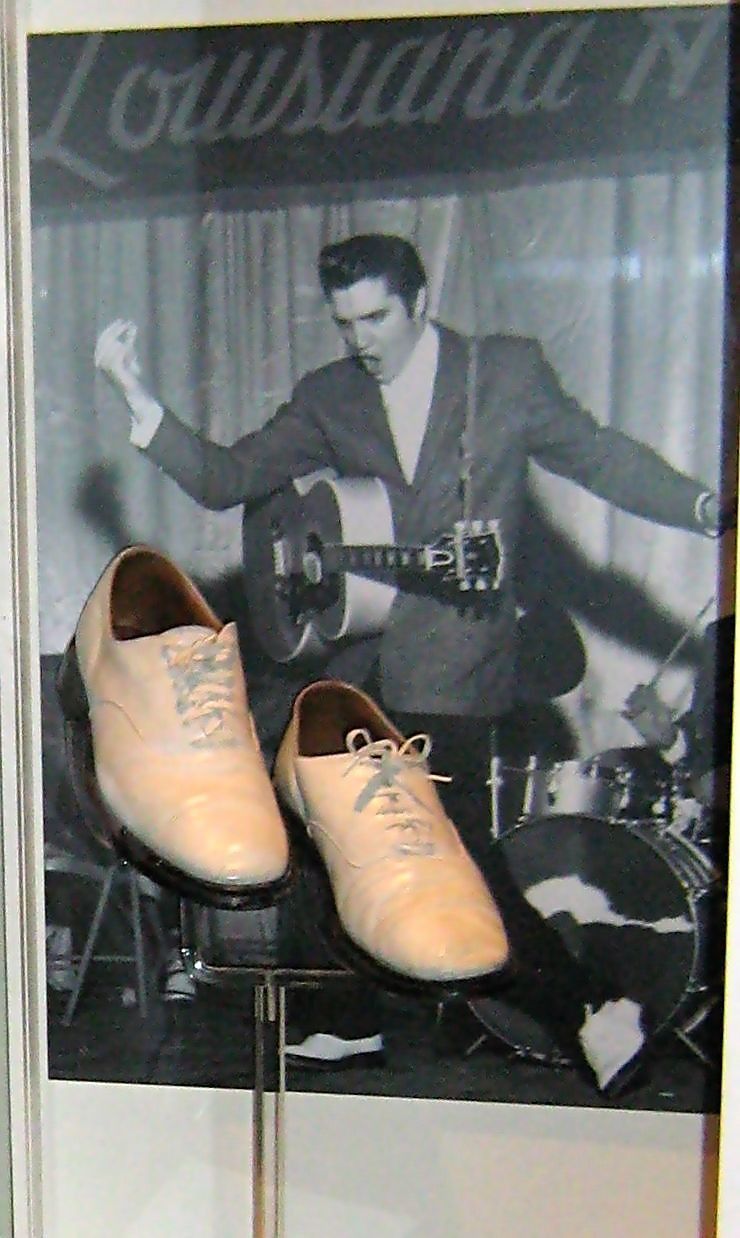
His audience on December 15, 1956, was so raucous that Logan announced "Elvis has left the building. I've told you absolutely straight up to this point. You know that. He has left the building. He left the stage and went out the back with the policemen, and he is now gone from the building."
Radio programs waned in popularity in the late 1950s as televisions became fixtures in American homes. Music acts were booked to perform on shows including The Steve Allen Show and The Ed Sullivan Show, and it was much more exciting to see and hear new acts rather than just listening to them. The final Louisiana Hayride broadcast was on August 27, 1960.
International Broadcasting Corporation sold KWKH in 1977, and it changed into a country music format. KWKH then changed to sportscasting in 2012.
It's not just southern Louisiana that can claim a rich musical heritage. Stop by Shreveport's Municipal Auditorium to feel the history or take a photo with the statues of James Burton and Elvis Presley.